
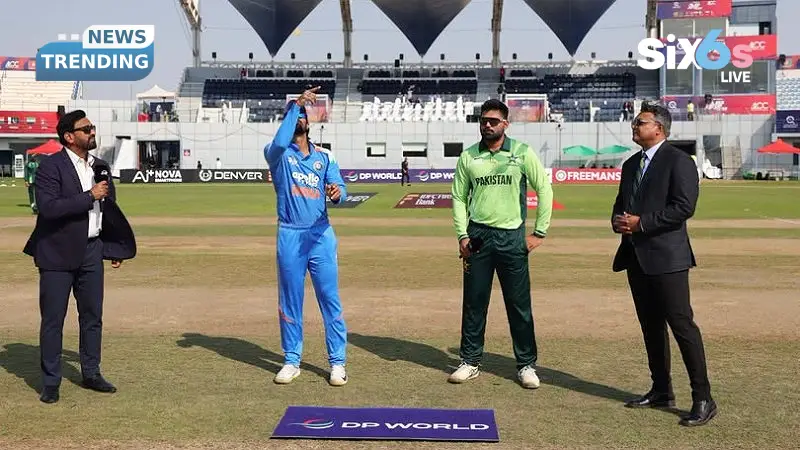
Nothing changes on the field, because the game’s lawmakers have said the matter sits outside their reach. Fraser Stewart, the MCC Laws Manager, told reporters at the ILT20 in Sharjah that his club can police respect between players and umpires during play, and that anything beyond that line is out of its hands. India A and Pakistan A skipped every handshake in Doha on November 22, from the toss to the final ball, so the issue now passes back to cricket’s administrators.
Stewart Draws the Line at the Boundary Rope
Stewart was blunt about the limits of his office. The club that writes the Laws can insist on respect between the people inside the rope, meaning players and the umpires who stand over them, and its authority stops there. Anything sitting above that relationship is something the MCC cannot manage. He added that the club would welcome handshakes, but he accepted that far bigger forces are at work between these two countries.
That position matters because handshakes have never been written into the rulebook. They are not compulsory under the Laws, and no ICC playing regulation demands them either. The preamble to the Laws does put respect at the centre of the game and names opponents among those who deserve it. Yet a preamble sets a tone and carries no sanction, so a captain who keeps his hands by his sides at the toss breaks nothing an umpire can report.
Rising Stars 2026 Handshake Row
The latest flashpoint came in Doha, where Tilak Varma and Abdul Samad met for the coin toss and walked away without touching hands. The afternoon finished the same way. Pakistan A set a target of 314, held India A to 265 and took the game by 48 runs, and neither dressing room lined up for the usual exchange once it was over. Under the Laws, the umpires had no grounds to step in at either moment.
Neither board has commented on the Doha game, and the Asian Cricket Council has stayed silent too. The most recent positions on record are older ones. Naqvi has said Pakistan will offer no handshake unless India does, while Saikia of the BCCI has described the climate as unsuitable for one. Both sides are waiting for the other to move first.
A Pattern That Has Run Since Dubai
The Doha snub is no one-off. It traces back to the 2025 Asia Cup in Dubai, where the senior men refused handshakes in all three meetings, on September 14, 21 and 28. The women carried it into their World Cup fixture in Colombo that October. The previous Rising Stars edition in Doha followed suit in November 2025, which means this event has now seen the snub twice.
Age-group cricket picked up the habit next. The Under-19 sides kept apart at their Asia Cup in Dubai in December 2025 and again at the Under-19 World Cup two months later. Then came the T20 World Cup game in Colombo on February 15, 2026. The toss in Doha makes it nine matches in a little over a year, spreading from the senior game down to the juniors, and no governing body has forced the issue once.
Knockout Draw Could Force a Final Rematch
Group B wraps up on November 24, with India A facing the UAE and Pakistan A taking on Nepal. Because both rivals sit in that same group, the semi-final draw keeps them apart until the final weekend. The first semi-final on November 26 pits the Group A winner against the second-placed side from Group B. The second, on November 27, matches the Group B leader with the Group A runner-up.
So the only route to another meeting is the final at West End Park on November 29, with a 1 pm local start, and both sides would have to win their semi-finals to get there. If that happens, the same question will land on the same two captains, and the MCC has already said it will not supply the answer. Unless the boards act, the Rising Stars 2026 handshake row heads into a title decider with nobody in charge of it. Tilak Varma and Abdul Samad would then meet at the toss once again.