
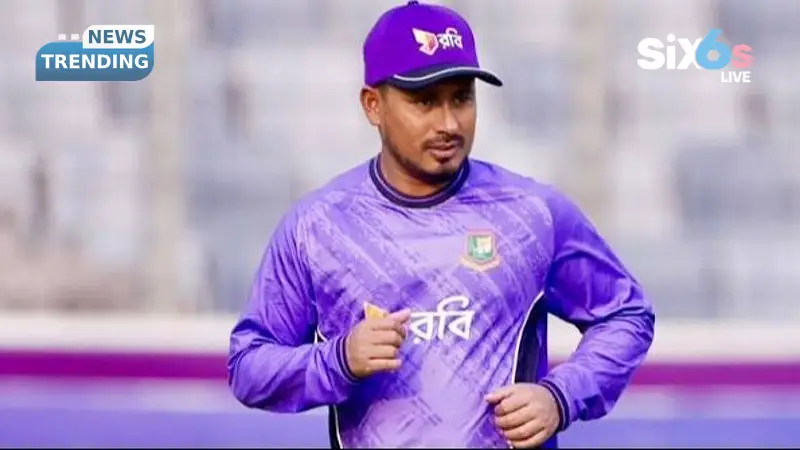
Habibul Bashar runs the Bangladesh A dugout in Doha, and Mohammad Ashraful sits directly beneath him. Ashraful has said so plainly: he is the number two, not the man in charge. The arrangement lands awkwardly, because the board moved him off the national batting job on 24 October. He now helps prepare a young side for a 50-over event that starts on 19 November, with a place in the senior picture as the prize on offer for the players, and few will want to waste it.
A Clear Chain of Command in Doha
Habibul Bashar holds the top job, and Mohammad Ashraful works as his deputy. Ashraful drew that line himself when he said publicly that he is not the head coach, that Bashar is, and that his own task is to assist. Bashar’s title has been described in two ways, head coach and selector, yet the working order in camp is the one Ashraful laid out, and nothing in his own remarks suggests any friction between the two men.
David Hemp held the head coach post last year, so this is a changed set-up for the Bangladesh A programme. No formal announcement of Ashraful’s appointment has surfaced and the board has not released a full staff list. That leaves the structure known mainly through what the men involved have said in public, which is really not much to go on. Eleven days in Doha will show how the new pairing works.
Rising Stars Asia Cup: Ashraful assistant coach
The role arrives only weeks after a setback. On 24 October the board named Mohammad Salahuddin interim batting coach and said Ashraful would move to a new position inside the organisation, though it never named the job. Local coverage tied the change to weak batting returns on the tours of Zimbabwe and the UAE, and it did not soften the tone.
Ashraful stays on the board’s books until his contract runs out. A board official has said talks are under way with foreign batting coaches, so Doha may be his last high-profile duty before a bigger reshuffle in the senior set-up. His tenure covered eight Tests, with five wins, one draw and two defeats, a record that sits oddly beside the criticism of the batting. Any successor from abroad would change the balance of the staff.
Message to the Young Squad
Ashraful has framed the tournament as a platform for players chasing a spot in the senior side, and he says the men chosen are future national players in the selectors’ eyes. He knows many of them from the national setup and is happy with the preparation so far. On pressure, he argued that coaches carry none, because the weight belongs entirely to the players who walk out to bat. The remark suits a squad of players still trying to be noticed.
Bashar set a firmer target: win the event. For that reason, the selectors went for the strongest available group with no experiments, and Sabbir Rahman’s inclusion was explained as a verdict on his talent and future, with age ignored. The 19-man preliminary squad came out on 3 November, and it includes Naim Sheikh, Yasir Ali Chowdhury and Rakibul Hasan. Bashar also expects tough rivals.
Fixtures Across Eleven Days
The tournament runs from 19 to 29 November in Doha and uses the 50-over format, a switch from the T20 edition of 2025. Bangladesh A face Hong Kong in the opener on 19 November, at the stadium on the campus of Doha’s science and technology university. They then meet Afghanistan A on 21 November and Sri Lanka A on 23 November, three group games in five days. Hong Kong, Afghanistan A and Sri Lanka A form the trio they must get past.
The other group holds India A, Pakistan A, Nepal and the UAE. India A and Pakistan A are the sides Bangladesh A could meet later. Semi-finals follow on 26 and 27 November and the final falls on 29 November, so the knockout rounds arrive after a short break from the group games. Every Bangladesh A result will be read as a verdict on the Rising Stars Asia Cup Ashraful assistant coach arrangement, right up to that last day, and the board’s next batting hire will colour it.