
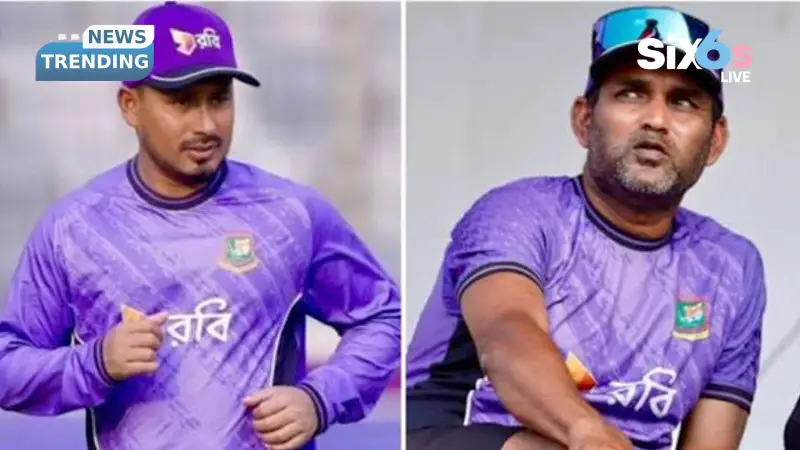
Mohammad Salahuddin takes over on an interim basis for the home Tests against the West Indies that start on 28 October, and a foreign appointment is not expected until that series is finished. The board confirmed Ashraful’s removal on 24 October and moved him to another role, with his contract running to February 2027. No official reason came with the decision, so reports of collapses in the UAE and Zimbabwe fill the gap, and the timing leaves almost no room for a settled plan.
The Board Confirms the Change
Shahriar Nafees, who leads cricket operations, confirmed the move on 24 October, and it was his department that delivered the news to Ashraful. Reporting on how it was announced is split. One version points to a late-night press release that described other duties, while other outlets lean on unnamed board sources, and the full wording of any official statement has not surfaced. That vagueness matters because supporters are left to judge the decision on results alone.
Ashraful stays inside the setup in a new role, which is why the contract running to February 2027 matters so much. Officially, no explanation has been offered for the switch. Reports tie the decision to batting collapses in the UAE and Zimbabwe, and some also mention the Asian Games in Japan as part of the backdrop, though none of that has been confirmed by the board itself. For a board that moves quickly, silence on the reasoning is itself a message.
Bangladesh Test batting coach after Ashraful
Salahuddin is the head coach of the BCB High Performance Unit and has served as a senior assistant coach since November 2024. His own contract runs until after the 2027 World Cup, so he arrives with a longer horizon than a stopgap would normally have. That history gives the board a coach who already knows many of the players from the pathway system.
His interim stint covers the two matches against the West Indies from 28 October, or lasts until a foreign coach joins, whichever comes sooner. That puts a familiar figure in charge of the batters for a short, high-visibility home series. It is a safe choice, and with so little time to prepare, safe is probably the sensible one. Nobody expects a revolution in a fortnight.
Hunting for an Overseas Specialist
A board official said discussions are under way with some foreign batting coaches, and an appointment would follow the West Indies series. Two outlets give no timeline, and not a single candidate name has emerged so far. For a job that matters this much, that is a surprisingly quiet process. Bangladesh wants a specialist with international experience, but wanting one and signing one are different things.
That silence tells us the search is at an early stage. Nobody can say whether a new coach will be settled in time for the next overseas assignment, and until a name appears, Mohammad Salahuddin remains the face of the batting group. The board has bought itself the length of two Tests to find someone, and the clock is already running on a decision that will shape the next two years of the batting.
Results Behind the Pressure
The results explain why the pressure built. In Harare, Bangladesh lost a Test between 28 and 30 June, beaten by 85 runs and an innings after totals of 140 and 185. The ODI series in Zimbabwe ended 2-1 to the hosts, with the second game finishing on 234 all out in a chase of 247, a 13-run defeat. The T20Is went the other way, and Bangladesh won them 2-1, which at least shows the problem was not universal.
The UAE tri-series was worse. A chase of 271 on 17 October ended on 172, a loss by 99 runs, and 160 all out against Afghanistan on 21 October meant a seven-wicket defeat and no place in the final. Under Ashraful since November 2025, the Test side won five, drew one and lost two of eight, and the batters produced 11 centuries in 34 internationals. A 64 all out at Mackay still lingers, though, and whoever fills the Bangladesh Test batting coach role after Ashraful will inherit that fragility along with a 1-1 result in Australia.