
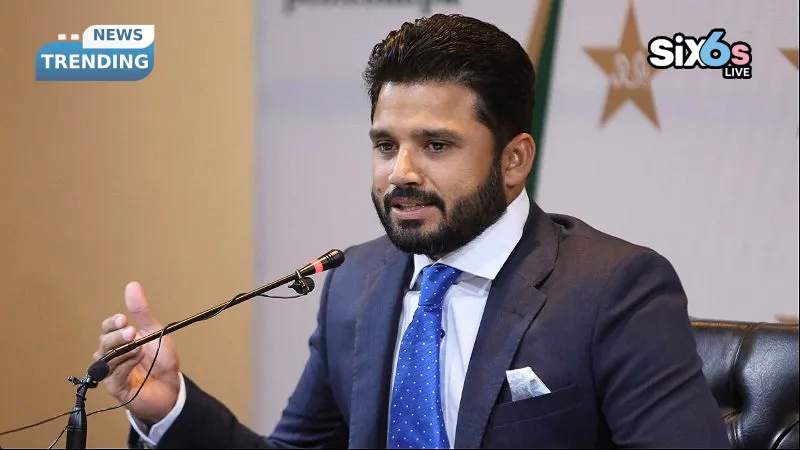
Azhar Ali says Pakistan’s international slide traces directly back to department cricket being shut down years ago, once the country’s biggest nursery for talent. He argues PCB’s habit of overhauling domestic structures every season never lets any plan prove itself, while young players keep leaving home over a lack of financial future in the game. His comments landed days after PCB confirmed WAPDA and Sahir Associates were dropped from Grade-I departmental cricket for 2026-27, replaced by OGDCL and Kingsmen Academy, following a threefold hike in participation fees.
Azhar Ali On Pakistan Cricket’s Recent Decline
Speaking about the state of the domestic game, Azhar called department cricket one of Pakistan’s biggest needs, saying it fuelled the sport’s success for decades. He believes the current dip in Pakistan’s international form links directly to the departmental system being shut down years ago, a setup that took a long time to recover once it disappeared and now feels under threat again.
His sharper complaint targets PCB’s habit of changing domestic structures every year. If a system changes annually, either last year’s version was wrong or this year’s is, and Azhar’s first ask would be giving any plan a few years before judging it. PCB keeps promising more developed players with each new format, a promise that keeps resetting, and young players have already left Pakistan once departments shut down, with no future at home.
Azhar Ali Pakistan Departmental Cricket Funding Cut
Azhar traces his own career to Khan Research Laboratories, the same route many Pakistan cricketers took before him. Even when regional authorities overlooked players, departments paid salaries and stuck with them through lean patches. That matters given Pakistan’s economic reality, where even a Grade 2 salary of thirty to forty thousand rupees from a smaller department can decide whether a family lets a son keep playing cricket.
Desire to play was never Pakistan’s problem, Azhar argues; unlike England or Australia, where school and county programmes draw kids in, Pakistani children are already playing everywhere. What’s missing is a way to give back to their families by eighteen or twenty. Grade-I fees reflect that tension, jumping from five million rupees last season to fifteen million for 2026-27, a threefold rise from three million two seasons earlier, with Grade-II fees now at 4.2 million and four million rupees.
WAPDA And Sahir Associates Exit Grade One
PCB has linked the fee increase to inflation, saying revenue covers livestreaming, ground and umpire costs, and player clothing rather than the board’s own coffers. New rules also bring mandatory twelve-month contracts, year-round financial security, fitness testing, and a guest player policy for Pakistan’s men’s and Shaheens squad members. PCB now supervises contracts, salaries, and match fees directly, and departments have lost power to issue no-objection certificates for overseas leagues.
WAPDA, one of Pakistan’s oldest sides and the defending first-class champion, asked PCB to revise the increase; PCB said both departments were uneasy about the board directly controlling contracts and salaries. Sahir walked away instead, releasing roughly thirty-five contracted players, while KRL nearly withdrew too before its chairman intervened. Six departments, KRL, PTV, Ghani Glass, MIT Solutions, SBP and SNGPL, stayed on after PCB eased its terms, and OGDCL with Kingsmen Academy were promoted to fill the gap.
History Behind Pakistan’s Domestic Cricket System
Departmental cricket has been part of the Quaid-e-Azam Trophy since 1953-54, scrapped under Imran Khan’s government in 2019 and reintroduced in 2023 after that government left office. Generations of Pakistan’s biggest names passed through the system, from Shoaib Akhtar at KRL to Wasim Akram, Moin Khan and Saqlain Mushtaq at PIA, Inzamam-ul-Haq at Allied Bank and Mohammad Yousuf at WAPDA, alongside Shoaib Malik, Saeed Anwar, Shahid Afridi and Ijaz Ahmed.
Azhar was among a handful of cricketers who met then prime minister Imran Khan in 2020 to argue against scrapping the departments, an effort that failed. PCB has not addressed his latest comments, and its stance since the fee hike remains that the reforms professionalise domestic cricket, with no sign the increase will be reversed. That is the heart of the Azhar Ali Pakistan departmental cricket funding cut debate: structure over sudden swings, and enough security that a parent doesn’t pull a son from the game before he gets a real chance to prove himself.