
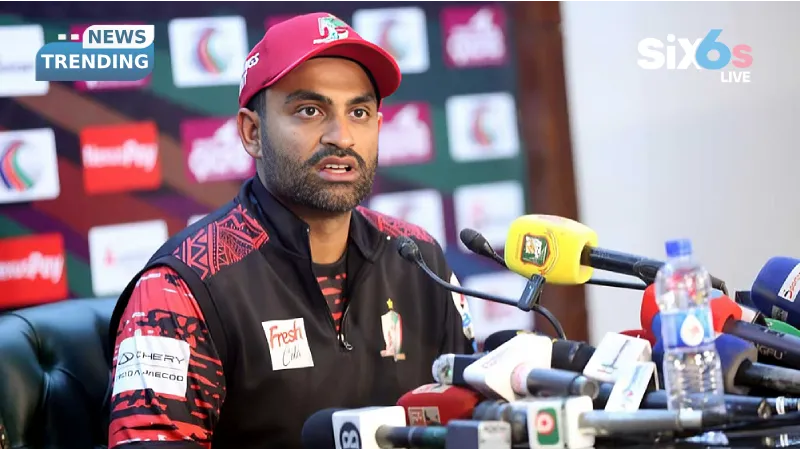
Tamim Iqbal has stated publicly that the Bangladesh Premier League cannot continue under its current structure. His comments addressed franchise selection failures, recurring payment disputes, and the need for foreign investment to restore credibility. These aren’t new problems. They’ve followed the tournament since 2012. What makes Tamim’s remarks significant is that they came with named accountability rather than the diplomatic language Bangladesh cricket administrators typically use when discussing internal failures publicly.
Franchise Selection Is the Core Problem
Tamim’s clearest argument is that the tournament’s structural problems originate before a single match is played. Franchise owners without financial stability or operational experience have repeatedly been approved for participation, and every consequence that follows, delayed salaries, ownership disputes, and mid-season operational uncertainty, flows directly from that initial selection failure.
A franchise league cannot function when the organisations running teams aren’t equipped to meet basic financial obligations across a six to eight-week competition. The Bangladesh Premier League has approved multiple franchises over the years that entered without the reserves, business infrastructure, or governance experience required to sustain consistent operations. Tamim’s demand for a reset isn’t a criticism of the tournament format. It’s a direct challenge to the screening process that allowed financially fragile operators to hold franchise licences in the first place.
BPL Payment Disputes Damaged Every Season
Payment controversies have appeared almost every season since the BPL launched. That pattern isn’t bad luck. It’s the predictable result of approving franchise owners who can’t guarantee salary commitments before the competition begins. So a BPL reset is mandatory.
For local players, delayed payments create financial pressure that affects preparation and performance. For overseas players, the reputational signal is worse. T20 franchise markets are competitive. Players choosing between BPL offers and alternatives from PSL, SA20, or other leagues factor payment reliability into every decision. The BPL payment problems have consistently placed the tournament at a disadvantage in attracting the overseas quality that drives broadcast value and commercial investment. Leagues that pay reliably attract better players. Better players attract bigger sponsorship. The BPL has broken that cycle at the first step for over a decade.
Foreign Investment Could Rebuild the BPL Reset
Tamim’s openness toward experienced foreign franchise ownership reflects the most realistic structural solution available. Established cricket business groups with operational experience in other T20 leagues bring financial discipline, marketing infrastructure, and governance standards that haven’t consistently existed inside the current BPL framework.
Bangladesh remains a comparatively affordable cricket market. Lower operational costs make the BPL commercially attractive to ownership groups looking to expand internationally without the entry costs of larger established leagues. The BPL’s audience is genuinely passionate about cricket, and that foundation gives foreign investors a real commercial asset to build around if the governance environment supports them. That condition matters. Foreign investment alone doesn’t resolve accountability failures inside the Bangladesh Cricket Board. Stricter screening, stronger financial guarantees, and transparent oversight need to accompany any ownership changes for the structural improvement to become permanent rather than cosmetic.
Accountability Must Follow Tamim’s Warning
The most significant aspect of Tamim’s remarks wasn’t the problems he identified. Those have been public knowledge for years. It was his direct questioning of why financially weak franchises were approved and why lower financial guarantees were accepted in previous seasons.
That framing points accountability inward at BCB decision-making rather than placing it entirely on franchise operators. Past controversies were discussed openly without producing meaningful structural consequences for the administrators who approved problematic franchises. If the current administration reviews those earlier decisions seriously and implements tighter governance going forward, Tamim’s intervention becomes a turning point rather than another public statement that produces no institutional change. Bangladesh cricket’s commercial potential is genuinely strong. The gap between that potential and the current BPL reality exists almost entirely because governance hasn’t matched the opportunity.
Cricket never stops, and neither do we. Follow Six6slive for the latest news, in-depth features, and exciting updates from the world of cricket. Dive into the action now