
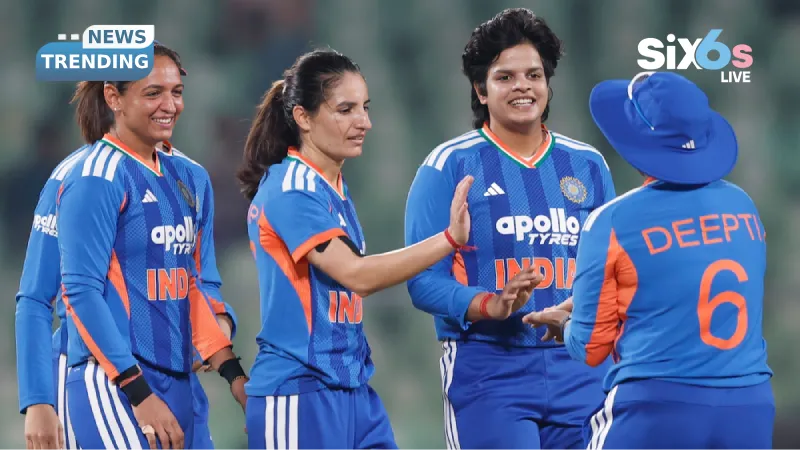
Harmanpreet Kaur has backed this squad publicly and without hesitation. The selection reflects her philosophy: attack over caution, firepower over balance. India’s middle order is more explosive than any previous World Cup campaign. Smriti Mandhana and Shafali Verma give the power play genuine match-winning potential. But English conditions don’t care about intent. The seam moves. The ball swings under overcast skies. And one structural gap in this squad could expose everything the aggressive approach is built on before the knockout stage arrives.
Aggressive Middle Order Carries Real Risk
Bharti Fzlmali’s selection signals something unambiguous. India isn’t interested in consolidating through the middle overs. They want to dominate them. That’s the right instinct for modern T20 cricket, where scoring rates between overs seven and fifteen separate title contenders from early exits.
The problem is the environment this squad will operate in. English pitches offer movement that flat Asian tracks simply don’t produce. Aggressive premeditation fails when the ball does something unexpected off the surface late in its swing. Platforms matter more in these conditions than in any subcontinental venue India has played major tournaments at.
India is trading consistency for explosiveness. That trade works when execution is perfect across consecutive matches. In a knockout format where one bad innings ends a campaign, perfect execution is far rarer than confidence projections suggest before a ball has been bowled.
Amanjot’s Absence Hurts England’s Plans
This is the selection carrying the most tactical weight across the entire squad announcement. Amanjot Kaur offered seam-bowling depth alongside genuine batting utility, a combination that English conditions specifically reward over spin-based alternatives.
Radha Yadav’s return strengthens spin depth and adds lower-order hitting. But spin isn’t the primary weapon on English pitches in early summer. Seam movement in the powerplay is, and without Amanjot, Renuka Singh carries an outsized responsibility at the top of every innings, regardless of conditions or opposition.
If Renuka is expensive or unavailable through injury, the bowling attack loses its most important opening dimension entirely. That isn’t a manageable rotation risk. It’s a structural gap that specific opposition batting plans will target directly once the tournament begins.
Powerplay Defines India’s Tournament Fate
Harmanpreet has made the power play a stated tactical priority. She’s right to. Teams winning the first six overs in English conditions control match tempo before the ball stops swinging, and batting becomes more manageable later in the innings.
Mandhana and Shafali can be genuinely unplayable when they’re set and attacking. Both have won matches from the first over against quality attacks across different formats. If India’s average strong powerplay starts consistently, the aggressive middle order becomes devastating against any bowling attack. If they don’t, that same middle order faces scoreboard pressure it wasn’t selected to handle and hasn’t been built to absorb.
One phase defines the entire campaign. India’s selection has been constructed around its success. There isn’t a plan B visible in the squad if it doesn’t.
T20 World Cup 2026 Demands Adaptation
T20 World Cup 2026 will test every assumption India has built this squad around across a compressed tournament window. English conditions aren’t a single variable. They change match to match, morning to evening, venue to venue across a format where there’s no time to adjust between losses.
Squads that win World Cups in England aren’t always the most explosive. They’re the most adaptable. India’s selection suggests one clear tactical identity rather than a flexible one capable of shifting approaches when the primary plan meets resistance.
Jemimah Rodrigues keeps her place through continuity. That’s good for role clarity in a squad where stability matters. It only holds if she delivers when opponents have studied enough footage to build specific plans targeting her preferred scoring zones under English conditions.
This squad can win the tournament. It can also exist in the knockout stage if the seam moves consistently, the top order fails twice in succession, and the bowling attack can’t compensate for what Amanjot’s absence leaves uncovered.
Cricket never stops, and neither do we. Follow Six6slive for the latest news, in-depth features, and exciting updates from the world of cricket. Dive into the action now!