
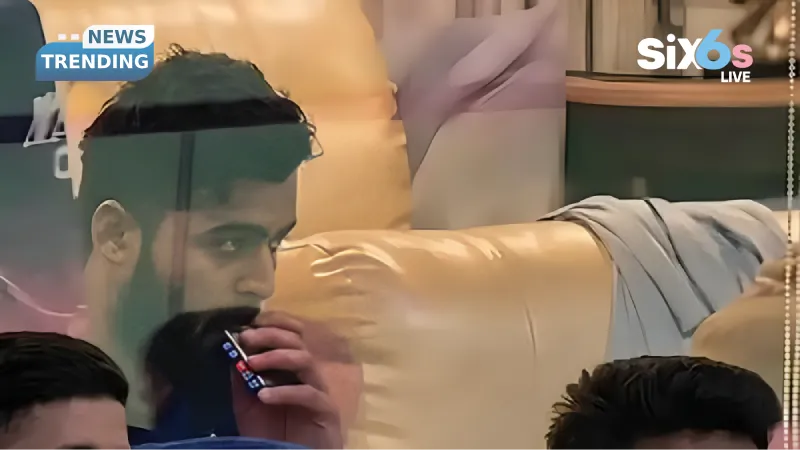
Riyan Parag was fined 25% of his match fee for vaping inside the Rajasthan Royals dressing room during a live match, and the most significant part of this story isn’t the penalty amount. It’s the clause used to impose it. Article 2.21 of the BCCI Code of Conduct is a discretionary provision, not a specific anti-vaping regulation. That gap between what the law says and what it was applied to cover is what makes this case worth examining well beyond the fine itself.
The Fine and What It Costs
The penalty was classified as a Level 1 offence under the BCCI’s player misconduct framework, which allows a fine of up to 50% of the match fee. Parag received the lower band: 25%. With his season contract reported at ₹14 crore and each match worth approximately ₹1 crore, the deduction translates to roughly ₹25 lakh for a single dressing room breach. One demerit point was also applied, and that matters more than it appears at first glance. Demerit points accumulate across a defined window, and repeat offences within that period trigger automatic suspension regardless of offence category. The financial figure drew immediate debate. Critics called it disproportionate given the absence of any explicit anti-vaping clause in the playing conditions. Supporters of the match referee’s decision argued the reverse: that a captain receiving a minimal response for a publicly visible breach would have undermined the conduct framework far more than a 25% fine ever could.
Article 2.21 Fills a Grey Zone
Article 2.21 is the clause governing conduct that brings the game into disrepute, and it functions as the code’s catch-all provision. It doesn’t list prohibited behaviours in specific terms. Instead, it empowers the match referee to act against conduct that, in their judgment, damages the league’s image or the spirit of the game even when no precise rule has been broken. Vaping inside a dressing room during a live match falls exactly into that space. There is no playing condition that names e-cigarettes. There is no dressing room behaviour standard that addresses this scenario directly. The match referee used Article 2.21 because it was the correct tool for an unlisted but clearly visible breach. The clause exists for exactly this purpose: modern cricket produces conduct situations that a rulebook written years earlier won’t have anticipated. The discretionary authority Article 2.21 provides isn’t a weakness in the code. It’s a deliberate design feature.
Captains Pay More Than Players
Parag wasn’t penalized simply as a player who broke a minor rule. He was penalized as the Rajasthan Royals captain, and that distinction is worth stating plainly. Captains carry a behavioral standard that extends beyond their own actions. They set the culture of the dressing room. They model habits that younger squad members absorb across a full season. What a captain does in a shared team space during a match shapes expectations for every player watching. A Level 1 fine for any player in this situation would be defensible. For the captain of an IPL franchise, the question isn’t just whether the minimum response is appropriate. It’s whether the minimum response is enough to mean anything. The match referee concluded that it was, but the demerit point signals clearly: a repeat offence in any format moves this from a footnote into a serious conduct record. Leadership roles in cricket don’t offer exemptions from the code. They increase accountability under it.
IPL 2026 Governance Sends a Message
The BCCI has built IPL 2026 into a global commercial product, and image management is woven directly into how it governs player conduct. Broadcast partnerships, sponsorship agreements, and the league’s international standing all depend on consistent behaviour from players on and off the field. Acting under Article 2.21 when no specific clause applies isn’t a sign of regulatory overreach. It’s a sign that the governing body refuses to let the absence of a precise rule create a loophole that any player can exploit. Discussions reportedly underway about expanding the conduct framework to include explicit dressing room behaviour standards suggest this incident has already prompted an internal review. If those revisions arrive, Parag’s case will have been the trigger. This isn’t just a fine. It’s the reason a future rule gets written.
Cricket never stops, and neither do we. Follow Six6slive for the latest news, in-depth features, and exciting updates from the world of cricket. Dive into the action now!