
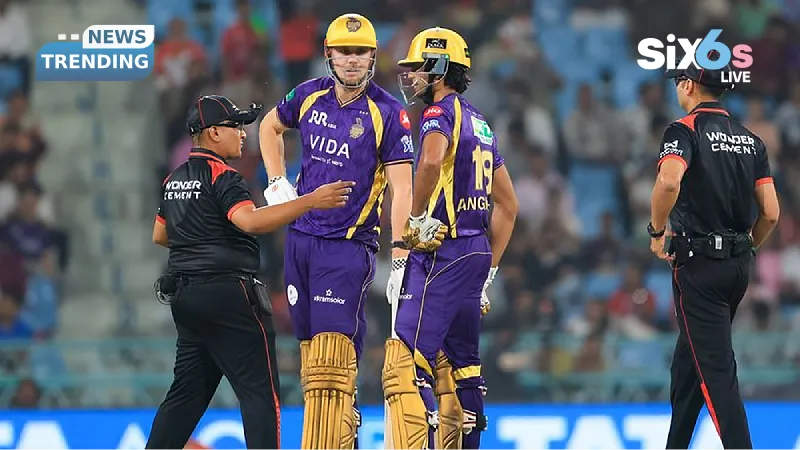
The MCC has backed the third umpire’s decision, and the reasoning removes almost every argument the controversy tried to make. Raghuvanshi’s dismissal wasn’t complicated once you understand what Law 37 actually measures. The law doesn’t ask whether the batter would have been run out. It asks whether his movement deliberately placed him in the path of a legitimate fielding attempt. On that question, the evidence was visible, the standard was clear, and the decision was correct.
What MCC Law 37 Actually Says
Law 37, maintained by the Marylebone Cricket Club as the global authority on cricket’s rules, defines obstruction as any wilful attempt by a batter to obstruct or distract the fielding side. The operative word is wilful. Wilful doesn’t require the batter to have planned the obstruction in advance. It requires only that the movement causing the interference was avoidable at the moment it occurred. The third umpire assesses whether a more direct and natural return path was available to the batter. If one existed and the batter chose a different route, the obstruction qualifies as wilful by definition. That framework is what makes Law 37 applicable across a wide range of situations. Raghuvanshi had a direct path available when he turned back. His running line told a different story, and Law 37 responded accordingly.
The Running Path That Sealed It
The moment that ended the debate happened mid-pitch. Raghuvanshi was sent back when he was already committed to a run. His natural return should have kept him on the side of the pitch he had been running along. Instead, his route shifted across the batting crease and directly into the trajectory of the incoming throw. Whether that throw would have hit the stumps without his presence is legally irrelevant. The fielding side had the right to complete that attempt without a batter crossing the line between ball and stumps. Raghuvanshi’s adjusted path did exactly that. The third umpire reviewed the angle, identified the deviation from a natural return route, and confirmed the obstruction. This wasn’t a marginal call requiring creative interpretation. It was a straightforward application of a law that exists because mid-pitch running lines can either protect or disrupt a fielding effort, and that distinction matters at every level of the game.
Intent Beats Outcome Every Time
Most of the post-match debate following the KKR vs LSG dismissal focused entirely on the wrong question. Commentators asked whether Raghuvanshi would have made his ground safely. That question doesn’t appear anywhere in Law 37. The law is structured around the fielding side’s right to complete a throw attempt without interference. If a batter’s path avoidably disrupts that attempt, the dismissal stands regardless of whether the throw was accurate, whether the wicketkeeper was in position, or whether the batter was going to be safe. This design prevents batters from running angles that technically avoid the ball while making a clean take impossible. Elite cricket holds this interpretation consistently across all formats. The MCC backing this decision didn’t create a new standard. It confirmed the standard that has always applied and that Raghuvanshi’s running crossed on this specific occasion.
IPL 2026 Dismissal Changes Running Standards
Dismissals like this one recalibrate technical expectations across the whole tournament. Running between the wickets under pressure demands three things: clear communication before the ball is played, commitment to a chosen path before the fielder receives the ball, and awareness of where throws arrive when turning back mid-pitch. When all three break down simultaneously, a batter ends up exactly where Raghuvanshi found himself. IPL 2026 moves fast enough that hesitation during mid-pitch moments creates dangerous running lines almost by default. Teams across the tournament now have a very specific and very concrete teaching moment available to them. Coaches will revisit running protocols with this case in front of them, and running lines will be drilled as technical skills rather than treated as purely instinctive decisions.
Cricket never stops, and neither do we. Follow Six6slive for the latest news, in-depth features, and exciting updates from the world of cricket. Dive into the action now!