
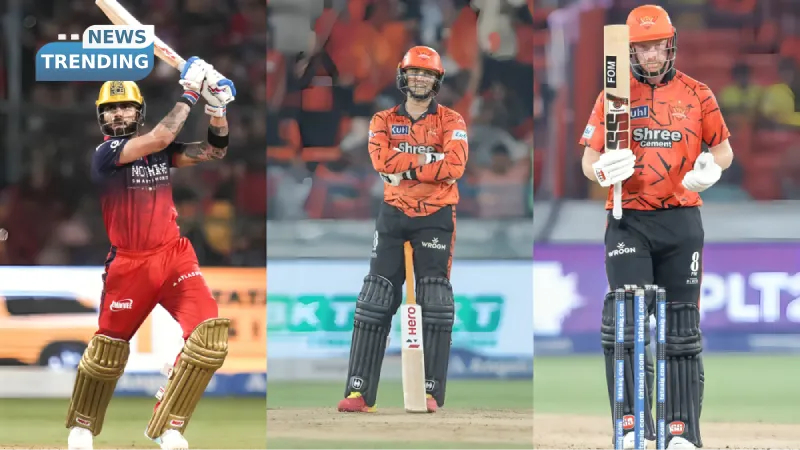
Eight runs. That’s all that separates the top three batters in the run-scoring charts right now. Virat Kohli sits at 328. Abhishek Sharma is five runs behind at 323. Heinrich Klaasen trails by just three more at 320. All three have batted seven innings. All three are averaging above 53. This isn’t a race with a clear leader pulling away; it’s three world-class batters locked in a contest so tight that one innings decides everything. On the bowling side, Anshul Kamboj holds the Purple Cap with 14 wickets, but the gap behind him is equally narrow.
Eight Runs Split the Top Three
Kohli’s 328 runs across seven innings at an average of 54.66 reflect exactly the kind of consistent, high-output batting that typically dominates an Orange Cap race by mid-tournament. The difference this season is that two SRH batters are matching his delivery for delivery.
Abhishek Sharma’s 323 runs at 53.83 continue the transformation from powerplay aggressor to full-innings match winner that defined his century against Delhi Capitals. Klaasen at 320 and 53.33 completes a top three where no batter has blinked despite the scoreboard pressure of knowing the other two are just one big knock away from leapfrogging them. One innings from any of these three and the entire leaderboard reshuffles. That’s what makes this the most compelling individual race in the tournament right now.
Kamboj Leads a Congested Pack
Anshul Kamboj’s 14 wickets from seven innings at an average of 15.78 give him the Purple Cap lead, but nothing about that position feels comfortable. Prince Yadav of Lucknow Super Giants sits one wicket behind at 13, averaging 16.76 across the same number of innings. Eshan Malinga of SRH completes the top three at 12 wickets and an average of 18.08.
Two wickets separate the leader from third place. In a tournament where a single good spell produces three or four wickets in one evening, the Purple Cap could change hands three times in a single matchday. Kamboj’s current lead is real, but it requires no dramatic performance to disappear.
Strike Rates Separate These Batters
The Orange Cap table looks almost identical across the top three in terms of runs and averages. What separates them tactically is the approach. Kohli builds innings through placement and rotation and accelerates late. Abhishek imposes himself earlier in the innings and sustains that pressure across all 20 overs. Klaasen hits boundaries in clusters that inflate totals rapidly once he finds his range.
| Rank | Player | Team | Runs | Innings | Average |
| 1 | Virat Kohli | RCB | 328 | 7 | 54.66 |
| 2 | Abhishek Sharma | SRH | 323 | 7 | 53.83 |
| 3 | Heinrich Klaasen | SRH | 320 | 7 | 53.33 |
Three different methods producing almost identical outputs across seven innings each is a genuinely unusual situation. It means the batter who adapts best to the specific conditions of the next few matches, rather than the one with the superior technique in isolation, is most likely to pull clear of the others before the playoffs arrive.
IPL 2026 Purple Cap Gets Tighter
IPL 2026’s bowling race is following the same pattern as the batting charts a small cluster at the top separated by margins that one spell can erase completely. Kamboj, Yadav, and Malinga are all taking wickets consistently rather than delivering one or two exceptional performances surrounded by quiet matches.
| Rank | Player | Team | Wickets | Innings | Average |
| 1 | Anshul Kamboj | CSK | 14 | 7 | 15.78 |
| 2 | Prince Yadav | LSG | 13 | 7 | 16.76 |
| 3 | Eshan Malinga | SRH | 12 | 7 | 18.08 |
That consistency is what keeps all three credible Purple Cap contenders rather than one dominant bowler and two chasers. The team that faces Yadav or Malinga on a surface suiting their style in the next round could easily watch both leapfrog Kamboj before the week is out.
Cricket never stops, and neither do we. Follow Six6slive for the latest news, in-depth features, and exciting updates from the world of cricket. Dive into the action now!