
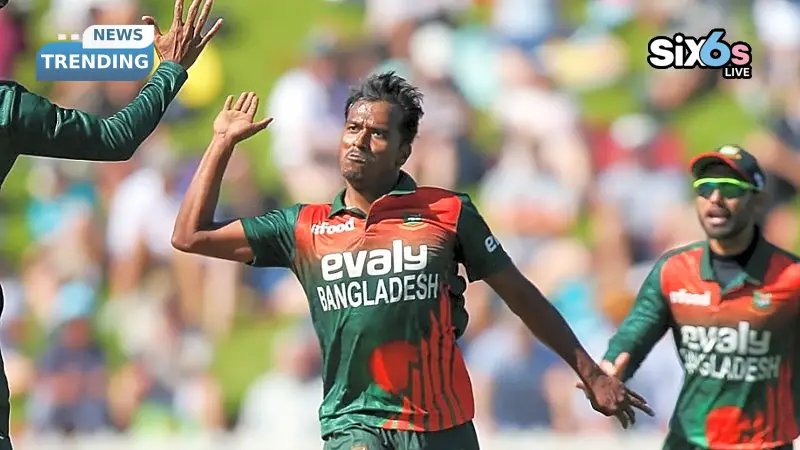
Bangladesh doesn’t always pause to mark the end of a career properly. Players retire announcements are made, and the next squad is named before the ink dries. What happened at Sher-e-Bangla National Cricket Stadium before the New Zealand ODI was different. A formal ceremony, a commemorative jersey presented by Tamim Iqbal, teammates, and officials gathered with genuine warmth, and a player walking onto the field with his son beside him. The BCB chose to do this right, and what that gesture meant extended well beyond one afternoon’s celebration.
A Send-Off Bangladesh Cricket Rarely Sees
The BCB’s decision to organise a structured farewell ceremony broke from a pattern that has quietly disappointed fans and players for years. Many cricketers who served Bangladesh across formats and conditions have retired without any formal acknowledgment, no ceremony, no moment of recognition, just a quiet exit from the international stage.
This time was different. The presentation at Sher-e-Bangla carried a deliberate intention to say clearly that contribution matters, that service across 27 Tests, 104 ODIs, and 28 T20 Internationals does not simply fade into a database entry. For future players watching that ceremony, the message was equally clear. Playing for Bangladesh, working through the difficult phases, delivering when asked, those things will be seen and remembered.
Setting that precedent matters as much as the tribute itself. It signals a shift in how the board values its players beyond their active years, and it creates an expectation that deserving careers will be honoured rather than allowed to disappear quietly.
The Rubel Hossain Numbers That Mattered
193 international wickets across three formats is a career total that deserves proper context. Rubel Hossain operated in the phases that expose bowlers most sharply, powerplays where batters attack from ball one, and death overs where margins for error are essentially zero. Bowling in those phases across a decade of international cricket requires more than pace. It requires composure under sustained pressure and the ability to execute specific plans when the match is already in the balance.
His 104 ODI appearances placed him among the most experienced pace bowlers Bangladesh has produced. Throughout those appearances, he shared the new ball and the death over responsibilities during a period when Bangladesh’s pace resources were developing, and the pipeline behind him was thin. That supporting role rarely earned him headlines, but it kept Bangladesh competitive in phases that frequently decide limited-overs matches.
One World Cup Spell Defined Everything
The 2015 ICC Cricket World Cup match against England remains the clearest illustration of what made him valuable under pressure. Two wickets in consecutive deliveries at a moment when the match could have gone either way, not just wickets, but the right wickets at the right time. That spell required a plan, the composure to execute it in a World Cup knockout context, and the technical precision to dismiss quality batters when everything was on the line.
Bangladesh won that match and progressed. The celebrating fans who flooded the streets that night probably felt only the result. Players and coaches knew exactly which delivery changed the equation. Spells like that don’t appear in career averages in a way that captures their true weight, but they live in the memory of everyone who watched them.
That moment alone would have been enough to earn recognition. The full career built around it made the farewell at Sher-e-Bangla entirely justified.
A Farewell That Went Beyond Cricket
Walking onto the field with his son transformed a retirement ceremony into something more personal and more lasting. It placed a cricket career inside a life, showing that the years spent travelling, preparing, and performing were part of a bigger story that a family shared. His acknowledgment of mentor Sarwar Imran pointed back to the grassroots system that produced him, reminding anyone watching that international careers begin long before the first cap and involve many more people than the player whose name appears on the scorecard.
The emotional weight of that moment carried a message about Bangladesh cricket’s future as much as its past. Young bowlers in academies and domestic cricket watching that ceremony saw a destination that goes beyond statistics. They saw a player respected, remembered, and genuinely celebrated, and that image stays with a young cricketer far longer than any coaching manual.
Cricket never stops, and neither do we. Follow Six6slive for the latest news, in-depth features, and exciting updates from the world of cricket. Dive into the action now!