
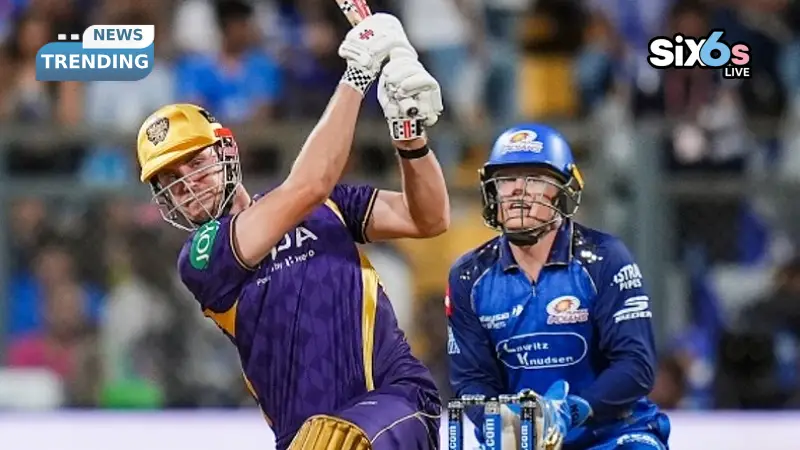
Aaron Finch has publicly suggested the issue with Cameron Green at KKR isn’t Green himself, it’s how he’s being deployed. Three innings. Three different batting positions. No fixed entry point. No defined phase ownership. No pre-innings clarity about whether he’s anchoring, rebuilding, or accelerating. Green is a class player who delivered for the Mumbai Indians in a clearly defined top-order role. At KKR, he’s being handed different instructions each match and producing the results that tactical uncertainty reliably generates. The quick 18, the run out, the low-score dismissal, these aren’t evidence of declining quality. They’re evidence of a batter who doesn’t know what this match needs from him before he walks out.
Three Innings, Three Different Batting Positions
The specific mechanism through which KKR’s selection is harming Cameron Green is positional instability. Batting at three in one match, four in the next, entering at a different match state each time, these aren’t minor adjustments. They require entirely different pre-innings preparation, different trigger movement calibration, and different shot selection thresholds. A batter who knew they were batting at three in every match would prepare their mindset and approach for that specific scenario. A batter who finds out their position based on the match situation prepares for nothing specifically and executes nothing cleanly. Green’s hesitation and reactive shot selection aren’t personality traits; they’re the output of a player making in-ball decisions that should have been made in the dressing room.
Seam Friendly Conditions Made Everything Worse
The specific match conditions that amplified Green’s technical difficulties were the rain-affected pitch against Punjab, which produced seam-friendly movement in the early overs. Batting first on a surface offering unpredictable bounce is the worst possible scenario for a batter already struggling to find rhythm; the technical issues that role uncertainty is producing are the same issues that difficult early conditions expose most visibly. Late footwork becomes later footwork. Indecisive stroke play becomes more indecisive stroke play. KKR’s decision to bat first on that surface didn’t create Green’s problems, but it maximised their visibility. A settled batter with role clarity could have navigated those conditions. Green, in his current environment, couldn’t.
Green’s IPL 2026 Price Tag Problem
The IPL 2026 auction price Green carried into the tournament converted every dismissal from a batting failure into a public verdict on his entire career value. A batter who scores 18 and gets out is having a difficult game. A batter who costs that much at auction and scores 18 and gets out is confirming the critics who said the price was too high. Both descriptions apply to the same innings. The psychological environment they create is entirely different. Price tag pressure doesn’t make good players bad. It makes the natural adjustment period that every batter entering a new franchise environment requires look like evidence of irreversible decline rather than the temporary difficulty it almost always is.
Finch Said Role Clarity Fixes Green
Aaron Finch’s specific point about Green, that the problem is deployment rather than ability, reflects what Green’s best cricket has consistently looked like. At the Mumbai Indians, a defined top-order position with clear phase ownership produced the all-round impact that justified his selection. He built innings when the match required building. He accelerated when the platform was set. He bowled his overs in phases suited to his specific type. KKR hasn’t given him the equivalent clarity. The role definition that made Mumbai’s investment in Green productive isn’t a Mumbai-specific advantage; it’s a basic selection management requirement that any franchise could provide if they chose to.
The solution KKR has available is straightforward to identify and apparently difficult to implement. Pick his batting position before the toss. Make it the same position in the next match. Give him the phase ownership that allows him to prepare specifically for what the match requires from that position. If he’s batting at three, he prepares to build against the new ball and accelerate through the powerplay transition.
Cricket never stops, and neither do we. Follow Six6slive for the latest news, in-depth features, and exciting updates from the world of cricket. Dive into the action now!