
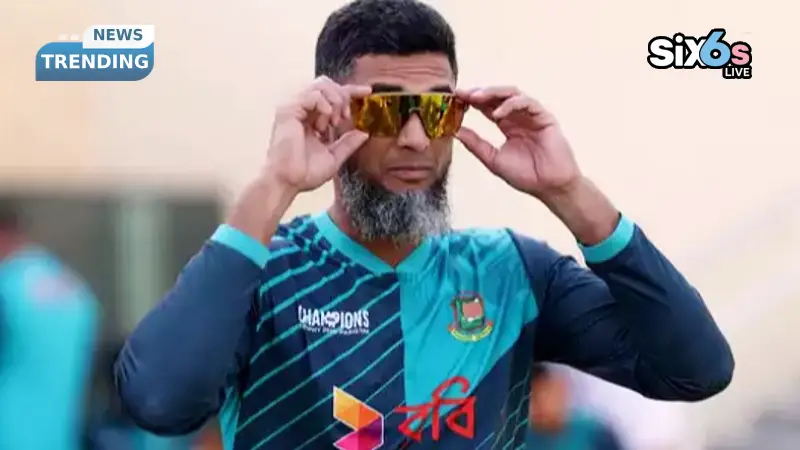
No announcement. No official title. No press conference confirming the appointment. He attended a BCB coaching course in 2025, has been working specifically with Nayeem Islam on power hitting mechanics and format transition, and is applying structured technical knowledge to player development conversations that go well beyond casual senior-player advice. The transition from Bangladesh’s most experienced finisher to Bangladesh’s next development coach is already happening. The official paperwork is the only thing missing.
The Coaching Course Nobody Talked About
The BCB-organised coaching course he completed in 2025 is the specific detail that separates his coaching trajectory from the typical former-player gives advice arrangement that most international cricketers fall into after retirement. Completing a structured coaching education programme means he has studied frameworks for player development, communication methods for technical instruction, and the pedagogical principles behind translating playing experience into teachable knowledge.
Most former players coach from instinct; they know what worked for them and communicate it based on feel. He is building the formal foundation that allows him to understand why it worked, which means he can teach it to players whose physical profiles and learning styles differ from his own.
His Nayeem Islam Mentorship Says Everything
The specific content of Mahmudullah’s work with Nayeem Islam reveals his coaching philosophy more clearly than any general statement about his future plans could. He’s not giving generic senior-player advice about mindset or experience. He’s addressing body positioning during power hitting, specifically keeping weight slightly back to generate leverage rather than committing forward before the ball’s full trajectory is known.
That technical specificity, the kind that comes from thousands of hours of personal practice under pressure, plus the formal coaching education to articulate the mechanics, is what separates a mentor from a coach. Nayeem Islam’s batting improvement in the power-hitting phase reflects the direct impact of that technical input.
Mahmudullah’s Finisher Experience Nobody Else Has
The specific coaching value that he brings to Bangladesh’s development system that no currently available coaching option replicates is his personal library of high-pressure finishing experience. Batting at six or seven in Test matches, ODIs, and T20Is for over fifteen years, managing death overs, reading field placements under scoreboard pressure, and accelerating when the required rate has climbed past comfortable, he has experienced the specific scenarios that Bangladesh’s emerging middle-order batters must learn to navigate.
Coaching finishing isn’t about teaching a skill set in isolation. It’s about teaching the decision-making framework that determines which skill to apply in which specific match situation. He can teach that framework because he built it through repetition across every format at the international level.
Bangladesh Desperately Needs What he Knows
The specific gap in Bangladesh’s batting development that his coaching profile directly addresses is finishing, the ability to convert a reasonable match position into a competitive total or a competitive chase into a win. Bangladesh’s top-order batting has developed considerably over the last decade. The middle-order finishing function, the specific skill of arriving at six or seven with a required rate that demands immediate acceleration and delivering it, has remained the point where matches slip away.
The knowledge required to develop that function in emerging players exists within his playing career. Transferring it into a formal development programme requires the coaching framework he’s currently building.
When the Official Role Finally Arrives
The progression toward an official coaching role follows the logical sequence that successful coaching transitions require. Mentoring current players develops their communication approach and identifies which technical concepts they can transfer effectively. The formal coaching education provides the pedagogical framework. Continued domestic involvement keeps him current with modern batting demands. The sequence points toward a phased transition, specialist batting consultant role initially, likely working with middle-order and finishing specialists, before a more comprehensive coaching position becomes appropriate.
The BCB’s interest in transitioning experienced ex-players into the coaching pipeline creates the structural opportunity. Mahmudullah’s preparation creates personal readiness. Both are converging toward the same outcome.
Cricket never stops, and neither do we. Follow Six6slive for the latest news, in-depth features, and exciting updates from the world of cricket. Dive into the action now!