
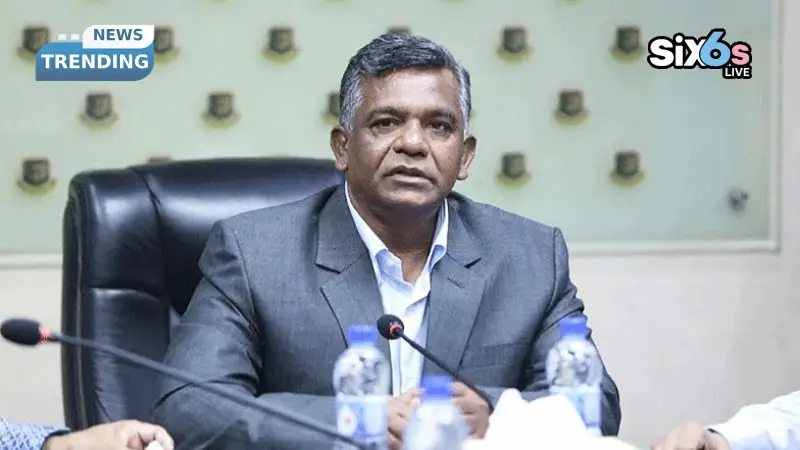
The Bangladesh Cricket Board’s investigation report has been submitted. Election malpractice allegations have been formally raised. Multiple directors have resigned. Tamim Iqbal withdrew from the election race after raising specific governance concerns. Every pressure point that typically produces a leadership change in cricket administration has materialised simultaneously. Aminul Islam has publicly declared he will remain in his position regardless. That declaration, made in the context of a submitted investigation report and growing internal fractures, isn’t just a personal decision. It’s the specific choice that converts a governance dispute into a prolonged institutional crisis with no visible resolution pathway.
Refusing to Resign While Everything Burns
The specific dynamic that makes Aminul Islam’s refusal to step aside consequential rather than merely defiant is what it signals about the board’s governance culture. Leadership figures who maintain their position under sustained pressure from multiple directions, internal director resignations, external allegations, and formal investigation are either confident in their administrative legitimacy or calculating that the alternative is worse. His public stance suggests the former.
The risk is that sustained resistance without resolution generates the kind of prolonged uncertainty that administrative bodies cannot function effectively within. Decisions get delayed. Factions form around different outcomes. Strategic priorities become secondary to internal positioning. BCB’s operational effectiveness is already diminished by this process.
The Election That Started All This
The October board elections are the specific trigger for the current crisis rather than its root cause. The dispute about how councillor nominations were collected, specifically whether involvement with ad-hoc committees in local cricket administration constituted procedural participation or inappropriate influence, is the technical question the investigation report was commissioned to answer. Aminul’s position is that his involvement was procedural and limited. Tamim Iqbal’s withdrawal from the election race after raising concerns added public weight to the allegation that something beyond procedure had occurred. The investigation report’s findings on this specific question determine whether the election process had systemic flaws or whether the concerns reflected a misunderstanding of procedural boundaries.
BCB 2026 Fracturing Through Director Resignations
The pattern of director exits from the board structure is the governance indicator that most clearly reveals the depth of the crisis beyond the Aminul Islam headline. Individual resignations happen in every administrative body. Multiple directors leaving within a compressed period signals something categorically different, a breakdown in the internal consensus that allows governance bodies to function. When directors conclude that remaining on the board is less productive than departing from it, they’re making a judgment that the governance environment is fundamentally compromised rather than temporarily difficult.
Bangladesh Suffers When BCB Governance Collapses
Bangladesh’s cricket programme operates within a governance structure that determines selection policies, domestic league management, international scheduling coordination, and player development investment. When the governance structure is consumed by internal conflict, all of those functions degrade, not dramatically in the short term but steadily as decisions get delayed, accountability becomes unclear, and the administrative attention required to manage a national cricket programme gets redirected toward managing the internal crisis. Bangladesh’s absence from major ICC tournaments has already raised preparation and coordination concerns that stable governance would address systematically.
What the Investigation Report Decides Next
The BCB investigation report is the specific mechanism that either resolves the current crisis or intensifies it. If the findings support Aminul’s position that his election involvement was procedural and within acceptable boundaries, the pressure for his resignation loses its primary justification, and the crisis enters a different phase where internal board unity becomes the question rather than leadership legitimacy.
If the findings identify systemic flaws in how the election process was managed, specifically whether ad-hoc committee involvement constituted inappropriate influence, the pressure for structural reform intensifies regardless of whether Aminul remains or departs. The report’s findings determine which version of the next chapter begins.
Cricket never stops, and neither do we. Follow Six6slive for the latest news, in-depth features, and exciting updates from the world of cricket. Dive into the action now!