
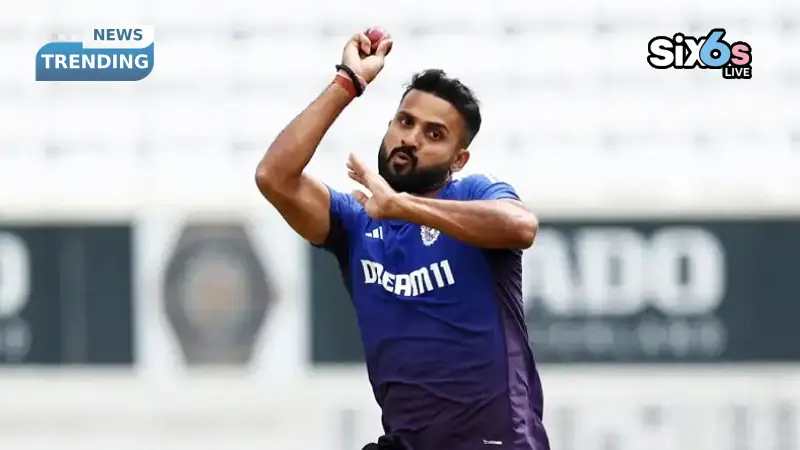
Kolkata Knight Riders were already managing a thin pace unit before this news arrived. Harshit Rana’s likely absence had already removed their most reliable Indian seamer. Now Akash Deep is out too. KKR is heading into their campaign with a pace department that has lost two of its most important Indian options before the first match is played. Fourteen IPL matches and 10 wickets do not describe a match-winner. It describes a squad player who covers gaps, manages workloads, and gives the captain an option when the frontline bowlers need a rest over. Losing that kind of player during an already fragile build-up does not just hurt the bowling; it forces every other decision in the XI to compensate.
KKR was Already Short Before This
The Harshit Rana situation was the first warning. KKR’s Indian pace options were already stretched before Akash Deep’s injury confirmed the second problem. In T20 cricket, the value of reliable Indian seamers is partly statistical and partly structural. They free up overseas slots for batting or specialist bowling reinforcement, they bowl in phases without the workload concerns that apply to foreign players across a long tournament, and they provide the captain with flexibility to rotate without disrupting the overseas combination. KKR has lost both their primary and secondary Indian pace options. What remains is a group of less experienced domestic bowlers who have not yet demonstrated they can hold their lines consistently across a full IPL campaign.
The IPL 2026 Overseas Slot Dilemma
IPL 2026 has now forced KKR into a combination problem they did not plan for. With two Indian seamers unavailable, the franchise faces a binary choice that has no clean answer. Option one: bring in an additional overseas pacer to fill the bowling gap. That reduces batting depth and limits the number of overseas batters or all-round options they can field simultaneously. Option two: promote domestic pace bowlers into the XI and absorb the inconsistency risk that comes with inexperienced seamers facing quality batting lineups. Neither solution replicates what Akash Deep and Harshit Rana provide, a dependable Indian pace that allows the overseas slots to be allocated purely on quality rather than positional necessity.
What His 10 Wickets Actually Meant
Akash Deep’s record of 10 wickets from 14 IPL matches is modest by star performer standards and important by squad player standards. The distinction matters for how KKR must now think about replacing him. He was not a bowler who changed matches on his own. He was a bowler who held an end while the frontline options were rested, bowled the difficult overs in the middle phase when conditions were neither new-ball friendly nor death-over specific, and did so at an economy that did not accelerate the match against KKR. That role, unglamorous, consistent, and necessary, is harder to replace than a high-impact specialist because no one thinks about it until it disappears. KKR is now thinking about it.
Wankhede Punishes Thin Pace Attacks
KKR’s away fixtures at venues like Wankhede expose the bowling gap most severely. High-scoring surfaces where batting lineups can attack from ball one demand pace bowling variety, different angles, different lengths, and different speeds to prevent opposition openers from settling into patterns. A thin pace attack with limited Indian options means KKR’s captain cannot rotate freely. He must commit his best bowlers to difficult overs because the alternatives are too inexperienced to be trusted in high-pressure phases. On flat Wankhede surfaces, that restriction does not just reduce wicket-taking opportunities; it increases run rates across the entire innings as batters identify the weaker options and target them.
KKR has a bowling problem that was serious before this news and is now structural. The franchise has the batting talent to post competitive totals, but in a tournament where close matches are decided in the final three overs, bowling depth is the difference between winning and losing those margins. Right now, KKR does not have enough of it.
Cricket never stops, and neither do we. Follow Six6slive for the latest news, in-depth features, and exciting updates from the world of cricket. Dive into the action now!