
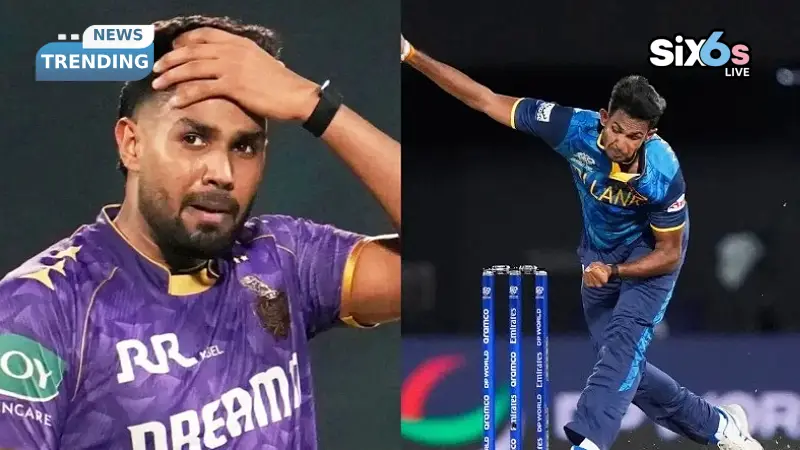
Harshit Rana took 19 wickets in IPL 2024 and 15 wickets in IPL 2025, two seasons of consistent returns that established him as KKR’s primary Indian pace option. Matheesha Pathirana’s sling-arm action in the death overs was the specific bowling threat that no domestic replacement can replicate. Both are unavailable for the tournament’s opening phase. KKR’s response is not to replace either of them. Vaibhav Arora, Umran Malik, Kartik Tyagi, Akash Deep, and the recently signed Blessing Muzarabani represent the pace resources available. The franchise’s position is that those five options provide enough depth to manage both absences without adding further squad disruption.
Why Existing Depth Makes Replacement Logic Complicated
Replacing Rana with another Indian fast bowler requires finding a seamer of equivalent potential in a mid-season market where the available options have already been passed over during the auction. The franchise assesses that Vaibhav Arora’s powerplay control, Umran Malik’s raw pace, and the rotation options provided by Tyagi and Akash Deep collectively cover the phase workloads Rana would have handled across the tournament.
That distribution strategy, spreading Rana’s overs across multiple bowlers rather than replicating them with one like-for-like signing, reduces individual workload pressure while maintaining bowling variety across different match situations. A single replacement seamer asked to bowl Rana’s four overs every match carries more pressure than four seamers rotating two overs each, depending on conditions.
How Pathirana’s Potential Return Changes the Calculation
Pathirana’s injury is temporary rather than season-ending; KKR’s team management expects him to return if recovery progresses on the current timeline. That uncertainty makes signing a replacement overseas pacer tactically counterproductive. The overseas allocation allows four players in the playing XI simultaneously. KKR currently deploys Cameron Green, Rahmanullah Gurbaz, and potentially Muzarabani across batting, wicketkeeping, and pace departments. Adding a replacement overseas seamer means either displacing one of those three or carrying a player who cannot feature in the optimal XI until Pathirana’s slot becomes available.
If Pathirana returns midway through the tournament, a replacement signing creates the specific problem of two overseas seamers competing for one slot, a selection dilemma that weakens rather than strengthens the squad balance KKR are trying to maintain.
Why IPL 2026 Overseas Slots Make Replacement Signings Complicated
The IPL 2026 overseas allocation is the structural reason KKR’s no-replacement decision makes tactical sense beyond the squad depth argument. Four overseas players in the XI means every overseas signing competes with existing players for the same limited slots. Muzarabani’s height and bounce on surfaces where extra carry creates tactical advantages give KKR an overseas pace option that addresses one vacancy already.
The franchise’s implicit assessment is that Muzarabani plus the four Indian seamers provides a bowling unit capable of maintaining the combination balance KKR need across 14 league matches without the disruption of integrating another new signing mid-tournament.
What the Real Test Looks Like
The no-replacement decision is validated or disproven across KKR’s first four matches, away at Wankhede against the Mumbai Indians, then three home games at Eden Gardens. If the pace rotation manages those fixtures without the bowling attack becoming predictable or over-reliant on individual seamers, the strategy works. If the absence of Rana’s consistency and Pathirana’s uniqueness becomes visible in the economy rates and wicket tallies across those four matches, the franchise will face the question of whether the no-replacement position was correct before the tournament has properly begun.
Cricket never stops, and neither do we. Follow Six6slive for the latest news, in-depth features, and exciting updates from the world of cricket. Dive into the action now!