
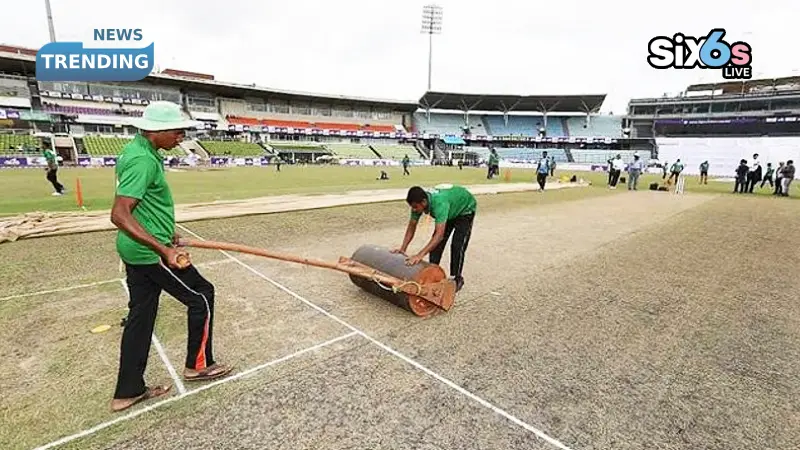
Pakistan head coach Mike Hesson has seen the Sher-e-Bangla surface, and he likes what he sees: more grass cover than previous tours, a healthier square, and the possibility of a pitch that offers genuine contest between bat and ball rather than the spin-dominated surfaces that have drawn criticism in previous Dhaka series. His specific expectation is a “sporting wicket.” For a venue that has historically produced conditions favouring the home side’s spin attack, that assessment is worth taking seriously, and it changes the tactical picture for both teams significantly.
Why Grass Cover Changes Everything at Mirpur
Sher-e-Bangla pitches have historically been criticised for two things: excessive spin assistance and inconsistent bounce. Both problems stem from the same source: surfaces prepared with minimal grass cover that dry quickly, crack early, and turn sharply from the first innings onwards.
Hesson’s observation that the current square looks healthier than before suggests curators have deliberately changed their preparation approach. Additional grass cover stabilises the pitch structure, reduces early cracking, and, crucially, gives seam bowlers something to work with in the first fifteen overs. On a traditional Mirpur surface, Pakistan’s pace attack becomes largely irrelevant after the powerplay. On a grassier surface, they remain a factor through the middle overs.
What Bangladesh vs Pakistan Tactics Look Like on This Surface
The tactical implications of a genuine Bangladesh vs Pakistan contest on this surface cut both ways. Pakistan’s pace attack, disciplined, varied, and experienced in Asian conditions, gains relevance it rarely has in Dhaka. If the grass holds through match day, their seamers can operate effectively into overs fifteen and beyond rather than handing over completely to spin after the powerplay.
Bangladesh’s adjustment is more complex. Their spin-heavy bowling strategy is built around Mirpur conditions working in their favour. A surface that reduces spin dominance forces them to rely more heavily on their pace options, Taskin Ahmed primarily, in phases where they would normally deploy slow bowlers. That is a less comfortable position for Bangladesh’s bowling unit to operate from, regardless of home advantage.
How Mirpur Pitches Typically Behave in ODIs
Historical ODI data at Sher-e-Bangla tells a consistent story. Teams batting first average significantly lower in the second half of their innings as the surface slows and the turn increases. Captains have preferred to bowl first at this venue in recent years, assessing conditions before setting a chase rather than defending a total on a surface that becomes progressively harder to bat on.
First innings scores at Mirpur in ODIs have typically settled between 220 and 260 on spinning surfaces. If Hesson’s assessment is correct and the surface plays more evenly, those benchmarks shift upward. Both batting lineups would be operating with more freedom, which changes risk calculations at the top of the order and in the middle overs.
Why Bangladesh’s Home Advantage Still Stands
A better surface doesn’t eliminate Bangladesh’s familiarity advantage. They have batted, trained, and played at Sher-e-Bangla across formats for years. Their batters know the dimensions, the outfield pace, and the visual background. Their spinners know exactly how to use whatever turn the surface offers, even if it’s less than usual.
Hesson’s optimism about the pitch is genuine, but Pakistan will still need to execute under conditions that suit the home side more than any international venue Pakistan regularly visits. The grass cover may level the playing field slightly. It won’t tilt it.
Stay updated on the latest cricket news and exciting updates at Six6slive. Dive into our in-depth articles and analyses to connect with the action today!