
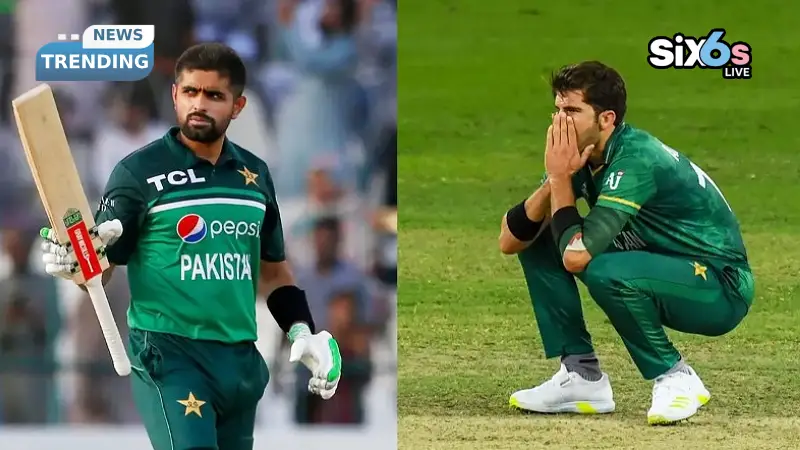
Babar Azam is out. Shaheen Afridi is the captain. Several uncapped players have been handed their first ODI call-ups. This is not a squad announcement, it is a statement of intent. Pakistan’s selectors have chosen to use the Bangladesh series to ask hard questions about who actually belongs in this team going forward, and they have done it by making the most uncomfortable decision available to them. What follows over three ODIs in Dhaka will tell us a great deal about where Pakistan white ball cricket is genuinely headed.
Dropping Babar Sends a Clear Message
Omitting Babar Azam from an ODI squad is not a minor rotation decision. It is a structural signal. Whatever the selectors communicate publicly, the underlying message is straightforward: recent form and accountability now matter more than reputation and historical achievement.
From a tactical standpoint, the move opens the middle order to experimentation. Pakistan have repeatedly struggled against spin focused attacks in subcontinental conditions, and a more dynamic No. 3 and No. 4 pairing built around strike rotation rather than anchor accumulation could serve them better in Dhaka. Babar’s absence forces that conversation into practice rather than theory.
Pakistan’s ODI average score against Bangladesh across the last eight matches in Bangladesh sits at 241, a figure that reflects how difficult scoring at pace is on these surfaces. A middle order recalibrated for rotation over boundary hitting addresses that reality directly.
Youth Gets Its Chance at Last
Sahibzada Farhan’s inclusion after his T20 World Cup 2026 performances is the clearest example of a reward-for-performance pathway being activated. Players promoted from Pakistan Shaheens alongside him signal that the developmental pipeline is finally being taken seriously in the 50-over format rather than just as a T20 feeder system.
Bilateral series against Bangladesh provide exactly the right environment for this kind of testing. The opposition is competitive enough to expose genuine weaknesses, but the context is low enough stakes that a young batter learning his ODI role does not carry the weight of a knockout tournament. Three matches to prove temperament, adaptability, and composure under pressure. That is a fair audition.
Pakistan vs Bangladesh Shaheen’s Tactical Plan
Shaheen Afridi’s captaincy changes the tactical identity of this side immediately. In Pakistan vs Bangladesh series conditions, his instinct will be to attack with the new ball in the powerplay and set an aggressive tone before the pitch begins to assist spin. All three matches at Sher-e-Bangla National Cricket Stadium mean Shaheen gets three chances to establish that template on a ground he knows well.
His bowling partnership with Haris Rauf gives Pakistan a genuine pace threat at both ends. Abrar Ahmed’s variations provide the spin dimension that Dhaka surfaces reward from the middle overs onward. Mohammad Rizwan’s retention as wicketkeeper anchors the batting structure when younger players around him are still finding their ODI rhythm. The combination is deliberately balanced for surfaces that slow down and grip as the innings progress.
Why Dhaka Conditions Suit This Squad
Sher-e-Bangla surfaces traditionally reward teams that rotate strike consistently rather than wait for boundary opportunities. Pakistan’s historical approach of anchoring around one dominant batter and targeting boundaries in bursts has not served them well in Dhaka. A more modular batting lineup with floating roles and multiple strike rotators is actually better suited to these conditions than the setup they have used in recent years.
Bowling at this venue also rewards patience. Teams that control the middle overs statistically dominate scoring phases here. Pakistan’s attack, if Shaheen manages his resources smartly, has the tools to do exactly that across 50 overs.
What This Reset Actually Means
This squad is not built to win a series at all costs. It is built to answer questions the selectors have been avoiding for too long. Can Pakistan’s middle order function without Babar as the axis? Can Shaheen lead tactically as well as he bowls? Can the uncapped players handle ODI pressure in genuine match conditions?
Three games in Dhaka will not answer all of those questions definitively. But they will provide more useful information than six months of squads picked around the same fixed core, producing the same inconsistent results.
Stay updated on the latest cricket news and exciting updates at Six6slive. Dive into our in-depth articles and analyses to connect with the action today!