
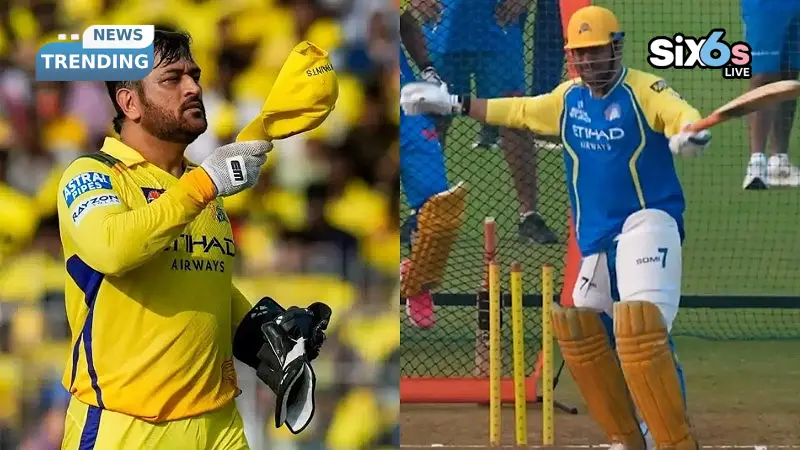
Chennai Super Kings begin their pre-season camp on March 1 with around 15 Indian players assembling at their high-performance centre, and MS Dhoni confirmed attending. With the league opener expected on March 28, that gives CSK nearly four weeks of structured preparation before a ball is bowled competitively.
Four weeks is a long time in T20 cricket. Used well, it’s an advantage. Used poorly, it’s just fitness work. The question is what Chennai plans to do with it.
Why Dhoni’s Early Presence Changes CSK’s Pre-Season Entirely
Most franchises treat pre-season as conditioning time. Chennai treats it as tactical architecture, and that distinction starts with who is in the room from day one.
Dhoni’s confirmation at the March 1 camp means death-over bowling combinations, finisher role rehearsals, and match-situation simulations get structured weeks before overseas players arrive. That’s not routine. Most captains show up when the full squad assembles. Dhoni showing up with the domestic core means the tactical framework is already set by the time international recruits land. New signings don’t redefine the system; they plug into one that’s already running.
In CSK’s last three IPL campaigns, their strongest starts came in seasons where core combinations were settled early. Their worst starts, 2022 in particular, followed chaotic pre-season windows with late squad changes. The pattern is not coincidental.
How Chennai’s Home Conditions Become an IPL 2026 Advantage
Chennai in early March is hot, humid, and unforgiving. For a franchise that plays its home games at Chepauk, one of the slowest surfaces in the IPL, that environmental familiarity is not a minor detail.
Acclimatisation on subcontinental surfaces takes time. Overseas players arriving days before the opener face that adjustment under match pressure. CSK’s Indian core, having trained at the high-performance centre through March, will have already logged weeks of work on pitches that grip and turn. Powerplay tempo decisions, middle-over rotation strategies, and fielding intensity under humidity, all of these get calibrated against the conditions they’ll actually face.
Franchises that prep in neutral locations and arrive at their home ground fresh often underperform in early fixtures. CSK’s home-based approach removes that variable entirely.
What the Phased Squad Assembly Means for Early Fixtures
The phased build-up, Indian players first, overseas players later, is partly logistical and partly strategic. International players completing global commitments in February can’t always arrive on March 1. But framing it as a disadvantage misreads how Chennai operates.
By the time overseas recruits join, the Indian core will have three weeks of match-simulated training logged. Batting combinations will be tested. Bowling phases will be mapped. The integration of foreign players into a pre-established framework is significantly smoother than building combinations from scratch with a full squad present but no shared tactical base.
If the IPL 2026 opener lands on March 28, CSK’s overseas players need roughly a week of full-squad training to be match-ready. That’s tight, but it’s workable when the domestic core has already done the heavy lifting.
Whether This Camp Translates Into Early-Season Results
Pre-season preparation doesn’t guarantee points. CSK have had structured camps before and still dropped early fixtures. What structured camps do is reduce the number of variables that cause early defeats, poor combinations, underdone fitness, and tactical misalignment.
Four weeks with Dhoni leading sessions, home conditions for acclimatisation, and a phased squad build mean CSK enter IPL 2026 with fewer unknowns than most franchises. In a competition where the top four spots are decided by margins of one or two wins across a 14-match group stage, minimising early uncertainty matters more than most analysts acknowledge.