
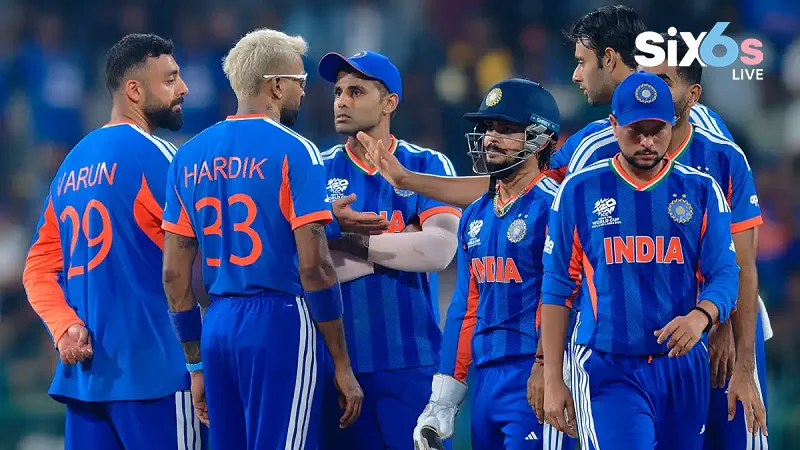
India’s sixth bowling option in the T20WC is a genuine tactical concern, not just outside noise. Despite dominant wins, questions persist around the India bowling combination at the T20WC, particularly whether five specialist bowlers are enough on flat surfaces. At the same time, shifting roles within the batting unit have intensified scrutiny over India’s role clarity and batting order decisions. When these factors combine with the inconsistent Shivam Dube bowling performance, the issue becomes structural rather than situational. If unresolved, this balance question could become decisive in knockout cricket.
The Five-Specialist Dilemma
India’s first-choice attack typically revolves around five frontline options, including Jasprit Bumrah and Varun Chakravarthy as primary threats. On responsive surfaces, that structure offers control across phases. However, on high-scoring tracks in the T20 World Cup Knockout, the margin for error narrows significantly.
The core of India’s sixth bowling option in the T20WC lies in risk management. If one frontline bowler concedes heavily or struggles with matchups, the burden shifts to the support option. In elite T20 cricket, that sixth over source must either be reliable or strategically protected. India currently appears to be navigating between a five-bowler system and a hybrid approach without fully committing to either.
This indecision fuels the ongoing India five specialist bowlers debate, especially when facing aggressive batting units capable of neutralizing even top-tier bowlers.
Why Opponents Will Target It in the T20 World Cup Knockout
Tactically, opposition teams structure innings around minimizing damage against strike bowlers and maximizing returns against perceived weak links. That is where Shivam Dube’s bowling performance becomes central to the India bowling combination conversation.
Across a limited sample in the tournament phase discussed, Dube conceded 124 runs in 9.2 overs at an economy rate exceeding 13. While he did collect wickets, the run flow is significant, particularly on flat wickets where 180-plus totals are common. In T20 cricket, conceding 15–20 extra runs in a short spell often shifts the win probability dramatically.
On batting-friendly surfaces, execution must be near perfect. Wide yorkers, slower-ball variations, and defensive lines require precision. Anything marginal becomes predictable, and predictability at the death overs stage is costly. In knockout scenarios, one over can swing momentum irreversibly.
Role Clarity and Structural Balance
The bowling debate intersects directly with India’s role clarity and batting order concerns. Frequent positional adjustments, floating middle-order batters, reactive promotions, and situational reshuffles suggest experimentation rather than settled identity.
This impacts the overall India team balance in T20 cricket. If India prioritizes eight batters for insurance, they inevitably rely more on part-time overs. If they back five specialists, the sixth option must absorb pressure overcompetently. The absence of defined batting roles complicates that equation, because team selection appears reactive to match conditions rather than strategically pre-set.
Conditions Will Decide the Risk Level
Not every pitch magnifies this issue. On slower surfaces where totals hover around 150–165, five high-quality bowlers can dictate tempo. However, in venues where boundaries are short, and powerplay scoring exceeds eight runs per over consistently, overs six through ten and sixteen through twenty become decisive.
In such conditions, the India sixth bowling option question grows louder. Batting depth offers recovery insurance, but it does not compensate for overs that leak momentum. The trade-off between depth and defensive reliability must be calibrated precisely.
India’s sixth bowling option for the T20 World Cup is manageable but only with clarity. India must either reinforce their sixth-over reliability or commit firmly to a defined structural model. Without that decisiveness, opponents will deliberately steer matches toward the perceived pressure point.
If India refine their India bowling combination and stabilizes the team balance in T20 cricket, this debate will fade. If not, one targeted over in a knockout match could determine how far their campaign goes.
Stay updated on the latest cricket news and exciting updates at Six6slive. Dive into our in-depth articles and analyses to connect with the action today!