
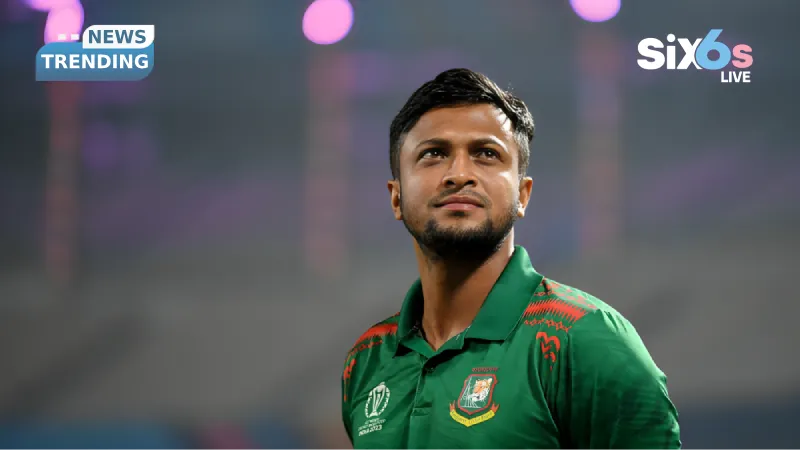
The Shakib Al Hasan saga in Bangladeshi cricket would make for an intense third act of that screenplay. He is the nation’s best all-round cricketer with a presence on the pitch far beyond the numbers he puts up; and right now Shakib is at a crossroads as to whether or not he will return to the national side after being told by the BCB that they may want to open the door to him again, and by a call from Mohammad Ashraful to target the 2027 Cricket World Cup. The talk about Shakib’s future has moved on from the debate about what lies ahead for Shakib Al Hasan to the loss that Bangladesh would suffer if he decides to retire.
The contradiction in Shakib’s case at 37 has never been sharper than it now is. He is an older, politically complicated player who can be considered a long-term fixture, with his place in the side less automatic than it was once before. Nonetheless, Shakib continues to be Bangladesh’s top ODI wicket-taker and among the game’s most consistent middle-order players.
BCB’s Calculated Gamble, Not Nostalgia
The BCB’s recent focus on Shakib Al Hasan is being portrayed cautiously and deliberately as strategic rather than emotional. Director of BCB, Asif Akbar, has stated that this is not merely an olive branch to Shakib for the disappointing performance during the Cricket World Cup. Regular communication with Shakib is ongoing. A return by Shakib is expected before the first of the March home One Day International (ODI) matches against Pakistan. In addition, there appears to be almost unanimous support from the Board for Shakib’s inclusion.
What makes this all harder to navigate is that there are many other factors involved in the decision-making process beyond just what makes sense on the field. Legal issues, security issues, and obtaining government approvals are issues that are out of the BCB’s hands; these are the very things that determine the timetable. That the BCB President has been directed to be in charge of working directly with the government emphasises how serious the desire is. This isn’t nostalgic thinking disguised as a plan; it’s simply the recognition that Bangladesh’s short-term ODI structure has no adequate replacement for Shakib’s overall contributions to the team.
Also read:- Why BCB’s Nazmul Islam Reinstatement Reopens Old Wounds in Bangladesh Cricket
Ashraful’s Long Game Vision
Ashraful’s input alters the frame completely; instead of viewing Shakib’s return as an emotional goodbye or farewell tour, Ashraful is arguing that Shakib can extend his career through selective longevity. Ashraful’s position is modern and practical; there are formats where players can continue to play with managed workloads, and potentially have a continued positive impact for years after other formats of the game have been retired.
History has shown this to be true. The ODI format has become a long-term home for many ageing, multi-format all-rounders (e.g., Dhoni in 2019, late-career Afridi). As the number of bilateral ODIs being played continues to decline, and as sports science improves and athletes get stronger and healthier over time, age is no longer a barrier for an athlete’s ability to compete at a high level. In essence, Ashraful’s position is simple, yet strong; if Shakib were to focus exclusively on the ODI format, reaching the 2027 World Cup at 38 would not be a gamble; rather, it would be a well-planned, strategic investment.
Why Bangladesh Still Needs Shakib’s ODI Brain
Remove the emotional and political elements of this debate, and it’s clear that Bangladesh has a major problem to address with regards to their future planning of their one-day team. The country has no direct comparable player to replace Shakib Al Hasan in ODI cricket; no player who can influence the game by controlling proceedings throughout the middle-overs phase. No player in left-arm spin can both defend and be aggressive on his day. And, most importantly, no player can provide tactical guidance at times when the pressure mounts.
Shakib’s most valuable asset going into 2025 is his ability to provide young players with “decision-density,” or how many decisions he makes in a game, and how they can learn from those decisions. The quicker Shakib is removed from the team, the sooner there will be a void of leaders in the team that may be perceived as an example of a smooth transition; however, it would actually represent a leadership void.
Stay updated on the latest cricket news and exciting updates at Six6slive. Dive into our in-depth articles and analyses to connect with the action today!