
International cricket has always claimed to be a game of neutrality; however, the backdoor entry of politics and geopolitical dynamics into the sport have forced it to confront the harsh realities that the scheduling of tournaments is done at the hands of administrators, but the actual contests are fought among governments, national cricket boards, and many other forces outside the ropes of the field of play.
The World Cup is at stake, but so too are precedents, pressures, and ultimately what level of autonomy smaller member Boards can truly exercise when the tournament hosting rights are held by one or more of cricket’s most powerful governing bodies.
The ICC’s Deadline Dilemma
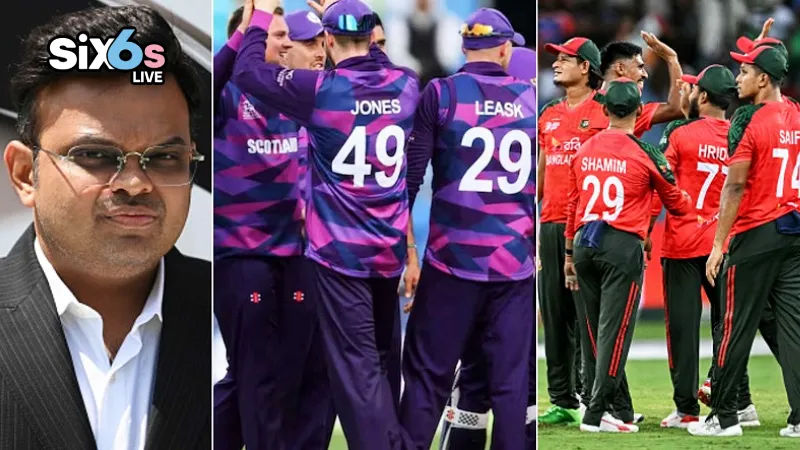
The 21st of January deadline for the ICC has a purpose as well. As we all know, the logistical aspect of a tournament can be very unforgiving. If Bangladesh withdraws from the tournament, then the next team that will qualify will be Scotland, which currently holds the position as the number one-ranked team not yet qualified. However, before they can compete in the tournament, Scotland will have to have at least 15 days of preparation time, have to make travel arrangements, and have to finalize their squad lists. This means that the ICC does not have a great deal of wiggle room when it comes to this deadline.
In attempting to fix a governance problem with a calendar, the ICC has run into a principled objection from the government of Bangladesh. In many cases, deadlines don’t resolve such issues as both sides have very different ideas about what is fair; instead, they simply allow one side to back down first.
History Offers Bangladesh Ammunition
Rather than a flourish of rhetoric, Asif Nazrul’s mention of Pakistan’s refusal to travel to India is based on prior precedent. On several occasions in previous ICC events, due to Pakistan’s concerns for its safety and security, the ICC has changed the venues to neutral sites, hybrid models, etc., in order to ensure that Pakistan would participate. The ICC had adapted at those times, stating that participation was of greater importance than adhering strictly to geographic location.
Bangladesh’s argument can be boiled down to this: If Bangladesh could accommodate a full member because of security reasons, then why would it have to negotiate in order to accommodate a reduced number of members? Of course, there is a big underlying issue. Have the rules been altered, or has the power balance of influence been altered?
At this point, Bangladesh’s stance becomes morally significant. Bangladesh is not looking for preferential treatment; Bangladesh is looking for equal treatment. The outcome of how the ICC decides on this will directly impact what smaller Boards decide about their ability to bargain with the ICC.
Group Swaps and Closed Doors
Another inconvenient fact is that after tournaments are structured as a group, individual boards will rely on a collective agreement in order to continue with their respective plans. The exchange of teams for Bangladesh has been halted by Ireland’s refusal to agree.
Global tournaments are theoretically a level playing field for all participants. Practically, every single change will have an effect on each board, broadcaster, and business contract. Therefore, Bangladesh’s lack of room to maneuver was not by accident; it is structural.
The firmness of his (Asif Nazrul) tone can be explained by this loss of procedural flexibility as well. Political resolve tends to become much harder when the procedures that give one flexibility are eliminated. The willingness of Bangladesh to take the risk of being isolated from other nations appears to be greater than its desire to appear compliant with something it feels has been imposed upon it.
Bangladesh’s unwillingness to alter its position is not brinksmanship; it is a conscious declaration of control within a structure that distributes authority unequally. The conflict is more about who has the right to make decisions when there is pressure, rather than where matches will be held.
Stay updated on the latest cricket news and exciting updates at Six6slive. Dive into our in-depth articles and analyses to connect with the action today!