
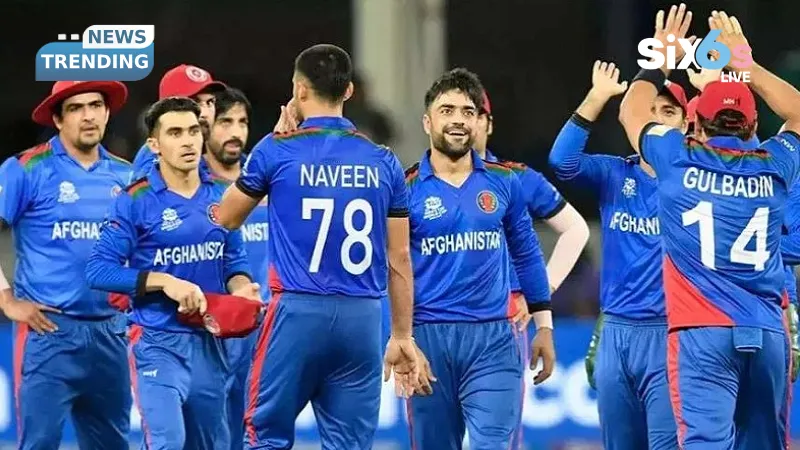
At some point in time, the T20 World Cup teams of Afghanistan were being portrayed by the media and fans as romantic underdog stories rich in talent but low in experience and always just one win from becoming legitimate. That story is over. With the selection of Rashid Khan as Captain and the balance and experience of a 15-player squad for the ICC Men’s T20 World Cup 2026, Afghanistan will no longer be asking to be considered serious contenders; they will be making that claim.
Rashid Khan’s Tactical Command Center
It is not only reasonable to assume Rashid Khan as captain of Afghanistan in Sub-Continent Conditions, which could be detrimental for opponents, but it is also possible that he will be able to devastate them. Rashid’s economy has been among the best in the world for a wrist-spinner across all Twenty20 Internationals, and his ability to bowl in the Power Play, Middle Overs, and Death provides Afghanistan with flexibility in their tactics that few other teams possess. Furthermore, Rashid has grown as a captain, and Afghanistan’s semi-final run in 2024 has demonstrated more rational decision-making regarding bowling rotations and making opponent-specific decisions.
Spin Depth That Warps Matchups
The addition of Mujeeb ur Rehman for AM Ghazanfar shows the selectors have opted for an experienced player rather than an experimental one. The combination of the pace and length that Mujeeb brings when bowling with the new ball will allow Rashid Khan and Noor Ahmad to dictate the pace of play on whatever surface they are playing on. In comparison to other teams, Afghanistan can now realistically complete 12 overs of spin on slow wickets such as Chennai or Delhi, and still maintain their wicket-taking ability.
Pace Returns Bring Balance, Not Just Speed
Naveen-ul-Haq and Fazalhaq Farooqi’s quiet returns help repair what has been Afghanistan’s biggest weakness in T20 cricket: its inability to consistently deliver over the final six overs. Naveen will be able to bowl with his injured shoulder after having recovered enough to resume bowling at awkward angles and with slower-ball variation again. Farooqi’s left arm speed creates additional variety for the Afghan team, which currently has a lot of right-handers.
Gulbadin Naib and the Value of Big-Match Nerve
While calling Gulbadin Naib a “big-match player” may seem to be from the selectors’ playbook, history is on their side when they say that Naib’s career has been based more on his ability to time everything, his timely breakthroughs, timely runs, and timely leadership. When the pressure of big tournaments forces teams into making quick decisions, Afghanistan relies on players who are comfortable with chaos, and Naib’s return suggests that Afghanistan is prioritizing knockout resilience over explosive performances in the group stage.
A Group That Punishes Hesitation
Group D is a very difficult one for the team as it includes the experience of South Africa and New Zealand, and two teams (UAE and Canada) that are unpredictable, rather than providing some breathing room. It is no coincidence that Afghanistan will be facing New Zealand first in Chennai; it is a test case. The early start is good news for Afghanistan if they can do well, because they could set the tone for the group; otherwise, a poor start would make the margin of error disappear rapidly.
The Afghanistan T20 World Cup 2026 squad isn’t exciting for the sake of being flashy. It’s intentional and aware of the conditions, as well as quietly brutal. Every single decision made in this selection process (Rashid as captain, Mujeeb back on the scene, Naveen’s gamble to be fit) shows the trust of a group in their identity. They won’t muscle their way past each team they’ll face, but they’ll outthink them all.
Stay updated on the latest cricket news and exciting updates at Six6slive. Dive into our in-depth articles and analyses to connect with the action today!