
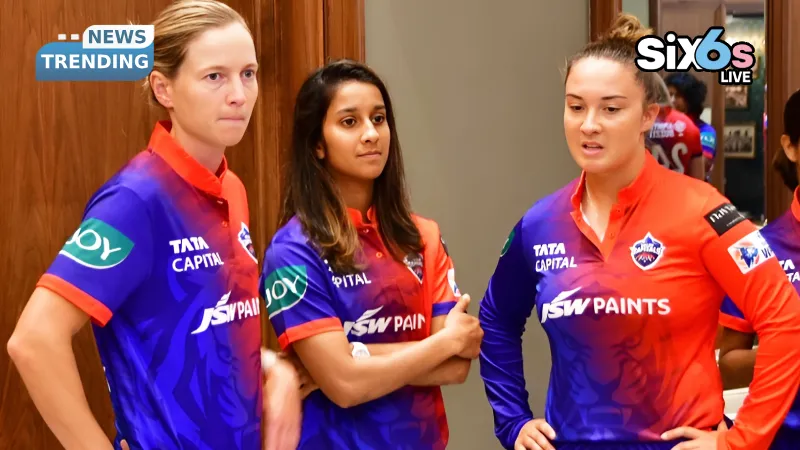
While the timing of a change in leadership in cricket may be determined by performance, it is ultimately about what a team intends to do. In this case, when Delhi Capitals decided to allow Meg Lanning to enter the WPL 2026 mega auction without any apparent fanfare, it was difficult to think of it as a break-up; it seemed more like handing over the torch. Not only did Lanning bring experience, success (including multiple championships), and credibility, but she also symbolised a circle of her kind of influence coming to an end. The gamble here appears to be much more contemporary: a connection with the current and evolving tempo of women’s T-20 cricket; a national identity; and a captain who will be the first from within the franchise ecosystem to assume that role.
From Iconic Outsider to Organic Insider
While Meg Lanning is an example of a successful “imported” Captain in T20 cricket (and specifically for the Delhi Capitals) in terms of her authority to lead immediately upon joining the team, the same cannot be said for Jemimah Rodrigues as a leader in the same context. Jemimah represents the alternative model of a homegrown, franchise-formed, and emotionally attached player/leader; she was the first-ever auction buy by Delhi Capitals in 2023 and their first player retained before the next cycle, a symbolic act that today looks like a plan to succeed Lanning when she leaves.
This is an emerging trend in T20 leagues where franchises are increasingly using Captains as cultural ambassadors rather than short-term leaders. Examples of this include Harmanpreet Kaur being backed by the Mumbai Indians, and the Chennai Super Kings’ long-standing faith in MS Dhoni, who has players who understand both match-specific conditions and the rhythm of the dressing room.
Indian Captaincy as Strategic Capital
Parth Jindal’s “We want an Indian captain” was not a casual remark. With the annual rotation of foreign superstars (due to international commitments) within this league, having an Indian captain would provide the ability for that team to maintain both a tactical continuum and stable commerce. This would allow players such as Laura Wolvaardt, Annabel Sutherland, and Marizanne Kapp to focus solely on their individual performances rather than worrying about the leadership burden.
Additionally, historically, franchise leagues have shown that teams that have a domestically based captain tend to last longer. Domestic captains can rapidly adjust to local conditions; they can handle player turnover much more smoothly, and they are able to be more resilient during transitional phases.
Numbers That Justify the Armband
While Delhi Capitals was unable to retain Lanning and her departure to the UP Warriorz for a fee of INR 1.9 crore will never be able to restore the nostalgic feelings that were being experienced; DC have moved from a nostalgic model to one that will focus on long term development over short term investment in the form of the four internationals who have been retained for INR 2.2 crores each and the U-19 World Cup winning captain Niki Prasad for INR 60 lakhs.
By making this choice, the franchise is wagering that in today’s women’s game, the way one leads is no longer based on past achievements (legacy) but rather is aligned with the player’s own identity as well as the identity of the franchise, and its vision for the future. The true test will not be if Jemimah Rodrigues wins right away. Rather, it will be if she can lead the Delhi Capitals to be a more cohesive and adaptable team going forward. And if her World Cup poise is any indication of what may lie ahead, this could very well be the start of DC’s most stable time ever.
Stay updated on the latest cricket news and exciting updates at Six6slive. Dive into our in-depth articles and analyses to connect with the action today!