
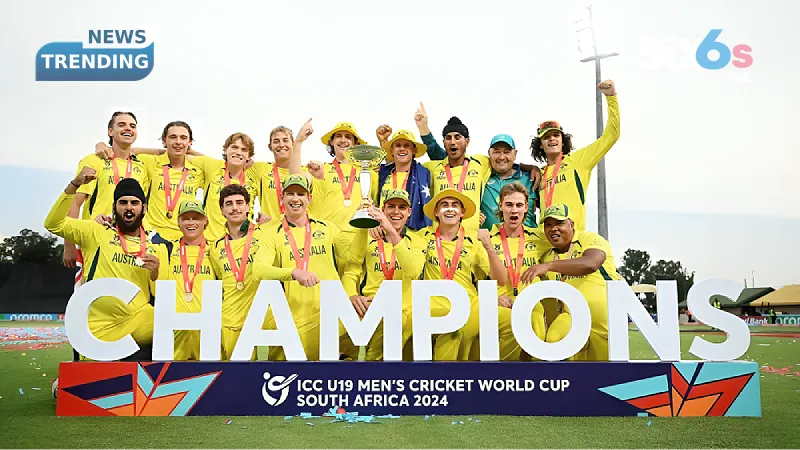
Each generation of cricket in Australia has its own defining moment: Lillee-Thomson’s summer, Waugh twins’ years of steel, and the Ponting machine of the 2000s. However, it is much quicker for the baton to be handed over at the junior levels, and there is an expectation that the players will deliver quickly, too. As the U-19 Cricket World Cup is set to take place in January in Zimbabwe and Namibia, Australia is entering the tournament with a unique opportunity and a unique amount of pressure. They are the defending world champions, and they will look to make history by becoming only the third team to defend their title. The key player behind this quest is a captain who was initially left out of the squad last time around.
Peake’s Evolution From Stand-In to Standard-Bearer
There have been Australian youth team captains who have been known for their flair, their fire, and those who can sell a textbook on how to play forward with a defensive mindset. Peake is an anomaly among these types of players. The reason for his rapid ascension to the top tier in 2024 was situational rather than predetermined. He became a tactical absorption unit; someone who could endure pressure spells, switch from striker to a role that allowed the game to develop naturally.
This past year, that is what has changed from an efficient player to being one of authority. The fact that his 50 for the PM’s XI against a nearly full-strength England bowling unit was more than just a run; it was more of a demonstration of how he can negotiate with the speed of the ball, adjust the angle of play, and, perhaps most importantly, demonstrate composure while batting against bowlers who are significantly beyond the youth level.
A Squad Built on Complementary Contrasts
Tim Nielsen’s optimism about his team was no hollow boast. In terms of its composition on paper, the Australian side is balanced with precision, a result of an attempt to create levels rather than a choice between just hitters and/or seamers.
Australia has a variety of resources for its bowling attack, with Will Malajczuk leading the way, along with his support from Nitesh Samuel and the versatile Aryan Sharma. This allows them to have a solid balance in terms of bowling options that will provide them with the flexibility to make some tactical decisions during games. The Australian team will be able to utilise different combinations in their bowling attacks, such as using both fast and slow bowlers, and also using players that are aggressive and those with the ability to play with grit, while also having experienced players playing alongside young and talented players.
Nielsen’s Pathway Philosophy Begins to Show
The Australian junior system has taken on a new approach to junior development by taking the emphasis off of developing elite-level players, and more so focusing on creating a pathway for players to develop through multiple avenues. For example, some junior players are getting the opportunity to be involved in senior training sessions and net sessions as part of an A squad or session with a local state unit, etc.
As such, Jayden Draper and Steven Hogan have been able to take advantage of the structure, and their experiences have allowed them to develop at a faster rate than most junior cricketers. The Australian team will consist of a number of young players who have benefited from the accelerated learning environment.
Historically, winning two consecutive championships is challenging and requires flexible skills, team maturity, and steady leadership; Australia appears to have all of these elements in a proportion that is fitting for Africa. The success of their attempt to win a fifth championship will be based on how well they execute, rather than on their capability; however, the foundation upon which they are building is clearly very strong.
Stay updated on the latest cricket news and exciting updates at Six6slive. Dive into our in-depth articles and analyses to connect with the action today!