
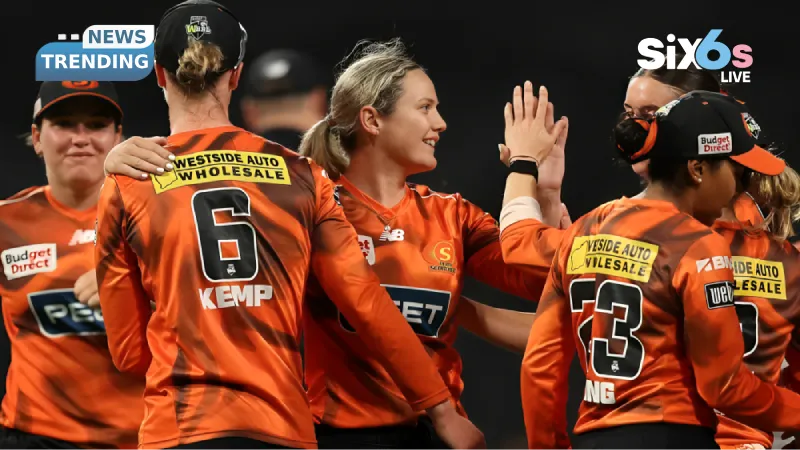
A specific kind of inevitability exists in WBBL finals cricket; the time the game shifts, the time your top performer turns up. The Scorchers were not only able to ride this inevitability but also create it on Thursday evening. Beth Mooney, who views pressure matches as optional warm-up games, scored an impressive 76 runs, the second most in WBBL finals history. Alana King, a bowler who usually waits until the heat is on before unleashing her best bowling, took 3 wickets for 17 runs and turned what was at least a chance at getting back into the game into a lost cause.
Mooney’s Tempo Control Redefines the First Innings
Perth’s innings did not start in a firework fashion; it started in a state of poverty. After only four overs of batting, by which time Beth Mooney, Perth’s future match-winner, had faced only three deliveries. The majority of batters are disrupted by the lack of rhythm created by such an infrequent delivery; however, Beth Mooney was able to create calculation based on her experience. Once the solid 40 by Katie Mack established a platform for Perth, Mooney transitioned from patient survivor to tempo leader. When Mooney hit a six off Ash Gardner, it signaled the tempo shift; when she scored fifty off only 27 balls, it showed that she had identified the game plan a lot longer than the Sixers were aware.
Perth’s Middle-Order Volatility Almost Undid the Platform
Paige Scholfield’s two consecutive sixes of Amelia Kerr via a slog sweep after Scorchers were looking likely to post over 190, instead saw them lose 5 wickets for just 21 runs. As has been a frequent occurrence throughout the WBBL, teams that put on big totals early in the game through star runs tend to be caught short at the back-end of their innings when they are unable to rotate the strike. The fact that Scorchers collapsed so dramatically in the last few overs may have had no bearing on whether or not they could win the game, but the psychological burden was certainly shifted onto their bowling unit to respond.
King’s Power Surge Masterclass Was the True Turning Point
Over’s that have been for just 6 runs are extremely rare to decide the match; however, there is nothing ordinary about an over with 75 runs required from 36 balls being hit by the opposing team for six runs. The sixth run conceded by King, in her second over of the spell (also dismissing Ash Gardner) served as the tactical blow which crushed the Sixers’ confidence after they had mounted their power surge in the previous over, scoring 16 runs. King would finish that crushing of the Sixers’ confidence with her wicket of Maitland Brown, in a manner that was not flashy, but rather perfectly timed to be the last tightening of the screws.
The Scorchers’ Death-Bowling Discipline Sealed the Cushion
21 runs needed from one ball is very achievable as long as you have wickets to your name. Unfortunately for the Sixers, they were running on empty. Perth’s death bowling has historically been overshadowed by the star-studded top order; however, Perth bowled smartly in length, didn’t commit too much at the pads, and didn’t give away the slot deliveries that can make a tight finish magical. When the equation finally shrunk down to a number that was chaseable, the Sixers had no ammunition left to try and pull it off.
Although Perth’s win wasn’t exciting to watch, it was strategic, tense, and based on two excellent performances from Mooney and King, which were as solid as they were unflappable. It was a great performance by both players that furthered the cause that they are among the top “big game” hitters in the history of the WBBL. A late collapse in batting may give Perth some concerns; however, their upside will always be greater than any opponents when their superstars play well.
Stay updated on the latest cricket news and exciting updates at Six6slive. Dive into our in-depth articles and analyses to connect with the action today!