
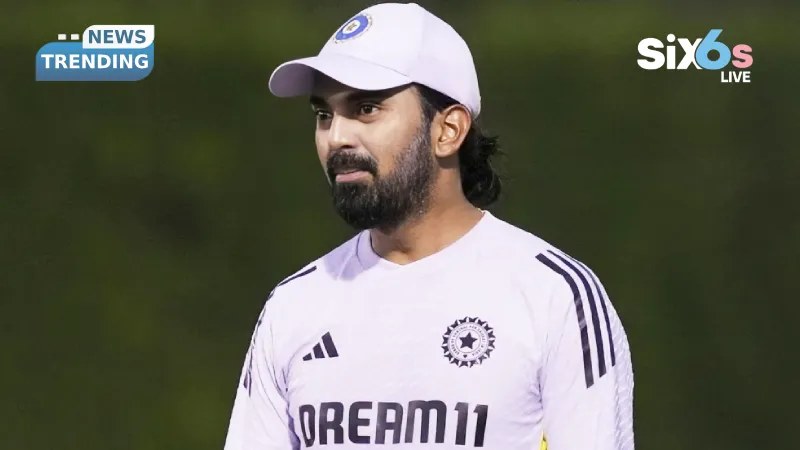
Indian Cricket has always been known to have a knack for having an abundance of plot twists in its history, yet handing the ODI Captaincy to KL Rahul, literally a day before this announcement, is what can be described as the ultimate late call cameo that even Bollywood would never attempt to write into their next big hit. Due to injuries sustained by Shubman Gill (neck) during the First test, and still recovering from his own setback, India were now left with a serious void in leadership, at exactly the time when it was most needed, as the team was looking to stabilise itself.
Evolving Leadership in a Time of Flux
As India’s white ball leadership has never been as unstable as it currently is due to injuries to Gill and Iyer forcing selectors to look outside of the normal hierarchy for players with potential to lead teams, yet selecting Rahul also shows that the selectors feel comfortable that Rahul will be a “stabilising bridge” between generations.
India’s Rahul is currently experiencing a “transitional” period similar to that which India will experience by India in terms of their development as a cricket nation. He has gone from being a test match opening batsman to a one-day international middle order batsman or finisher, a role he filled well when they won the Champions Trophy and later when India went on tour to Australia for the ODIs.
Shared Leadership: India’s New Decision-Making Model
Instead of a macho “I’ll do everything by myself,” Rahul adopted something that is being rewarded in an increasing amount of modern cricket: distributed leadership.
India now has both Rohit Sharma and Virat Kohli to support Rahul as captains. In addition, other experienced players such as Ravindra Jadeja have also returned; this reduces Rahul’s role as a solo decision-maker and increases his role as an orchestrator of the team. The model for India is similar to many successful international teams (Australia under Steve Cummins and New Zealand under Kane Williamson), which use their team as a whole to provide the same type of leadership through experience, cricketing intelligence, and the ability to make decisions based on different situations.
A Captain Comfortable in His Own Skin
Rahul has always brought a quality of calmness to his captaincy – at times perceived as being detached, but he is one of India’s most assured thinkers. The most telling comment from Rahul in the press conference was not about strategy or what the team is looking to achieve. It was this: “I’m excited to take on that responsibility. I really don’t give it too much thought.”
That is quintessentially KL Rahul – someone who understands that there will be criticism, that there will be setbacks, but that the ability to lead cannot be scripted. That casualness is, in fact, his greatest asset. As with Test cricket, with T20 cricket, a single decision can result in winning the match; however, the captains who remain calm survive, while those who are uncertain fail.
A short-term need has become an ongoing situation for KL Rahul as the new ODI captain. The rebuild to the 2027 Cricket World Cup is a gradual process; during such phases, a team’s ability to produce multiple leaders at different levels is as important as their ability to produce good batsmen. In addition to his temperament, experience, and past successes in South Africa, Rahul will be more than just a temporary leader for Team India. He will serve as a leadership anchor.
Stay updated on the latest cricket news and exciting updates at Six6slive. Dive into our in-depth articles and analyses to connect with the action today!