
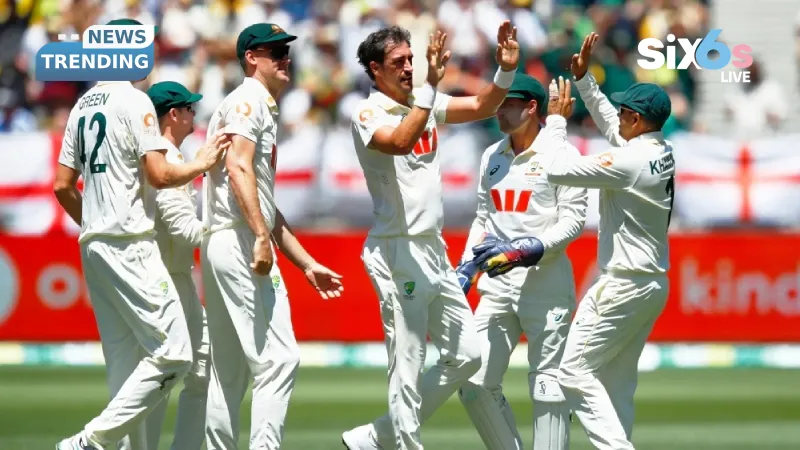
Cricket can throw you a few curve balls before even the first ball is delivered – and it’s no different for Australian fast bowlers. Josh Hazlewood, the Australians’ best right-arm spearhead, will likely be ruled out of the opening test at the Gabba due to a hamstring strain he sustained during a Sheffield Shield match. Whether or not Pat Cummins is fit enough to play will also remain unclear. The uncertainty of how many fast bowlers are available could very well determine which direction the Ashes series goes – a team with the world’s best, but a missing heartbeat through their bowling line-up.
Starc Steps Up, Others Learn the Hard Way
Starc stepped into the void left by the injured Hazlewood and Cummins as the mainstay of an attack that was under extreme pressure; his 7/58 on day one was not only a reflection of the number of wickets he took, but it was a message that when the senior pace men fail, the experienced and aggressive will fill the breach. Boland’s transformation from an expensive first-day performance to a game-changing second-innings effort is another example of how unpredictable fast bowling is in Test cricket. This should serve as a reminder to the Australian selectors that they need to have a clear understanding between intent and execution, particularly when using inexperienced players such as Brendan Doggett in high-risk situations. While there may be comfort in Starc being so dominant, Test cricket consistently exposes the depth of a team unless the burden placed on its seniors is properly managed.
Cummins’ Clock: Timing Is Everything
While Pat Cummins is nearing his return to the team, the question of when he returns is as much about timing as it is about fitness. The Australian cricket team has a problem with its schedule; if they win the first test at the Gabba, Cummins may be left out of the second test at the Adelaide Oval or vice versa because there will be only eight days between the two tests, and consecutive Tests are difficult for even the most fit of the quickest bowlers to play. McDonald’s cautious optimism for Cummins’ return reflects a bigger picture; the focus is on letting him build up his endurance rather than rushing him back into action. Traditionally, fast bowling units have historically been very careful with returning from injury, their top elite bowlers, because too many times they have had soft tissue injuries that have affected the rest of the series. While his intense work in Perth training indicates that he is almost fully recovered, the “last mile” of rehabilitation can be the hardest part, especially in the extreme heat of an Ashes tour.
Debutants Deliver: The New Guard Emerges
In the absence of several of Australia’s established players, its newcomers played well. Jake Weatherald scored runs for Australia throughout their second innings to maintain their momentum in the run chase. It also points out another significant shift: that Australia’s depth in the Shield system is producing results, and new players are being seamlessly integrated into the Australian national side. The modern-day approach has many historical examples (e.g., the gap left by Bodyline, or the time after Smith) that were all based on instinct rather than analysis; however, the modern way of thinking is to make decisions with analysis and confidence, as well as to create opportunities based on experience. Not only will this series be about the return of several of Australia’s established players, but it will also show whether those who have been relegated to the fringes can withstand the pressure.
The Australian bowling puzzle represents an opportunity for McDonald to use his experience with a combination of veteran bowlers, young talent, and the need for tactical patience while dealing with Hazlewood’s absence and the possibility of Cummins returning conditionally. The collective heroism of Starc, the contribution of new players, and the overall flexibility of the team indicate that Australia may have the ability to absorb these disruptions, provided they get load management and timing right. Over the course of the next few days at the Brisbane Test, it will be clear whether the Australian pace attack continues to run like a well-oiled machine or will provide a case study for how teams manage resources in the Ashes. It will also be as interesting off the field as it is on.
Stay updated on the latest cricket news and exciting updates at Six6slive. Dive into our in-depth articles and analyses to connect with the action today!