
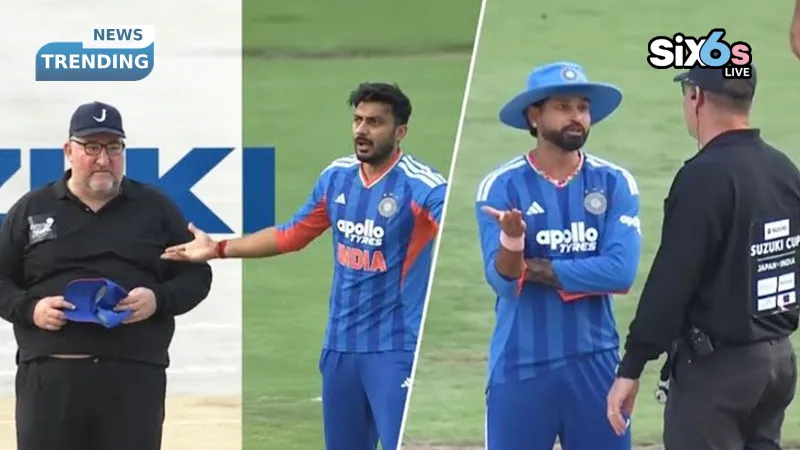
If Japan finish as Group A runners-up, they meet India in the quarterfinal on 28 September, and every marginal call in that game will be watched through the lens of the overturned wide. Japan lost the rain-shortened five-over contest at Sano by just 2 runs after the on-field umpires reversed a wide with the hosts chasing a historic upset. No official body has commented. That silence means a knockout sequel would arrive with the dispute unresolved and the umpiring under a microscope.
Four Balls Left and One Reversed Call
Rain cut the contest at Sano International Cricket Ground to five overs a side on 22 September. India posted 32/4, with Shreyas Iyer top-scoring on 16 and Charlie Hara-Hinze taking 2/17 to keep the target within reach.
Japan’s reply came down to the final over. Kendel Kadowaki-Fleming made 12, and Benjamin Ito-Davis added 9, leaving the hosts needing five off the last four balls. For a team outside cricket’s traditional powers, that was already a remarkable position.
That’s when Chris Thurgate, the Japanese umpire standing at the bowler’s end, signalled a wide. India objected, Thurgate consulted his colleague Chris Brown of New Zealand, and the pair overturned the call. No third umpire was listed for the match, so the on-field officials had the only say. Japan finished on 30/3 and lost by 2 runs. Washington Sundar’s 2/13 did the damage, while Axar Patel conceded 7 and Ravi Bishnoi 10 without taking a wicket.
India vs Japan Wide Controversy Asian Games 2026
The fallout was instant. Cricket writer Ben Gardner branded the reversal disgraceful and accused India of bullying the umpires out of the call, with Japan five runs away from what he framed as the biggest upset the sport had ever produced.
Official reaction hasn’t followed. No statement has come from the match referee, the ICC, the BCCI or the Japan Cricket Association addressing the decision. That silence leaves the reversal hanging, with no explanation offered for why a call made by the umpire best placed to judge it was abandoned.
Japan’s captain chose restraint. Kadowaki-Fleming admitted emotions were running high in the dressing room but focused on the pride of taking what he called the best team in the world to the last ball, and he stopped short of criticising the officials. Iyer’s post-match words carried the same tone. He praised Japan’s attitude and approach as impeccable, which reads as generous given how the finish played out.
The Quarterfinal Path Runs Through Group A
The draw is what turns an ugly finish into a live storyline. India go straight into the quarterfinals and will face the Group A runner-up on 28 September at 10 am PKT, while the Group A winner meets Sri Lanka on 29 September at 5 am PKT. Group B feeds the other half of the bracket. Its runner-up plays Pakistan on 28 September, and its winner faces Bangladesh a day later.
Japan sit in a three-team Group A with Afghanistan and Nepal, playing a single round-robin at Kōrogi Sports Park from 24 to 26 September. Their campaign opens against Afghanistan on 24 September, with the Nepal fixture following inside the same window. Second place is the realistic target for the hosts, and second place means India. Beat one of those two sides and the rematch moves from possible to probable.
Umpiring Scrutiny Will Follow Any Rematch
A knockout meeting would put the officials under more pressure than the players. Whoever stands in that quarterfinal will know that one marginal wide call already decided a game between these sides.
The absence of a third umpire at Sano matters here. Without a television review, the on-field pair carried the full weight of the decision, and any knockout fixture that also lacked one would face immediate questions.
For India, the risk is reputational rather than sporting. Beating Japan again would settle nothing if another tight call goes their way, and a side of their standing gains little from that kind of noise.
Japan, meanwhile, have the harder job and the better story. Until someone in authority addresses the India vs Japan wide controversy at the Asian Games 2026, fans will keep replaying those four balls, and a quarterfinal sequel would only raise the volume.