
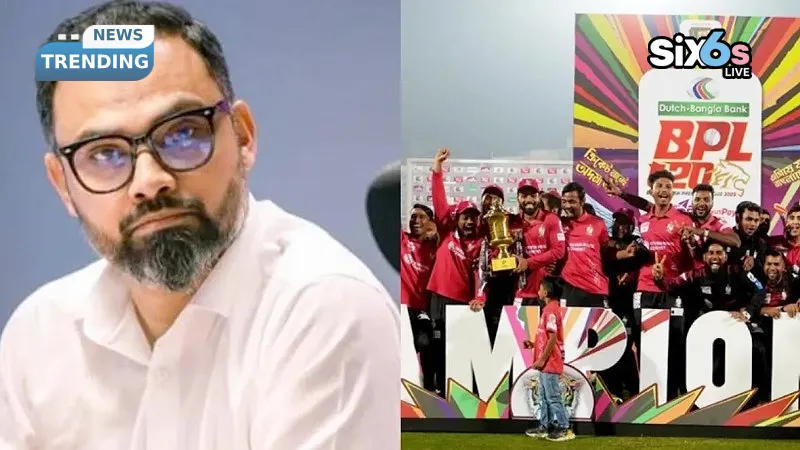
Bangladesh Cricket Board has confirmed that ownership of its new six-team domestic franchise competition will go to established and reputed corporate and financial institutions inside Bangladesh, for an initial term of three years. No formal eligibility criteria, application window or deadline has been published beyond that wording. The board says owners will avoid the franchise fees and player payment disputes that plagued the Bangladesh Premier League, since they will simply cover costs already built into the BCL and NCL structures. A first T20 event is pencilled in for December.
The Board’s Resolution, In Its Own Words
The BCB’s board of directors met virtually on 20 September for its fourth meeting since the current board took charge, and agreed in principle to a six-team domestic structure spanning First Class four-day cricket, List A one-day matches and List A T20 under a single competition framework. The official release states that team ownership rights will be offered to corporate and financial institutions for an initial three-year period.
The board also confirmed that the T20 leg will be the first event staged under the new structure, with a tentative window in December, though exact dates have not been fixed. All three formats, previously run separately as the BCL and NCL, are being folded into one unified competition.
No Eligibility Criteria Published Yet
Beyond the phrase established and reputed corporate and financial institutions, the board has not published any further eligibility criteria, whether around minimum capitalisation, regulatory standing or registration requirements. There is no confirmed bidding process, no expression-of-interest window and no deadline on the record as of this announcement.
The tournament itself does not even have a confirmed name. Board president Tamim Iqbal had said before the meeting that a formal announcement could land in the final week of September, potentially around the 25th or 26th, though that timeline predates the board’s own 20 September resolution.
Player contract length is another open question, with the board yet to decide whether deals will run for one year or three. A second tier of matches involving second-eleven sides is also expected to sit alongside the main competition, a move that could open opportunities for well over a hundred additional cricketers once details are confirmed.
BCB domestic franchise competition team ownership
Owners will not need to pay franchise fees in the way BPL investors have in the past. Tournament committee chairman Sirajuddin Mohammad Alamgir explained that new investors will simply follow the existing payment structure the board already uses for players in the BCL and NCL, avoiding the fee complications that have dogged the Premier League.
Alamgir was blunt about the logic behind it, saying there is no need to charge a huge ownership fee when owners simply advance player payments under a structure the board already runs. That approach, he said, saves the board a significant amount of money while removing one of the biggest points of friction from the old system.
Alamgir also pointed to a planned foreign player exchange programme, which he said would cut the cost of bringing overseas players into the competition while making matches more competitive, though that detail has not yet been confirmed in the board’s own 20 September resolution.
BPL’s Payment Problems Explain the Shift
The BPL’s history of unpaid dues is exactly what the new structure is designed to avoid. A BCB source has said the board ends up covering almost the entire player payment bill for one or two teams most seasons, after franchise owners call players at prices they never intend to pay in full.
No cricketers, clubs or corporate groups have publicly reacted to the 20 September announcement yet, though a BCB source said several good organisations had already expressed interest in taking on ownership before the resolution was finalised.
Durbar Rajshahi players once boycotted training over unpaid allowances until government intervention forced owners to settle up, and the board had to take over Chattogram Royals outright the day before a BPL edition began after its owner withdrew. The BPL itself has been put on hold, with officials saying they would rather skip a season than hand out franchises through makeshift arrangements, which is exactly the risk this new BCB domestic franchise competition team ownership model is built to remove.