
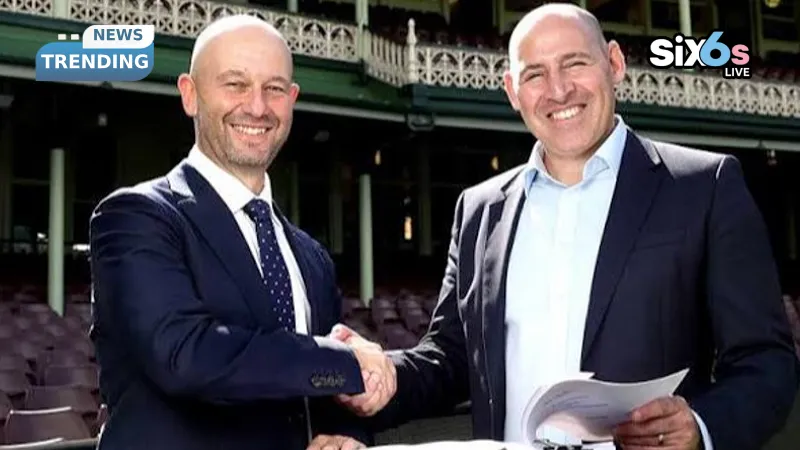
He does not actually have one yet, and he said as much himself. Speaking in Darwin during the Bangladesh Test, the Cricket Australia chief executive admitted bilateral ODIs are propping up broadcast deals even as the format loses meaning, and that swapping them for something with more context means finding replacement revenue first. Greenberg framed it as a problem CA is still working through, not one it has solved, with both short-term and long-term pieces still unresolved. Nothing here happens quickly, and Greenberg made no promises about timelines.
Greenberg Responds To Gupta’s Warning
Greenberg’s comments came directly off the back of ICC chief executive Sanjog Gupta’s interview, published days earlier, warning that randomly scheduled bilateral series cannot survive without context and competitiveness attached to them. Gupta had reportedly made the same point to Cricket Australia staff in person during a visit to Melbourne.
Greenberg did not dispute the diagnosis. He called the principle behind Gupta’s comments correct, adding that bilateral ODIs make up a meaningful share of Cricket Australia’s broadcast agreements, so removing them means figuring out what replaces both the fixtures and the money attached to them. He described it as a fine balance between short-term contractual reality and long-term structural change. The exchange mattered because it came from cricket’s most powerful administrative body, not a rival board with an axe to grind.
Cricket Australia Bilateral ODI Revenue 2026
The audience numbers explain why Greenberg is not rushing into anything. Three formats are competing for the same broadcast dollar right now, and the gap between them is stark.
| Format | Broadcast and Attendance Trend | Player Retention Risk |
|---|---|---|
| Bilateral ODI | 260,000 viewers, up 60 percent but still behind BBL and Tests | High |
| BBL and International T20 | 770,000 viewers, up 20 percent; 1.09 million total attendance | Medium |
| ICC Events and World Cup ODIs | Tied to World Cup context; FTP 2028-31 still pending | Low to medium |
Those numbers sit inside a broadcast deal with Seven and Foxtel that runs until 2031 and was signed back in December 2022, long before Greenberg had to defend it publicly. No comparative attendance or ratings figures have been published yet for this year’s bilateral series against Pakistan and Bangladesh, which makes it harder to say whether the gap is closing or widening. International T20 cricket sits somewhere in between, with September’s series against New Zealand reportedly up 17 percent on the previous white-ball assignment against the West Indies.
The Player Payment Fight Underneath It All
This revenue debate is tangled up with an ongoing standoff between Cricket Australia and the players’ association over BBL money. The ACA wants a bigger slice than the current 27.5 percent revenue share from the Big Bash, and Todd Greenberg has rejected that proposal outright, calling it a fundamental disagreement rather than a negotiating gap that will close quickly.
A final call on BBL privatisation is expected by early to mid-September, after board meetings with New South Wales and Queensland. Paul Marsh, the ACA’s chief executive, has said publicly that Australian cricket is not unified on a way forward, and that the current BBL ownership plan does not deliver the best outcome for the game or its players. The current MOU between CA and the ACA runs until mid-2028, with a central contract pool of over 21.9 million dollars split across 24 players, though CA issued only 21 contracts this cycle to allow bigger individual payments from a fixed pot.
The ICC Timeline Holds The Cards
Greenberg is one of the administrators working inside the ICC group finalising the Future Tours Programme for 2028 to 2031, with a rough outline for 2032 to 2035 already being discussed. That timeline, not anything Cricket Australia can unilaterally decide, is where any real restructuring of bilateral ODI cricket will actually get settled.
He also confirmed CA has formally passed on Andrew McDonald’s push for larger ODI World Cup squads to the ICC, a smaller but related sign that Australian cricket wants more say over how the format is shaped going forward. No dollar figure or specific new compensation model for bilateral ODIs has been attached to any of this yet. Until the Cricket Australia bilateral ODI revenue 2026 conversation produces an actual proposal rather than a diagnosis, bilateral cricket keeps its awkward, underpaid spot on the calendar.