
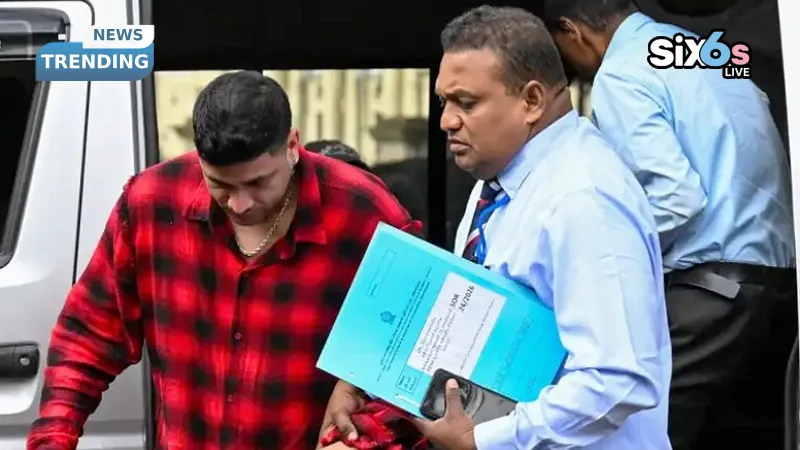
Kalra says he was framed. The evidence stacked against him says otherwise: recorded phone calls, video footage, and an associate caught holding actual bribe money when police moved in. His legal team frames it as a setup against an innocent minority shareholder. Sri Lanka’s investigators frame it as the conclusion of a ten-day sting operation. Bail was refused once already, and Kalra now sits in remand until the end of July while the courts weigh which version holds up. Two prior LPL owners were convicted for the same offence.
The Timeline That Led to a Remand
The case against Kalra began roughly ten days before his arrest, when a Jaffna Kings player told Sri Lanka’s Special Investigations Unit that the co-owner had approached him. Two more players were contacted soon after. Working on instructions from investigators, the players negotiated a total payment of 11.5 million Sri Lankan rupees, with 9.5 million agreed as an advance.
Kalra was arrested on 16 July at a luxury hotel in Colombo, the moment an associate arrived carrying a bag containing that advance. He was produced before a magistrate the next day. The Chief Magistrate denied bail, ruling that releasing him could compromise the ongoing investigation, and Kalra was remanded until 31 July.
Investigators Detail the Approach and Evidence
Court filings name three Jaffna Kings players as the targets: Bhanuka Rajapaksa, Dunith Wellalage, and Avishka Fernando. Investigators allege Kalra offered more than USD 30,000 combined to influence match outcomes, with the 9.5 million rupee advance, worth roughly USD 28,700, seized at the point of transfer.
The case rests on recorded phone conversations and video evidence gathered during the surveillance period. It falls under Sri Lanka’s Prevention of Offences Relating to Sports Act, introduced in 2019 specifically to criminalise match-fixing, spot-fixing, and the failure to report corrupt approaches. Kalra’s defence counsel disputes all of it, arguing there is no evidence their client ever offered or paid a bribe to anyone involved.
Manjot Kalra Fixing Allegations LPL 2026
Kalra’s legal team released a statement on 19 July insisting he is fully cooperating with investigators and confident the facts will eventually clear his name. It leans heavily on his cricketing past, describing a man who represented India with honour and understands exactly what integrity is expected of anyone tied to the sport.
The statement frames his ownership stake as a minority position taken up in good faith, not a foothold used for corruption. His representatives went further, suggesting Kalra was set up and that they intend to expose whoever actually orchestrated the approach against him. He will not comment publicly again before the investigation concludes.
How Sri Lanka Cricket and the League Responded
Sri Lanka Cricket confirmed it was aware of the arrest and pledged full cooperation with the Special Investigations Unit. The board was unambiguous about the tournament’s future, stating that the 2026 season would proceed as scheduled and that governance standards would not slip because of one case.
The organisers, IPG Group, echoed that position, pledging to work with the board, the anti-corruption unit, and integrity mentors already embedded with every franchise. Surveillance has tightened across all teams, and officials have pointed to the swift arrest as proof the legal framework works when corruption is suspected.
The Owner’s Past and a Familiar Pattern
Kalra, 26, made his name as an India Under-19 player, top-scoring with an unbeaten 101 in the 2018 World Cup final that India won against Australia. Several of his teammates from that side, including Prithvi Shaw, Shubman Gill, Arshdeep Singh, Riyan Parag, and Shivam Mavi, went on to play for the senior national team.
His ownership stake in Jaffna Kings runs through an entity called Sports Commune, alongside co-owner Mayank Goel, and was acquired only in May 2026 after the board terminated the previous franchise holder for failing its contractual obligations. That timing matters because this is not the league’s first brush with this exact problem. A Dambulla Thunders owner was convicted in 2024 for trying to influence a player, and a Galle Marvels co-owner was jailed the same year over a direct fixing approach. That history is exactly why the Manjot Kalra fixing allegations in the LPL 2026 case feel less like an isolated incident and more like a pattern the league still hasn’t solved.