
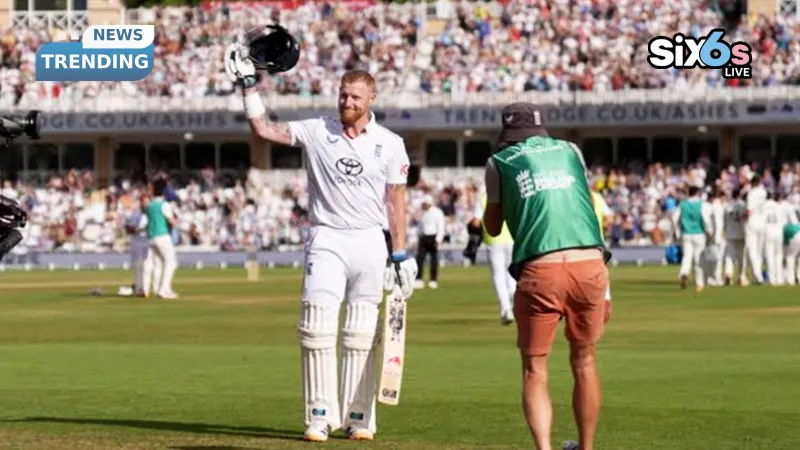
Ben Stokes announced his retirement from international cricket via an ECB statement at 3.25 pm on Day 4 of the third Test against New Zealand at Trent Bridge, ending a career of 122 Tests, 114 ODIs, and 43 T20Is. The timeline before England need a new permanent captain is longer than the moment suggests: the Pakistan Test series doesn’t begin until 19 August, roughly seven weeks away, and head coach Brendon McCullum has already said there’s no rush to make the call.
A Decision He Says Wasn’t About One Incident
Stokes pointed to burnout as the cause, saying the Lord’s Test brought back negative feelings about where he was in his career. He named the mental toll of England’s 4-1 Ashes defeat in Australia as the bigger factor, more significant than the nightclub incident drawing scrutiny in the weeks before.
That incident took place at Rex Rooms in Chelsea on 8 June, after England’s Lord’s Test win, when an altercation involving Saracens rugby player Totoa Auvaa left England security guard James Shaw needing stitches. Stokes received a written warning and no fine, and denied the episode drove his decision. In his post-match comments at Trent Bridge, he gave Harry Brook his full support as successor. ECB chief executive Richard Gould called Stokes’ contribution to English cricket immeasurable.
Ben Stokes retirement England Test captain successor 2026
No successor has been named, and head coach Brendon McCullum was direct about why at Trent Bridge: those conversations need to happen in due course, with several weeks of room before a ball needs to be bowled in the Pakistan series. That timeline removes the urgency that might otherwise surround a vacancy this significant.
Two names sit at the centre of the discussion. Joe Root captained at the Oval against New Zealand after Stokes and Gus Atkinson were withdrawn pending the nightclub investigation, an interim arrangement for that one match only. Harry Brook, the confirmed vice-captain and widely seen as the long-term heir to the role, was passed over for that interim job specifically because of his own off-field incident at a bar in Wellington on the eve of a white-ball match last winter.
Root’s Complicated Case for the Job
Root’s standing as England’s most experienced Test captain isn’t in dispute, but the exact scale of his record carries some discrepancy depending on the source. The most recent figure, the Oval Test, was his 65th match in charge. An exact win-loss split since hasn’t been published. Root himself has shown little appetite to reclaim the role. At the Oval, he kept his comments focused on that single week, framing his presence as offering experience rather than angling for a return, and noted he would have rated his own chances of captaining England again at just 0.1% earlier in the year.
After Trent Bridge, he avoided directly answering whether he wants the job back, saying his focus was on celebrating Stokes’ career. He also remembers how his first stint ended: stepping down in April 2022 after winning just one of his final 17 Tests, a run that closed with a series defeat in the West Indies.
Brook Is the Favourite, Just Not Yet
ECB managing director Rob Key has described Brook as having a bit more learning to do, while still acknowledging he remains the long-term successor. That assessment, paired with the timing of his own disciplinary issue, explains why the Oval interim job went to Root instead.
What’s clear is that the decision doesn’t need to be made this week. The Pakistan series opens at Headingley on 19 August, followed by Lord’s from 27 August and Edgbaston in September, giving the ECB a genuine runway rather than an emergency. No formal announcement had been made as of 29 June, and no public deadline has been set. The Ben Stokes retirement England Test captain successor 2026 conversation is one England can have on their own timeline, not one forced by an imminent fixture.