
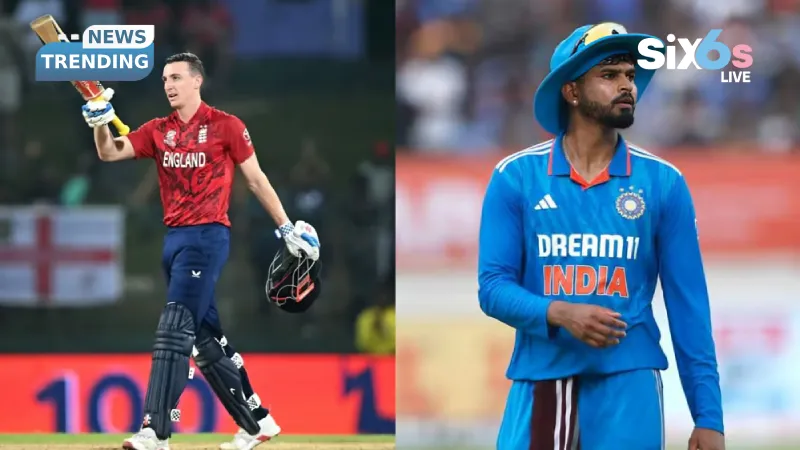
The ECB has moved start times for three floodlit T20Is against India from 6:30 pm BST to 5:30 pm BST, an hour earlier, so that Indian broadcasts wrap up around 2:00 AM IST instead of 3:00 AM IST. That single scheduling shift tells you more about where English cricket’s financial centre of gravity sits than any annual report could.
The Start Time Change Explained
the adjustment on June 8, 2026. The decision involved the ECB, the BCCI, Sky Sports in the UK, and Sony Sports Network in India. Under the standard ECB process, start times are finalised after consultation between those parties, so the BCCI’s involvement in reshaping a home schedule is not a procedural breach. It is, though, something new in bilateral cricket: a host board publicly adjusting its home match timings around a visiting nation’s television audience. No confirmed prior instance of a host doing this so explicitly in a bilateral series has been documented in mainstream cricket journalism.
ECB England India T20I Timings Indian Viewers 2026: The Financial Picture
The ECB’s financial accounts for the year ending January 31, 2026 put hard numbers behind this decision. Turnover reached £408.9 million, up £89.4 million on the prior year, with that increase directly attributed to broadcast and ticketing revenues from England’s 2025 home India Test series. Profit on ordinary activities came to £12.6 million. Cash reserves sat at £72.8 million. Ring-fenced Hundred franchise profits reached £522.3 million.
The ECB’s own report noted that its revenues are inherently cyclical, tied to the scheduling of high-value series by opposition. The ticket market backs that up: all three ODIs have sold out, with only a few hundred T20I tickets remaining across five T20Is. The presence of Virat Kohli and Rohit Sharma in the ODI leg has been specifically cited as a driver of demand.
Ashes Year Cannot Balance Without India
The ECB’s financial report projects a significant loss in 2027, even with a home Ashes series on the calendar. A home Ashes against Australia was, for most of cricket’s modern history, the peak of the English financial year: five Tests, packed grounds, full broadcast yield. That it can no longer keep the ECB out of deficit when India is absent is a concrete measurement of how much the bilateral India premium has grown.
The ECB has not projected a record loss; its report uses the phrase “significant loss position,” but the structural point is the same. The Ashes retains its cultural weight. It has lost its financial supremacy relative to an India tour. That gap will only widen as Indian broadcast rights continue to outpace every other bilateral deal in world cricket.
The Bilateral Precedent Being Set
The closest public parallel is the 2024 ICC Men’s T20 World Cup in the West Indies and the USA, where West Indies CEO Johnny Grave confirmed that scheduling was built around Indian prime time, with some matches starting as early as 10:30 AM local time. Grave said openly that the vast majority of revenues for all ICC events come from one market, and that finding a balance between Indian prime time and home fans was necessary. But that was an ICC-managed global event, where commercial decisions sit with the central body.
The ECB’s 2026 move is different in kind. A host board has restructured its own home bilateral schedule around the viewing hours of the visiting country’s audience, and done so openly. The inconvenience to English fans is marginal: one hour earlier on a weekday evening. What it normalises, though, is a hierarchy of audiences, where the Indian viewer’s prime time outranks the host board’s established scheduling conventions. Whether that becomes a template for future bilateral series involving India, anywhere in the world, is the question the ECB’s decision has now put on the table regarding ECB, England, India T20I timings for Indian viewers in 2026.
Cricket never stops, and neither do we. Follow Six6slive for the latest news, in-depth features, and exciting updates from the world of cricket. Dive into the action now