
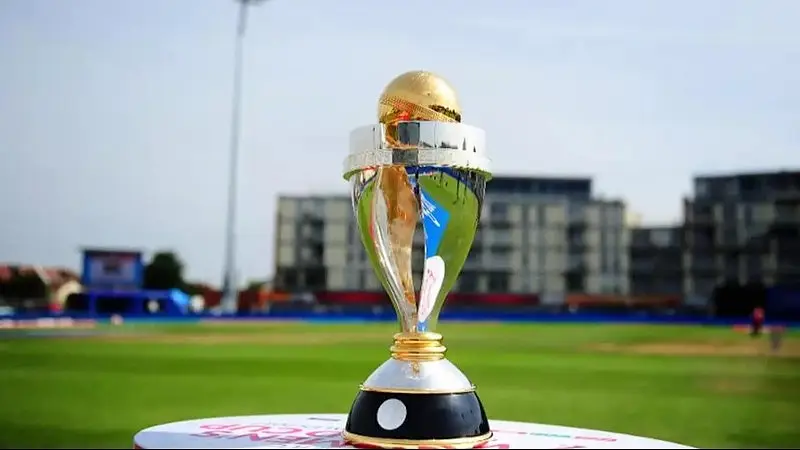
The move lands directly on WPL territory. The ICC Board approved the window shift at its Ahmedabad meeting on 1 June 2026, moving the inaugural Women’s Champions Trophy from June–July to 14–28 February 2027. Under the 2025–29 FTP cycle, February is the BCCI’s confirmed WPL window. Smriti Mandhana, Harmanpreet Kaur, Deepti Sharma, and every other Indian international would become unavailable to their WPL franchises from 14 February at the latest. The ICC has given no public reason for dropping June–July.
The ICC Women’s Champions Trophy 2027 February Schedule Change Explained
Sri Lanka was announced as host on 26 July 2022 and reconfirmed by the ICC Board on 4 November 2024. The tournament format is a six-nation, 16-match T20I competition with a round-robin group stage, the top two teams advancing to the final. Sri Lanka retains hosting rights provided it qualifies on merit; if it doesn’t, it receives automatic entry as the host nation. The inaugural edition carries added weight; no Women’s Champions Trophy has been played before, so Sri Lanka will host a first-ever final regardless of which two nations reach it.
The six competing nations haven’t been formally confirmed, but current T20I rankings point to Australia, England, India, New Zealand, South Africa, and the West Indies, alongside Sri Lanka. The ICC’s statement described the move as ‘part of several measures to strengthen women’s cricket worldwide,’ with no further explanation in the primary board release. That gap between the confirmed decision and the unconfirmed participant list is itself telling; the ICC is committing to a window before finalising who fills it.
Why WPL 2027 Faces Direct Conflict
WPL 2024 ran from 23 February to 17 March. WPL 2025 ran from 14 February to 15 March. WPL 2026 ran from 9 January to 5 February; the BCCI shifted it slightly earlier as part of the 2025–29 FTP structure, which gave WPL a dedicated January–February window from 2026 onwards. Australia’s WBBL was moved to an October–December window specifically to avoid overlapping with WPL.
Official dates for the 2027 edition haven’t been confirmed by the BCCI, but the FTP allocation projects a January–February window. If WPL 2027 runs into mid or late February, as it has in three of the last four editions, the final stages overlap directly with the opening rounds of the Women’s Champions Trophy. India’s five WPL franchises would lose their international players from 14 February, not as a hypothetical risk but as a scheduling certainty. Franchise owners who signed marquee India internationals are paying for players who won’t be on the field during the tournament’s most commercially critical stretch. Neither the BCCI nor the ICC has addressed publicly how the conflict will be managed.
Which Nations Feel the Impact
The conflict is concentrated in one place: India. The BCCI administers the only major women’s franchise league with a confirmed February window in the world. Every Indian international contracted to a WPL franchise becomes unavailable from 14 February onwards; that’s the full national squad stripped from five franchises simultaneously, mid-tournament.
| Nation | Key Women’s T20 League | February Conflict with WCT 2027 |
| India | WPL (Jan–Feb window) | Direct, full squad unavailable from 14 Feb |
| Australia | WBBL (Oct–Dec) | None |
| England | The Hundred (Aug) | None |
| South Africa | No major franchise T20 in Feb | None |
| New Zealand | No major franchise T20 in Feb | None |
| West Indies | CPL (Jul–Sep) | None |
| Sri Lanka | Host nation | No overseas league conflict |
Australian and English players contracted to WPL franchises face the same conflict, but those players would simply depart WPL mid-season for national duty, disruptive for franchises, but not structurally different from the current overseas release model. The problem belongs to the BCCI, and the BCCI alone.
Sri Lanka’s Dry Season Advantage
Colombo’s February average rainfall is approximately 47mm with temperatures ranging from 23 to 31°C, among the lowest monthly rainfall figures on the west coast calendar. January and February are the driest months on the island, with combined monthly rainfall staying below 100mm. The south-west monsoon, which runs from May through September, makes the same coastal venues operationally unreliable in June and July, with rainfall exceeding 200 to 250mm and humidity near 90%. Rain delays at R. Premadasa Stadium in Colombo during June have historically disrupted domestic series; the February switch removes that variable entirely.
For Sri Lanka, moving from June–July to February isn’t a scheduling compromise; it’s the difference between a tournament that finishes on time and one that doesn’t. Whether the ICC weighed that benefit against the WPL conflict before approving the ICC Women’s Champions Trophy 2027 February schedule change, and how the BCCI responds, will determine what the fixture calendar actually looks like.
Cricket never stops, and neither do we. Follow Six6slive for the latest news, in-depth features, and exciting updates from the world of cricket. Dive into the action now!