
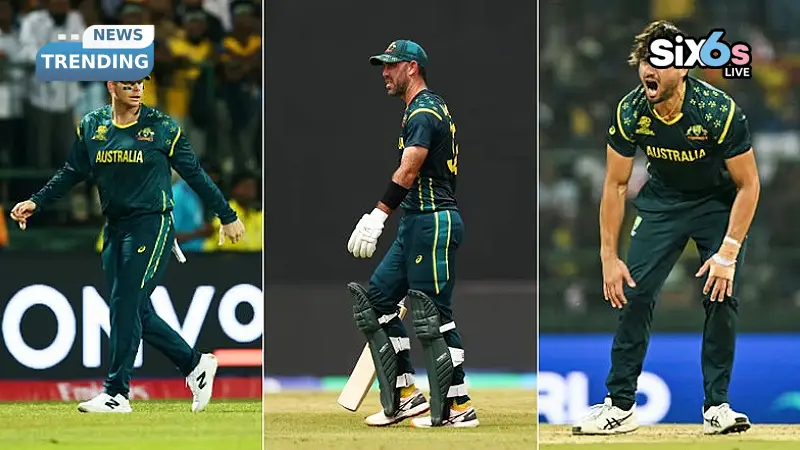
George Bailey’s selection panel omitted three of Australia’s most experienced T20 players for the Bangladesh series and immediately clarified none of them are finished. Maxwell’s one half-century from his last 20 T20 innings built the statistical case against him. Stoinis’s strong IPL form built the case for him. Smith’s PSL strike rate above 160 built another. None of it was enough. The decision signals a deliberate pivot toward 2028 rather than a verdict on current ability, and Bailey wants that distinction understood by everyone involved.
Maxwell, Stoinis, and Smith Step Aside
All three absences carry different explanations but serve the same strategic purpose. Maxwell, at 37, has been the most scrutinized. His inconsistency across 20 T20 innings reflects a batter whose peak form arrives less predictably than it once did, even if the ceiling when he’s on remains as dangerous as anyone in world cricket.
Stoinis’s exclusion surprised many, given his recent franchise performances. His IPL contributions made a strong case for continued selection, but Australia’s management appears more focused on identifying what the next generation can do in his role than confirming what Stoinis already offers. Smith’s situation is the most straightforward. His PSL numbers proved he can still score quickly at an international level. The issue isn’t ability. It’s that Travis Head and Mitchell Marsh occupy the top-order positions Smith would need, and creating clarity in that structure matters more right now than rewarding PSL form.
George Bailey Explains the Transition
Bailey has framed the Bangladesh tour specifically as a low-risk environment for experimentation. Australia’s schedule between now and 2028 includes major Test commitments, Olympic preparation, and another home T20 World Cup. Testing younger combinations in subcontinental conditions now creates options that don’t exist if the senior core remains unchanged through every fixture.
The broader workload management argument supports the same conclusion. Resting Pat Cummins and Josh Hazlewood alongside the batting omissions isn’t coincidental. Australia is consciously distributing rest and opportunity across the squad rather than carrying a fixed core through every bilateral series regardless of context. Joel Davies earned attention after his Big Bash season with the Sydney Sixers. Aaron Hardie’s dual-skill impact in the PSL final provided exactly the all-round template Australia wants to explore further. These aren’t replacements for Maxwell or Stoinis. They’re options being evaluated for roles that might not exist yet.
Glenn Maxwell’s T20 Future Stays Open
Glenn Maxwell remains the most debated name in this squad announcement precisely because his game is so difficult to replace when he’s playing well. His spin-reading ability, unconventional strokeplay, and match-winning ceiling against quality bowling attacks represent skills Australia’s younger batters haven’t demonstrated consistently at the international level.
Bailey’s panel hasn’t closed that door. The Bangladesh series creates space for younger players to make a case without the pressure of immediate World Cup qualification. If those players perform, Maxwell’s path back narrows. If they don’t, his experience and specific matchup skills against spin become relevant again before larger tournaments arrive. Smith faces a similar dynamic. His PSL performances confirmed he remains competitive at this level. The question for both players isn’t whether they can play. It’s whether the roles Australia needs in 2028 match what they offer, and Bailey’s panel has two years to find that answer without committing prematurely.
Bangladesh Conditions Shape New Selections
Bangladesh’s surfaces present specific challenges that make this tour more useful than a home bilateral series would be. Slower pitches reward batters who rotate strike rather than purely boundary-hit, and spin bowling carries significantly more value than it does in Australian conditions.
Australia’s left-arm spin depth has been a consistent gap in their T20 setup. Developing options in that area against Bangladesh’s batting lineup gives selectors concrete information rather than speculation. The entire squad design reflects conditions-specific thinking rather than simply resting senior players. Hardie’s versatility and Davies’s spin-bowling contributions both address tournament patterns Australia expects to encounter in Asian venues during upcoming ICC events. That tactical specificity is the clearest signal that this tour serves a precise developmental purpose rather than simply marking time before the next major tournament.
Cricket never stops, and neither do we. Follow Six6slive for the latest news, in-depth features, and exciting updates from the world of cricket. Dive into the action now!