
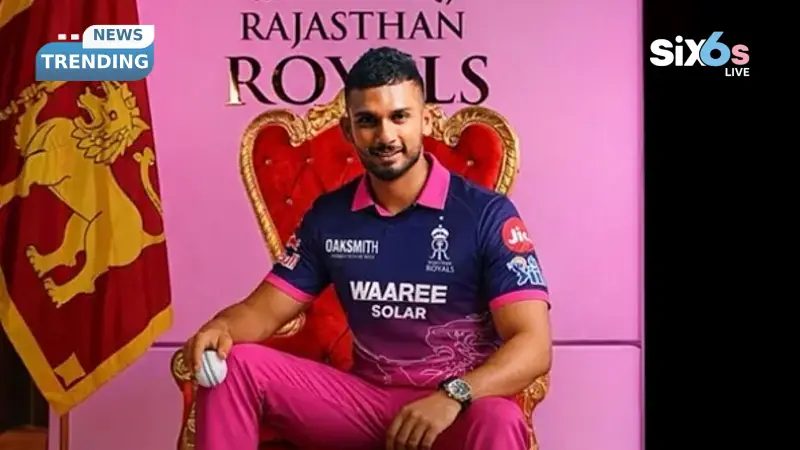
Dasun Shanaka signed for Lahore Qalandars, accepted the terms, and then walked away before fulfilling them. The reason was an IPL opportunity with the Rajasthan Royals as a replacement player. The outcome was a ban lasting one full season. The sequence is straightforward, but what it reveals about the growing tension between global T20 leagues, player priorities, and contractual discipline is worth examining carefully. This wasn’t a scheduling accident or a misunderstanding. It was a decision with consequences the league made absolutely clear.
What Shanaka’s Contract Actually Required
Player contracts in franchise cricket are not informal agreements. When Shanaka signed with Lahore Qalandars, he accepted specific obligations around availability, conduct, and completion of the tournament. The framework exists precisely because franchises build their squad balance, their tactical plans, and their financial commitments around the players they sign.
Withdrawing without justification that meets the league’s approval criteria triggers the enforcement mechanisms built into those contracts. In Shanaka’s case, authorities concluded that his withdrawal was unilateral. No approved exemption existed. No exceptional circumstance was recognised. He simply chose to leave, and the governing body treated that choice exactly as the regulations require.
The firmness of that response matters. It tells every player currently signed to a PSL franchise what the threshold is and what happens when it’s crossed.
IPL Money vs PSL 2026 Loyalty
The financial gap between IPL contracts and PSL contracts is real and significant. Players across formats are aware of it, and the temptation to accept an IPL opportunity when one appears is entirely understandable from a personal financial perspective. That context doesn’t make Shanaka’s decision wrong as a life choice. It makes it wrong as a contractual one.
In PSL 2026, the scheduling overlap between the two tournaments has again placed players in difficult positions. Several cricketers have navigated that situation by communicating early, seeking official exemptions, or declining one opportunity before accepting the other. Shanaka didn’t follow that path. He accepted the IPL replacement slot while his PSL obligations remained active, which removed any possibility of the league treating this as a grey area.
The Rajasthan Royals opportunity likely offered considerably more than the Lahore Qalandars could match. The ban he now serves is the cost of taking it without authorisation.
How PSL Ban Rules Actually Work
The PSL’s disciplinary structure operates on a tiered basis. Fines address minor breaches. Suspensions address more serious ones. A ban lasting one full season represents a firm but measured response serious enough to be a genuine deterrent, calibrated enough to leave the door open for the player’s return.
The league’s position is explicit. Credibility depends on players honouring commitments. When a franchise invests in a player, builds tactics around their presence, and markets their participation, a sudden withdrawal creates damage that extends well beyond one team’s squad balance. It affects broadcaster relationships, fan expectations, and the confidence of future signatories.
Previous enforcement actions have shown the PSL is willing to escalate penalties for repeat offenders or more severe breaches. Shanaka’s ban fits the pattern of a first serious offence receiving a proportionate but unmistakable response. The league absorbed the disruption. The player absorbs the consequence.
What This Ban Changes Going Forward
For Shanaka specifically, missing a full PSL season carries a real cost beyond the obvious financial one. Franchise cricket in the subcontinent is where visibility is built, and visibility is what drives future contracts. A year away from PSL reduces his exposure in conditions that suit the particular skills of an allrounder like him, and it gives franchise selectors alternatives to consider during his absence.
For the wider pool of international players currently signed across PSL franchises, this case lands as a clear signal. The league is watching, the rules are enforced, and choosing another tournament over an existing commitment will produce a documented consequence. Better scheduling coordination between global leagues would reduce the frequency of these conflicts. Until that coordination improves, players face these choices regularly, and the PSL has now shown exactly how it responds when the wrong choice is made.
Cricket never stops, and neither do we. Follow Six6slive for the latest news, in-depth features, and exciting updates from the world of cricket. Dive into the action now!