
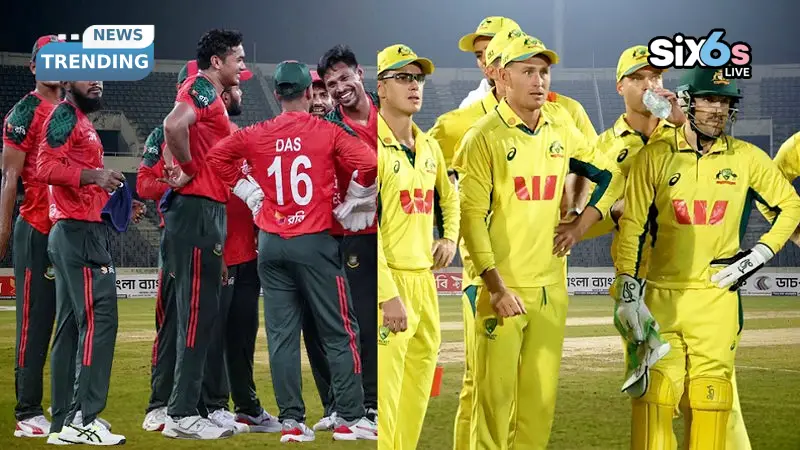
Australia hasn’t played an ODI in Bangladesh since 2011. That’s not a minor scheduling gap; that’s 15 years of accumulated home advantage sitting on Bangladesh’s side of the ledger before a single ball is bowled in June. The last time Australia visited for T20Is, Bangladesh beat them 4-1 and made it look comfortable. Now Australia returns with a squad in transition, a leadership picture that still has questions around it, and six matches to play on surfaces specifically designed to neutralise everything Australia does naturally well. Bangladesh knows exactly what conditions to prepare. Australia is still figuring out who its best white-ball team actually is.
Schedule, Venues, and What’s Confirmed
The tour is split cleanly across two formats and two cities. Three ODIs will be played in Dhaka, followed by three T20Is in Chattogram. Exact match dates and timings are still to be confirmed, but the structure is set.
The venue split is tactically significant. Dhaka surfaces tend to assist spin from early in an innings and slow down progressively as a match develops, which rewards patient bowling and batting lineups built around rotation and placement rather than power. Chattogram offers slightly more pace and bounce by comparison, but spin remains a major factor in T20Is, there too. Bangladesh has chosen two venues that play to their domestic strengths and ask questions of touring sides who haven’t been exposed to these conditions recently. Australia fits that profile almost perfectly.
Australia Tour of Bangladesh Resumes
The ODI leg of this tour carries a historical weight that the scheduling doesn’t fully communicate. Australia’s last ODI visit to Bangladesh was in 2011, which means an entire generation of Bangladesh cricket has developed, matured, and established a home record without facing Australia in the format. That’s not the same Bangladesh team Australia last played on these surfaces.
Pat Cummins holds the ODI captaincy but has had limited appearances in the format since the 2023 World Cup. Mitchell Marsh leads the T20I side. The leadership dynamic across both formats raises legitimate questions about squad continuity and who is actually driving Australia’s white-ball identity right now. This tour also feeds directly into Australia’s 2027 ODI World Cup preparation, which means it isn’t just a bilateral series filling the calendar. Results and combinations matter for planning that extends well beyond June.
The Subcontinent Conditions Problem
Bangladesh’s home record against full-strength touring sides in subcontinental conditions is one of the most underrated advantages in world cricket. They don’t just play at home, they build pitches, prepare surfaces, and select teams that are specifically optimised for what those surfaces demand.
The Australia tour of Bangladesh drops a traditionally pace-heavy attack onto Dhaka pitches that offer spinners the kind of assistance that can make even reliable fast bowling feel irrelevant. Australia’s batters will face spin that behaves differently from anything they encounter at home: lower bounce, sharper turn on worn surfaces, and deliveries that stop on the bat in ways that disrupt timing and footwork.
Why Both Teams Need This Series
Australia’s broader international calendar has them playing an ODI series in Pakistan before arriving in Bangladesh, which creates a continuous subcontinental preparation block. That’s useful context; it means the Dhaka ODIs won’t be Australia’s first exposure to spinning conditions in this window, even if Bangladesh’s surfaces will be more extreme than what Pakistan typically offers.
For Bangladesh, this series lands at a moment where testing themselves against top-tier opposition at home serves a clear purpose ahead of future global tournaments. A series win against Australia, particularly in ODIs where the two sides haven’t faced each other in this format on home soil in 15 years, would carry genuine weight both for rankings and for the squad’s confidence going into whatever ICC cycle comes next. Australia want combinations. Bangladesh want confirmation. On these surfaces, Bangladesh start with the structural advantage. Whether Australia’s adaptability closes that gap is the question June will answer.
Cricket never stops, and neither do we. Follow Six6slive for the latest news, in-depth features, and exciting updates from the world of cricket. Dive into the action now!