
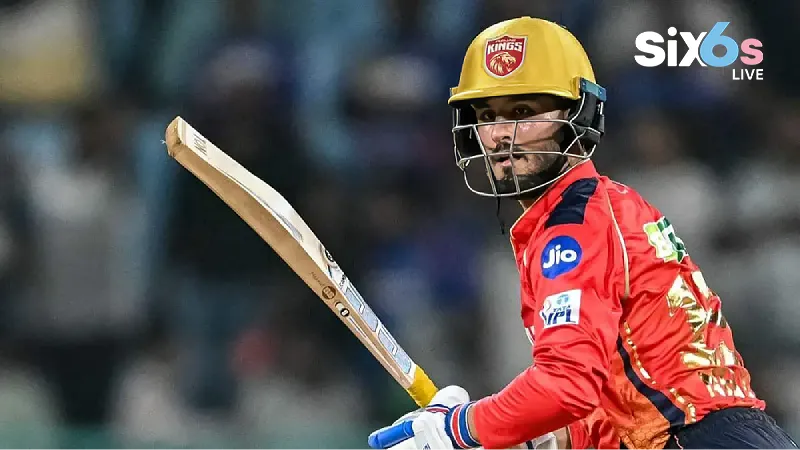
369 runs. Strike rate of 145.84. A middle-order function that covers the spin phase, the exact phase where most batters slow down, panic, or get out trying to force boundaries the pitch won’t give them. Nehal Wadhera has been producing this output at Punjab Kings while playing the role that India’s middle order needs most and getting almost no national recognition for it. The competition is fierce; several left-hand middle-order options exist in Indian domestic cricket. But Wadhera’s specific combination of spin-handling composure and sustained scoring rate is rarer than the competition for his position suggests.
What 369 Runs at 145 Confirms
369 runs at a strike rate of 145.84 from the middle order isn’t a flash-in-the-pan performance; it’s a sustained contribution across an entire IPL campaign from a batter operating in the phase where run-scoring is most difficult. The middle overs are where spinners dominate, fielders are attacking, and the pitch has settled enough that timing replaces power as the primary scoring mechanism. A strike rate above 145 in that environment means Wadhera is finding boundaries and rotating strike at a combined rate that keeps the innings above par without the platform a top-order batter receives. That’s a harder skill than any strike rate produced from position three with field restrictions still in place.
Wadhera Thrives When Spinners Take Control
The specific technical quality that separates Wadhera from the average T20 middle-order batter is his footwork against spin. His use of the sweep and its variations, conventional, slog, reverse, gives him boundary options against deliveries that most batters can only defend or nudge. Against left-arm orthodox, his ability to go inside-out over covers removes the standard field placement that slow left-arm bowlers rely on. Against leg spin, his quick feet and willingness to use his reach to smother the turn before it develops give the bowler no natural length to bowl to. He’s difficult to bowl at in the phase where most batters are easiest to contain.
IPL 2026 Is Wadhera’s India Audition
The Indian middle-order position for the next major tournament cycle is genuinely contested. IPL 2026 is the primary evidence-gathering exercise for selectors deciding which left-hand middle-order option best covers the spin-handling function that the team requires in subcontinent and overseas conditions. Wadhera’s sustained output in that specific role across an entire tournament, not two or three cameos but consistent contributions match after match, is the most relevant evidence available. Selectors who pass over a batter producing 145-plus strike rates in the spin phase in favour of alternatives with less specific or less sustained numbers will need to justify that decision in ways that the statistics don’t support.
Wadhera Bowling Changes His Selection Calculation
The development of bowling as a secondary skill changes Wadhera’s selection calculation entirely. A batter who can contribute two overs of spin, even at part-time quality, gives the captain a bowling option in the middle overs that doesn’t require sacrificing a batting position. If Wadhera’s leg spin or off-spin develops to the point where it can reliably produce eight controlled overs across a tournament, his value to the team doubles without his batting improving at all. Punjab Kings’ tactical flexibility increases. His selection ahead of a specialist batter with similar batting output becomes justifiable through the bowling dimension alone. The development intent is right, even if the bowling isn’t yet match-ready.
Consistency across two consecutive seasons rather than one strong campaign is what converts a promising IPL performer into a national selection. Selectors have watched players produce excellent single-season numbers and then revert to the mean, and they’ve learned to weight sustained performance more heavily than peak performance. Wadhera’s path to the India squad runs through replicating the 2025 season output in 2026, improving his finishing record in matches where Punjab needs 30 from three overs and he’s at the crease, and developing the bowling option far enough that it contributes overs in at least five matches. All three are achievable. Whether he achieves all three determines the timeline.
Cricket never stops, and neither do we. Follow Six6slive for the latest news, in-depth features, and exciting updates from the world of cricket. Dive into the action now!