
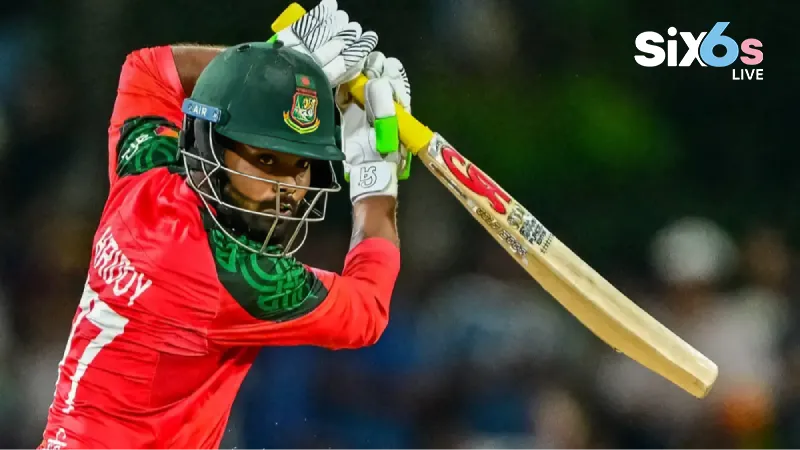
Towhid Hridoy has tennis elbow. Tennis elbow doesn’t disappear between a skill camp and a series opener. It responds to rest, to reduced load, to careful management across weeks rather than days. Bangladesh’s position is that Hridoy will be available, which is medically possible and tactically convenient. The position doesn’t answer the harder question: available to play and available to perform are different things, and against New Zealand’s bowling attack, the difference between a Hridoy who can bat freely and a Hridoy who is managing pain through every shot is the difference between a Bangladesh middle order that competes and one that survives.
Tennis Elbow Never Just Disappears Quickly
The specific nature of tennis elbow is the reason this injury update requires more scrutiny than a standard fitness bulletin. It’s a repetitive stress injury caused by overuse of the forearm muscles, which means the activity that caused it is the same activity Hridoy needs to perform in competitive cricket. Rest reduces inflammation. Returning to batting restores it. The cycle repeats unless the underlying mechanics are changed or the load is genuinely reduced for an extended period. Hridoy playing through it manages the pain rather than resolving the injury. Every batting session, every net practice, every series match adds to the load that the injury hasn’t recovered from. The question isn’t whether he can play, it’s whether playing makes the injury worse.
Training Load Is the Real Indicator
The Bangladesh medical and coaching staff’s decision to reduce Hridoy’s repetitive batting drills while maintaining overall fitness is the correct short-term management approach. The critical indicator isn’t what he does in the skill camp, it’s how the elbow responds to match-intensity batting after three consecutive days of bowling and fielding sessions. Tennis elbow reacts to cumulative load rather than single-session intensity. A batter who manages well across two net sessions and then struggles in the third is experiencing the cumulative response that makes this injury difficult to predict. How Hridoy’s elbow responds across the full skill camp duration, not just the first session, determines whether the optimism Bangladesh’s management is expressing is justified.
Playing Hurt in NZ Series 2026
The specific challenge of playing hurt in the NZ series 2026 is that New Zealand’s bowling attack is precisely designed to create the conditions that expose physical limitations in batters. Short-pitched deliveries that require the batter to pull, generating the forearm rotation load that tennis elbow makes painful. Deliveries that demand hard hands on the drive, requiring the wrist and elbow extension that the injury restricts. New Zealand will bowl short at Hridoy if they identify the elbow concern through early-match assessment. A batter managing pain doesn’t react to the short ball with the same aggression and commitment that he does when fully fit. The technical limitation becomes visible in two overs.
Worsening Elbow Could End Bangladesh’s Series
The worst-case scenario isn’t Hridoy playing below his best. It’s Hridoy playing below his best, the elbow worsening through match-intensity load, and Bangladesh losing their middle-order anchor not just for this series but for the subsequent tournament window. Managing him through the NZ series at less than full fitness and aggravating the injury produces a longer absence than the one rest before the series would have required. Bangladesh’s selectors are weighing short-term availability against that specific risk. The optimistic framing, he’ll be available, doesn’t fully account for what happens if the elbow doesn’t hold up through three consecutive T20Is at match intensity.
Available Doesn’t Mean Ready to Perform
Medical clearance is the minimum standard for playing, not the standard for competing. A batter cleared to play has been assessed as unlikely to cause serious further damage through participation, which is a different judgment from being assessed as capable of producing his best cricket. Hridoy’s best cricket involves hard hands through the line, aggressive footwork against spin, and the freedom to play shots without a mental calculation about whether the elbow can absorb the contact.
Playing with that mental calculation produces a different batter, more conservative, more hesitant, more likely to miss the aggressive option that the match situation requires. Bangladesh needs the aggressive Hridoy. Medical clearance doesn’t guarantee he’s the version that shows up.
Cricket never stops, and neither do we. Follow Six6slive for the latest news, in-depth features, and exciting updates from the world of cricket. Dive into the action now!