
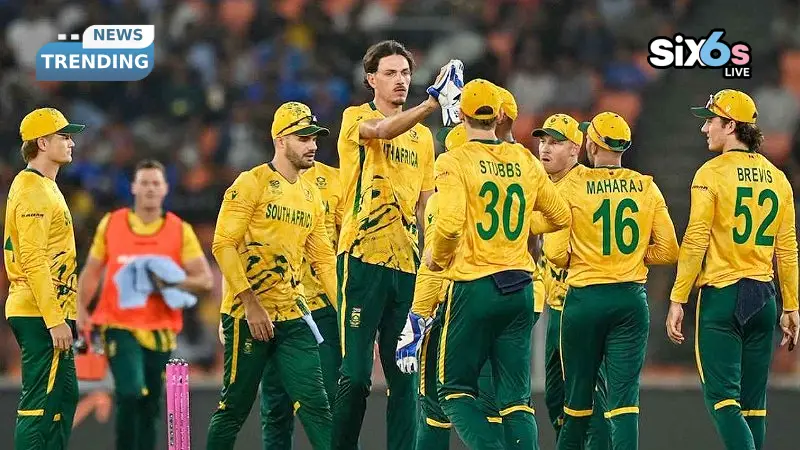
Gerald Coetzee is out. Nandre Burger is out. Lizaad Williams is out. Dewald Brevis is in. Corbin Bosch is in. Ottneil Baartman is in. Matthew Breetzke is in. The CSA contracts list for 2026 doesn’t just reflect current selection; it reflects a philosophy about what South African cricket values when the calendar is packed, the World Cup is approaching, and availability matters as much as talent. The omissions carry as much information as the inclusions. Three fast bowlers who were expected to be central to South Africa’s pace attack across the next eighteen months have been removed from contracts because the board can’t build planning around players who aren’t available to play.
Why Injuries Killed Three Contract Cases
The statistical foundation for omitting Coetzee, Burger, and Williams isn’t debatable. Coetzee appeared in eight T20Is since the last contract list. Burger appeared across fifteen games spanning ODIs and T20Is. Williams managed six T20Is and one ODI. Combined, three bowlers with genuine international quality filled fewer than five percent of available playing slots across 53 matches. South Africa cannot build tactical plans for upcoming Tests, ODIs, and T20Is around players who haven’t been available often enough to be part of those plans. The omissions are less about quality than about the practical impossibility of including players in a contracted squad when their fitness history makes consistent selection unreliable.
Harmer Gets the Hybrid Nobody Expected
Simon Harmer, at 37, receiving a hybrid contract, is the selection that requires the most specific justification. He gets it because two Tests in Sri Lanka are on the horizon and South Africa need experienced spin options alongside Keshav Maharaj on turning subcontinent surfaces. Harmer’s domestic form has remained relevant. His ability to bowl on surfaces that assist off-spin and contribute with the bat in the lower order gives South Africa a specific Test function that younger alternatives haven’t yet provided at the same level. Hybrid contracts exist precisely for this scenario, retaining experience in a format-specific role without extending a full contract to a 37-year-old across all three formats.
CSA 2026 Rewarded Youth Over Reputation
The four new additions in CSA 2026 contracts, Baartman, Bosch, Breetzke, and Brevis, all earned their inclusion through domestic form and consistent performance rather than existing international reputation. This is a meaningful selection philosophy shift. Previous contracts occasionally retained players based on reputation, while their form declined. These inclusions reward players who are actually producing right now in the environments CSA can observe. Brevis’s T20 profile has been building toward this recognition for two seasons. Bosch’s all-round domestic returns justified the inclusion. Baartman and Breetzke confirm South Africa is looking specifically at players who can contribute across formats rather than one-dimensional specialists who fill squad numbers.
Brevis Bosch Breetzke Baartman All Rewarded
The specific value each brings to South Africa’s squad architecture is worth separating. Brevis provides the aggressive T20 batting option that South Africa has been developing toward international cricket since his Under-19 days. Bosch covers the all-round function that allows bowling-batting balance across formats. Breetzke gives the middle-order batting depth that Test cricket demands during overseas tours. Baartman’s pace provides the attack option that the injured senior pacers’ absences created. Taken together, these four additions don’t plug one gap; they plug four separate gaps that the contract list had previously left unaddressed.
What This List Says About 2027
The 2027 World Cup selection logic is visible in every decision on this contract list. South Africa is building a squad architecture that functions when key players are injured, because the last eighteen months have proved that planning around availability is more important than planning around talent alone. The youth inclusions give players eighteen months of international exposure before the tournament. The hybrid contract for Harmer covers an immediate spin need without preventing younger spinners from developing into the first-choice roles. The omitted fast bowlers remain categorised as “players of national interest”, available for selection when fit, but not contracted until they demonstrate consistent availability. It’s the most structured World Cup preparation plan South Africa has publicly articulated.
Cricket never stops, and neither do we. Follow Six6slive for the latest news, in-depth features, and exciting updates from the world of cricket. Dive into the action now!