
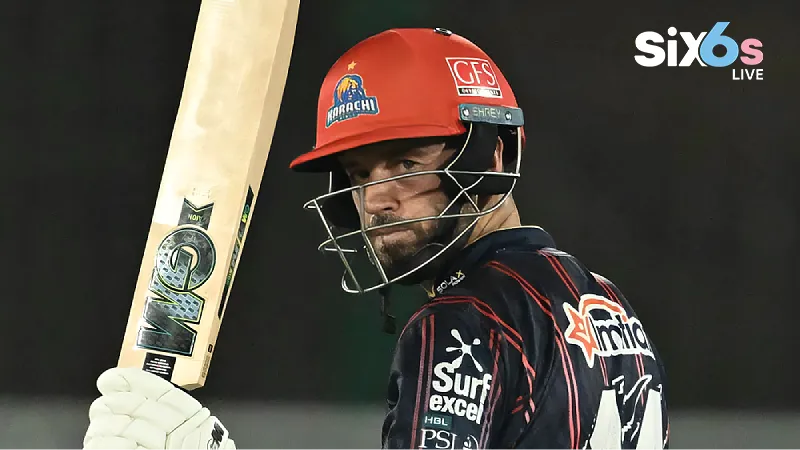
James Vince has 1544 runs in 56 PSL matches at a strike rate close to 140. Last season, he scored 378 runs at 148.23, including a century. Peshawar Zalmi built their top order around him alongside Babar Azam because that combination gave them something most PSL lineups struggle to produce: a batter who anchors the innings and accelerates it simultaneously without the innings ever feeling like it’s doing one at the expense of the other. He’s gone now. Zalmi are left trying to find another batter who does that specific thing. There isn’t one available who does it as well.
What Zalmi Lost Beyond the Runs
Vince’s value to Peshawar Zalmi wasn’t just his scoring. It was his role clarity. Babar Azam, beside him, knew exactly what his function was: to set the tempo, build the partnership, accelerate when Vince gave him the cue. That partnership functioned because each batter understood what the other was doing. Replace Vince with a batter who either needs to anchor or needs to attack but can’t do both, and Babar loses that shared understanding. The innings becomes reactive rather than planned. In T20 cricket, reactive top orders produce 145 when they should be posting 170.
The Numbers Behind the Real Gap
378 runs at 148.23 in PSL 2025 with a century included. These aren’t numbers that suggest Vince was in the middle of his career; they confirm he was in the middle of a purple patch. The strike rate of 148 combined with that volume means he wasn’t just impactful in short cameos; he was sustained. He built innings and still scored at a rate above par. Finding a replacement who matches both the volume and the rate from the pool of available players at this stage of the tournament is not realistic. Zalmi is replacing a consistent 40-ball 55 with someone who might produce a 20-ball 30 on a good day.
PSL 2026 Withdrawals Compound Zalmi’s Problem
Zalmi’s Vince situation doesn’t exist in isolation in PSL 2026. Multiple overseas withdrawals across the tournament have reduced the quality ceiling of available replacement players for every franchise. The pool that Zalmi can draw from to fill Vince’s slot is shallower than it would have been if the broader withdrawal trend hadn’t happened simultaneously. Teams that lose one overseas player in normal circumstances can find a comparable replacement. Teams that lose overseas players during a period when the entire available pool is depleted by a wider withdrawal pattern are solving the problem with inferior options, regardless of how well they search.
None of the Replacements is Vince
Mohammad Haris brings aggression from the top, but not the stability component that made Vince’s role work alongside Babar. Tanzid Hasan Tamim brings stability but not the acceleration ceiling that kept Zalmi’s powerplay totals above par. Brian Bennett adds depth further down the order, but doesn’t resolve the specific top-order balance question. Each option covers part of what Vince did. None covers all of it. The honest assessment is that Zalmi’s top order combination is weaker than it was before the withdrawal, regardless of which combination they choose as the replacement.
Zalmi’s Season Depends on Fast Adaptation
If Peshawar Zalmi spend the first three or four matches experimenting with combinations, trying different partners for Babar, and adjusting their approach based on results rather than planning, they lose those matches while still searching for the answer. The correct approach is to pick one combination, most likely Haris, given his aggression matches Vince’s acceleration ceiling better than the alternatives, commit to it for at least five matches, and let the partnership develop. Babar will adjust. He’s adjusted to different opening partners before. The key is the stability of the combination, even when early results are imperfect.
Vince’s withdrawal hurts. It doesn’t end Zalmi’s season. Whether it becomes the difference between a playoff finish and an early exit depends entirely on how quickly their new opening combination develops the understanding that Vince and Babar had already built.