
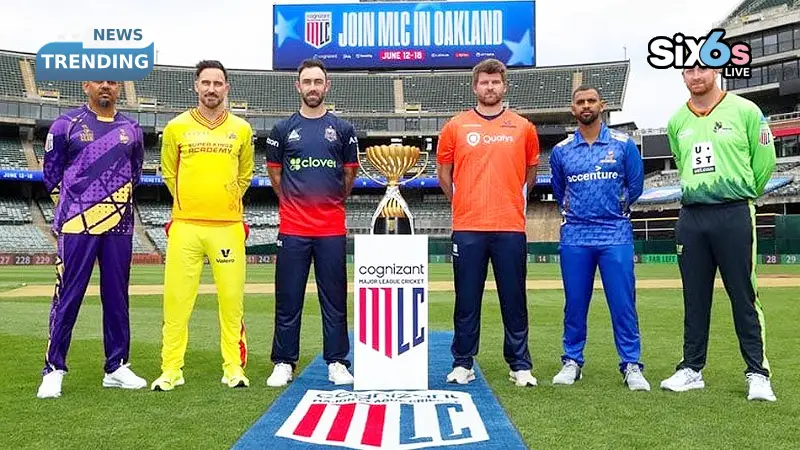
Seventeen players were selected. Fast bowlers are dominating the premium salary brackets. Steven Taylor, once USA cricket’s most recognisable name, is not among them. The MLC draft doesn’t make global headlines, but it tells you more about where American cricket actually is than any press release about growth and ambition. This draft got some things right. The tactical thinking behind the selections is sharper than in previous years. It also revealed a problem that keeps reappearing, and nobody has fixed it yet. Domestic players are still being squeezed out by international experience, and the gap isn’t closing fast enough.
Steven Taylor’s Omission Was Inevitable
Steven Taylor not being selected isn’t a story about one player falling out of favour. It’s a story about how franchise cricket evaluates value now compared to five years ago. Past achievements don’t buy squad slots anymore. Current form, tactical utility, and how cleanly a player fits a specific role do. Taylor’s exclusion from the draft reflects exactly that shift; franchises looked at what they needed phase by phase and decided his profile didn’t fit those specific requirements better than the alternatives available. The MLC unsold players list in 2026 will keep featuring names that dominated previous eras until those names produce the kind of current form that forces selection.
Fast Bowlers Became the Most Wanted
The clearest strategic signal from this draft is the premium placed on pace bowling. Multiple franchises targeted fast bowlers, particularly those with structured domestic backgrounds, and the $50,000 salary bracket was dominated by pace options. This tells you two things simultaneously. First, T20 cricket’s power shift continues; teams that control powerplay and death overs with quality pace bowling win more than teams that stack batting and hope the bowling holds. Second, USA cricket’s own fast bowling pipeline isn’t producing at the rate franchises need. Buying internationally experienced pace options isn’t a reflection of the league’s growth. It’s a reflection of the gap still to be filled domestically.
MLC 2026 Picks Experience Not Potential
The dominant selection philosophy across MLC 2026 franchises was straightforward: if the choice is between a proven performer from an established cricket system and an emerging American domestic player, take the proven performer. That approach makes competitive sense for a league still building its identity and its broadcast audience. It creates an immediate quality floor that keeps matches interesting. The cost is the pathway problem. Domestic USA players who watch international experience fill the slots they’re supposed to be developing into will either wait longer than is sustainable or find opportunities elsewhere.
What 17 Picks Actually Reveal
Seventeen selections, with a significant portion coming from established cricket systems outside the USA, tell a specific story about where the league sits in its development cycle. It’s not a failure, it’s a phase. The early years of any franchise T20 league look like this. IPL’s first season wasn’t built on Indian domestic talent dominating every slot. BBL’s growth depended heavily on international participation before Australian domestic cricket became the product’s main draw. MLC is following the same pattern. The question is whether the league is actively accelerating the domestic pipeline or simply repeating the international-first approach indefinitely.
American Cricket’s Domestic Gap Remains Unsolved
The limited presence of purely USA domestic circuit players in this draft is the one area where the right answer and the easy answer point in different directions. The easy answer is to keep picking internationally experienced players because they’re better right now, and the competition quality stays high. The right answer is to find structural ways to integrate domestic talent into competitive environments earlier so they become the internationally experienced players of the next cycle. MLC can’t skip that developmental phase.
The 2026 draft shows a league thinking more clearly about tactical roles than it was two years ago. It also shows a league that hasn’t yet cracked the local development problem. Both things can be true simultaneously. Both need to be acknowledged honestly for the league to move past the phase it’s currently in.
Cricket never stops, and neither do we. Follow Six6slive for the latest news, in-depth features, and exciting updates from the world of cricket. Dive into the action now!