
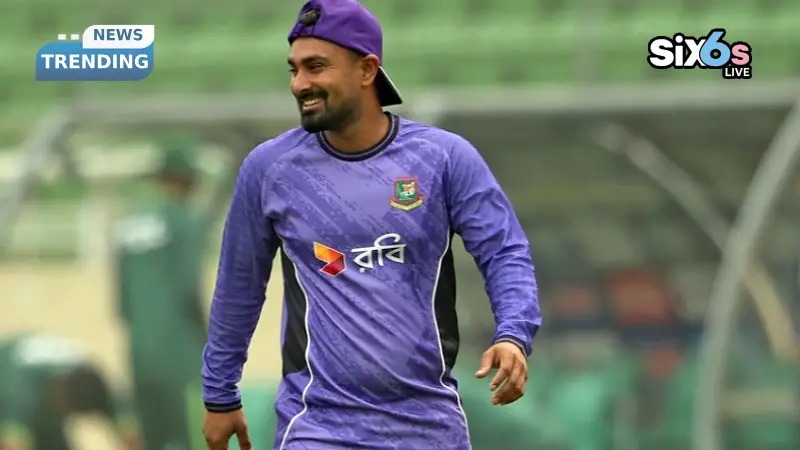
Litton Das has opened the batting for Bangladesh in ODIs for the past four years. Against Pakistan in the upcoming series, he is expected to walk out at number five. That single positional change reflects something larger; the gap left by Mushfiqur Rahim and Mahmudullah’s exits from Bangladesh’s ODI setup has created a middle-order problem that experience and role clarity must now solve. Litton is Bangladesh’s answer to that problem. Whether the answer works will shape how Bangladesh’s batting functions not just in this series but across the entire next ODI cycle.
Why the Middle Order Gap Is a Structural Problem
Mushfiqur Rahim and Mahmudullah didn’t just provide runs between overs twenty and forty. They provided the tactical intelligence that comes from managing chase pressure, reading spin bowling conditions, and knowing when to accelerate without triggering a collapse. That combination of experience and situational awareness is extremely difficult to replace with younger batters who haven’t yet accumulated the same volume of high-pressure ODI innings.
Bangladesh’s recent ODI middle-order performances without those two players have reflected that gap: innings that lack the stability to rebuild after early wickets and the tactical precision to manage spin-heavy phases on Mirpur-style surfaces. The solution isn’t to find two new players who replicate Mushfiqur and Mahmudullah. It’s to move the most experienced available batter, Litton, into the phase of the innings that needs him most.
Why Litton Is Equipped for the Role
Litton Das is not an inexperienced middle-order batter being asked to do something unfamiliar. In Test cricket, he regularly bats around number five or six, facing the challenge of rebuilding innings after early wickets or accelerating in the final session. The tactical demands of that role in red-ball cricket are more complex than the equivalent ODI position requires.
His recent T20 form also confirms his match rhythm remains intact, 696 runs across 30 matches at an average of 25.77 and a strike rate of 130.58. That strike rate in T20 cricket translates into an ODI batter who can manipulate gaps, rotate strike against spin, and shift gears when the match situation demands acceleration. His BCL one-day scores of 10, 55, and 0 across three matches provide a limited but competitive sample of his current fifty-over touch.
What Bangladesh vs Pakistan Reveals About the New Batting Order
The Bangladesh vs Pakistan series is effectively Bangladesh’s first major test of a restructured ODI batting template. The approach is layered, the top order provides early stability, the number three consolidates, Litton and the middle order manage the spin-heavy phase between overs twenty and forty, and the lower order accelerates in the final ten overs.
That structure depends entirely on Litton’s ability to adjust to the role quickly. If he settles into number five within the first match, Bangladesh have a genuinely experienced batter managing their most vulnerable batting phase against Pakistan’s disciplined bowling attack. If the adjustment takes time, Bangladesh’s middle-order fragility, the same fragility that has cost them matches in recent bilateral series, remains exposed precisely when Pakistan’s bowlers are most dangerous.
What Sher-e-Bangla Conditions Add to the Equation
Mirpur’s pitch behaviour specifically suits the role Bangladesh are asking Litton to perform. The surface slows after the power play, turn increases through the middle overs, and batters who can counter spin through technique rather than power become disproportionately valuable between overs fifteen and thirty-five.
Litton Das’s ability to use his feet against spin and find gaps through the off side on slow surfaces is the specific technical skill Bangladesh need from their number five at this venue. Against Pakistan’s spin options, who will be looking to exploit the middle-overs phase where Bangladesh have historically been most vulnerable, Litton’s experience could be the difference between a competitive total and an innings that collapses by 20 runs short of where it should have reached.
Stay updated on the latest cricket news and exciting updates at Six6slive. Dive into our in-depth articles and analyses to connect with the action today!