
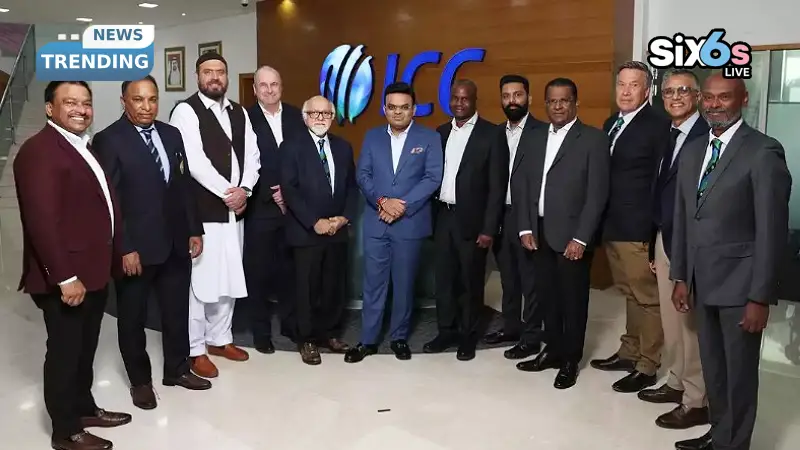
The ICC’s scheduled March 25- 27 governance summit in Doha has been postponed. The reason is the escalating regional conflict in the Middle East, which made hosting a large international administrative gathering in Qatar impractical on both safety and logistical grounds. Member boards have been informed that the session will likely reconvene in April at an alternative venue, though exact dates and location are yet to be confirmed.
Why Doha Was Chosen in the First Place
Doha had been selected as the host city for this governance session partly because of the ICC’s developing relationship with Qatar’s sporting ecosystem, a relationship that has grown alongside Qatar’s broader investment in international sport over the past decade.
The March meeting was not a routine check-in. It was one of the ICC’s key structured governance sessions of the year, bringing together board directors, chief executives, and senior leadership to discuss policy decisions, financial distribution among member boards, strategic expansion into emerging cricket markets, and administrative reform within the ICC structure. Missing this window doesn’t derail those conversations permanently, but it does push several agenda items into a compressed April schedule.
What the ICC Doha Meeting Was Set to Decide
The ICC Doha meeting sits within a calendar of board and committee sessions that collectively shape how global cricket is governed. Global tournament planning cycles, financial models that determine how money flows from the ICC to smaller member boards, and structural reforms all require board sign-off at these sessions.
The postponement means any decisions requiring board approval at this meeting will now wait until the rescheduled April gathering. The ICC has historically managed disruptions of this kind through venue changes or virtual formats, and the governing body is reportedly exploring alternative locations within the same region to minimise travel disruption for board members.
Senior Officials Still Converging on Ahmedabad
Despite the Doha postponement, several senior cricket administrators are expected to gather in Ahmedabad for the ICC Men’s T20 World Cup Final at Narendra Modi Stadium. Jay Shah, whose home city is Ahmedabad, is among the prominent figures expected to attend. Roger Twose, Tavengwa Mukuhlani, and Mohammed Moosajee are also anticipated to be present.
Major ICC events routinely double as informal networking opportunities for board representatives; conversations happen in the margins of finals that would otherwise wait for scheduled governance sessions. The Ahmedabad gathering won’t replace Doha’s formal agenda, but it does provide an opportunity for preliminary discussions before the April meeting convenes.
What This Means for Cricket Administration
A postponed governance meeting is a logistical disruption, not a structural crisis. The ICC’s decision-making framework is built around multiple meetings per year precisely because the organisation governs cricket across more than a hundred member nations; no single meeting is the only opportunity for key decisions to be made.
The April rescheduling will carry the full Doha agenda forward. Until then, operational cricket schedules remain unaffected, bilateral series continue as planned, and the tournament calendar for 2026 and beyond stays on track. The conflict in the Middle East has paused one meeting. It has not paused cricket.
Stay updated on the latest cricket news and exciting updates at Six6slive. Dive into our in-depth articles and analyses to connect with the action today!