
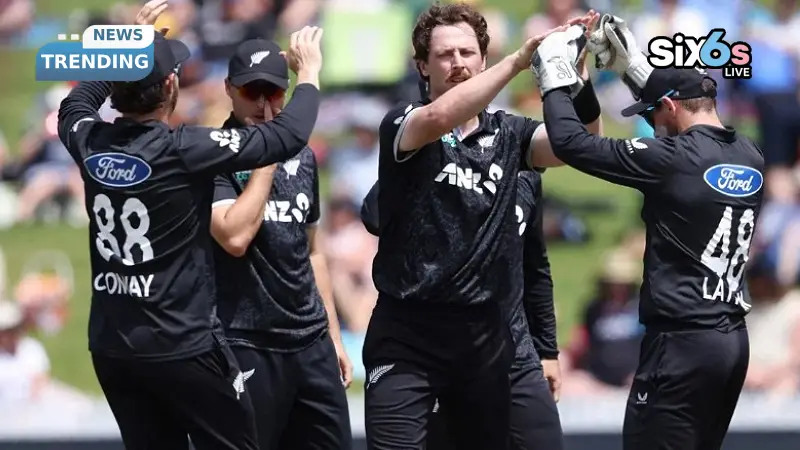
New Zealand head into their T20 World Cup semi-final against South Africa with a bowling selection question that could define their entire knockout strategy. Their most reliable new-ball seamer has flown home briefly for the birth of his child, leaving the coaching staff working through contingency plans at the worst possible time in a tournament. Jacob Duffy and Kyle Jamieson are both in the frame. The surface at Eden Gardens will influence which way the decision goes.
Why the New Ball Decision Shapes Everything
New Zealand’s bowling structure is built around early wicket-taking. Against South Africa’s top order, aggressive, experienced, and capable of accelerating from ball one, the first six overs set the tone for everything that follows. In this tournament, New Zealand’s seamers have collectively taken 60% of their wickets in the powerplay and first half of the middle overs, which tells you where their plans are concentrated.
Losing a primary new-ball bowler at this stage isn’t just a personnel change. It’s a structural disruption that forces the captain to rethink allocation, field settings, and which bowler absorbs the pressure when South Africa’s openers come out swinging.
What Matt Henry Brings That Others Don’t
Matt Henry has taken 11 wickets in this tournament at an economy of 7.20, the best figures among New Zealand’s frontline seamers. His powerplay economy of 6.80 reflects the kind of discipline that forces top-order batters into conservative starts rather than giving them width to work with early.
Henry’s value isn’t just wickets. It’s the control that allows New Zealand’s spinners and change-of-pace options to operate in better conditions in the middle overs. When Henry bowls his four overs within the first ten, the game looks completely different for New Zealand than when a less experienced seamer is managing those phases.
The Jacob Duffy and Kyle Jamieson Decision
Both replacements offer something, but they solve different problems. Jacob Duffy is the like-for-like option, hard lengths, consistent lines, and a similar new-ball method to Henry. The concern is experience at this level under knockout pressure, where captaincy decisions around bowling changes and field placements become more consequential than in group stages.
Kyle Jamieson is a completely different proposition. His height generates a steep bounce that can trouble batters on surfaces with extra carry, and Eden Gardens has historically produced pace-friendly conditions when the pitch hasn’t been overused. Jamieson also strengthens the batting depth to No.8, which gives New Zealand strategic flexibility in a close finish. The trade-off is that match rhythm teams rarely introduce returning players in knockout cricket unless the conditions strongly justify the gamble.
Eden Gardens Surface Makes the Call
The pitch at Eden Gardens will likely decide which replacement option New Zealand goes with if a replacement is needed at all. Earlier matches in this tournament have shown significant variation between venues. Some surfaces have rewarded seam movement early; others have slowed under lights and assisted spin.
If Eden Gardens offers early movement, Duffy’s bowling style suits the conditions, and the like-for-like swap becomes straightforward. If the surface plays true with extra bounce, Jamieson’s height advantage makes him the more tactically sound option. New Zealand’s coaching staff, led by Rob Walter, has consistently shown the ability to read conditions quickly and adjust; that adaptability will be tested here more than at any other point in the tournament.
The NZ vs SA semi-final is the most demanding fixture of the tournament, regardless of who bowls. Henry’s availability just determines how many of their preferred plans they get to use.