
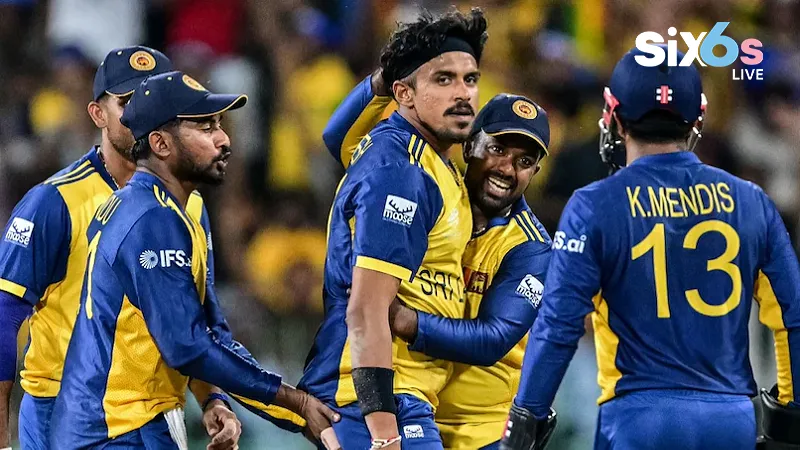
Sri Lanka’s elimination was not merely the result of one poor performance, but a reflection of deeper structural shortcomings. Following the decisive defeat to the New Zealand national cricket team, Shanaka openly acknowledged issues surrounding preparation, injuries, and long-term planning. Any serious Sri Lanka World Cup elimination analysis must therefore move beyond the scoreboard and examine systemic flaws. His remarks, particularly around conditioning standards and squad direction, amplified ongoing concerns tied to Shanaka’s fitness concerns in Sri Lanka and the urgent call for a structural reset of cricket reform.
World Cup exit: Fitness Standards Must Be Non-Negotiable
A central pillar of the Dasun Shanaka reaction was his insistence that fitness must become “number one.” Sri Lanka entered the tournament without several fully fit players, continuing a troubling pattern of Sri Lanka injuries and World Cup disruptions across recent ICC events.
In modern T20 cricket, physical conditioning is directly linked to competitive margins. Reduced agility impacts boundary prevention. Even marginal pace drops affect death-overs execution. Recovery cycles between high-intensity matches are equally critical. Sri Lanka’s recurring fitness concerns suggest either inconsistent enforcement of standards or insufficient monitoring structures.
Elite teams typically operate under centralized strength-and-conditioning benchmarks, with workload management aligned to tournament timelines. Shanaka’s candid remarks imply that Sri Lanka’s internal accountability mechanisms have not delivered uniform compliance. Until conditioning becomes selection-gated rather than advisory, injury recurrence will continue to compromise tournament stability.
Tactical Misreading of Conditions
Another revealing layer of the Dasun Shanaka World Cup exit reaction involved misjudgment of playing surfaces. Sri Lanka anticipated better batting conditions, particularly at the R. Premadasa Stadium, but encountered variable and slower tracks.
This miscalculation influenced squad composition. Strike-rate heavy batters were selected with power-hitting intent, yet surfaces often demanded rotational strike play and sweep-based scoring patterns. Shanaka highlighted how players like Kamindu Mendis and Dunith Wellalage adapted using sweeps and reverse sweeps strokes, statistically safer on lower-paced decks compared to aerial power shots.
Against New Zealand, Sri Lanka struggled to recalibrate once early pressure built. Tactical flexibility in T20 is not optional; it requires pre-tournament modeling of venue behavior. The broader Sri Lanka World Cup elimination analysis, therefore, extends to strategic forecasting failures. Teams that win global tournaments do not rely on surface assumptions; they prepare for surface variability.
Long-Term Planning and Leadership Clarity
Perhaps the most structurally significant admission within the Dasun Shanaka reaction concerned long-term planning. Shanaka explicitly stated that tournaments cannot be approached with short-term goals.
Sustainable success in ICC competitions typically follows multi-year cycles of squad consolidation, role definition, and performance tracking. When captaincy tenure is uncertain, and selection turnover remains frequent, clarity erodes. Players require a stable role identity finisher, powerplay aggressor, and matchup spinner reinforced over extended periods.
Without structured planning cycles, tactical cohesion weakens. Sri Lanka’s fluctuating combinations in recent tournaments suggest experimentation rather than consolidation. A true Sri Lanka structural reset cricket model would institutionalize multi-phase planning: development phase, consolidation phase, and tournament execution phase.
Managing Negativity and Mental Pressure
Beyond physical and tactical themes, the Dasun Shanaka World Cup exit reaction also addressed external negativity. Shanaka acknowledged the emotional toll of sustained criticism. The involvement of mental-conditioning specialist Paddy Upton reflects recognition that psychological resilience is performance-critical.
In high-stakes tournaments, composure determines conversion rates in tight matches. Sri Lanka admitted they could have handled certain situations, including key fixtures, with greater game awareness. Mental fatigue, compounded by injury instability and structural uncertainty, often magnifies execution errors.
Addressing external noise does not eliminate accountability, but structured mental-performance programs must operate alongside technical training. Without psychological reinforcement, structural reform remains incomplete.
The Dasun Shanaka reaction was not a routine post-match statement; it was a blueprint for reform. His comments highlighted conditioning lapses, tactical misjudgments, leadership uncertainty, and psychological strain as interconnected factors in Sri Lanka’s downfall. Any meaningful Sri Lanka World Cup elimination analysis must therefore frame this exit as systemic rather than incidental.
Stay updated on the latest cricket news and exciting updates at Six6slive. Dive into our in-depth articles and analyses to connect with the action today!