
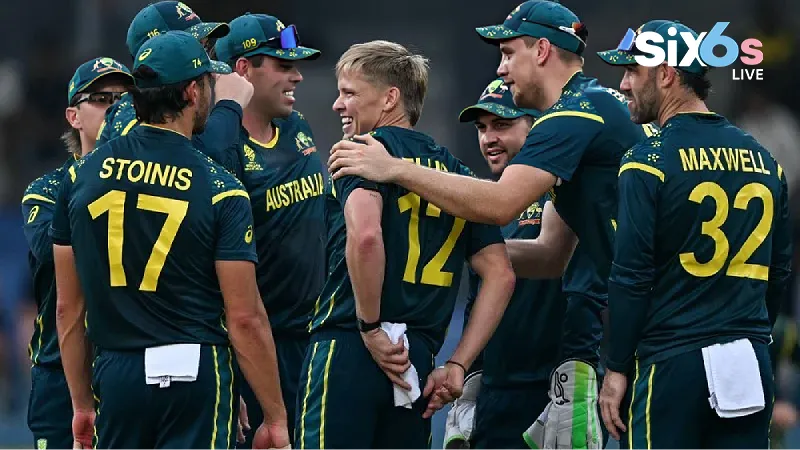
Australians not caring about the T20WC is a narrative born from defeat, not indifference. The conversation surged after Australia’s early exit from the tournament, particularly following the shock loss to Zimbabwe and the costly defeat to Sri Lanka. Yet framing this as apathy ignores competitive context, tactical execution, and the realities of modern white-ball cricket. The evidence suggests something different: frustration with performance rather than disengagement from the format.
Early Exit Sparked the Debate
Australia’s group-stage elimination at the T20 World Cup triggered immediate scrutiny. Expectations were high given Australia’s pedigree in ICC tournaments. However, T20 is structurally volatile. A single poor powerplay, a misread pitch, or a mistimed acceleration can collapse a campaign.
The defeat to the Zimbabwe national cricket team was particularly damaging because it exposed execution flaws rather than systemic weakness. Two days later, the loss to Sri Lanka national cricket team confirmed qualification was slipping away. In such compressed tournaments, recovery windows are minimal.
When elite teams exit early, public narratives often shift from tactical critique to cultural explanation. That pivot is how Australians not caring about T20WC became a dominant talking point.
T20 World Cup Preparation Tells a Different Story
The claim of indifference contradicts internal preparation standards. Senior players, including Adam Zampa, have emphasized that white-ball planning involves detailed role allocation, opposition match-up simulations, and phase-specific scenario training.
Modern T20 preparation includes:
- Powerplay run-rate modeling
- Spin match-up analytics
- Death-overs bowling matrix planning
- Boundary percentage targets per phase
These processes demand structured investment. The Australia failure reflected breakdowns in execution, not the absence of preparation. Tactical plans exist; delivery under pressure determines outcomes.
Middle-Overs and Death Phase Exposure
The Australia vs Zimbabwe T20 loss highlighted difficulties against disciplined seamers operating on slower surfaces. Zimbabwe controlled pace variation and back-of-length accuracy, forcing risk-heavy strokes. In T20 cricket, boundary denial in overs 7–15 significantly lowers winning probability, and Australia struggled to rotate effectively in that window.
Similarly, the Australia vs Sri Lanka T20 defeat revolved around spin containment. Sri Lanka compressed the middle overs with tight lines and defensive fields, reducing boundary frequency. When run-rate pressure exceeds the required trajectory, batters are forced to accelerate late in the innings.
Death-over-economy is another decisive metric. In tightly contested tournaments, even marginal over-rate leakage in overs 17–20 shifts net run-rate calculations and qualification scenarios. Australia’s inability to consistently dominate those phases proved costly.
Cultural Hierarchy of Formats
Australia cricket fan culture historically prioritizes The Ashes. Test supremacy has shaped national cricket identity for decades. When white-ball setbacks occur, segments of the fan base instinctively recalibrate toward red-ball pride.
However, historical performance contradicts the indifference thesis. Australia reached the T20 WC semifinals in 2007 and 2012, the final in 2010, and won the title in 2021. Celebration levels during those campaigns were emphatic. Engagement has consistently correlated with competitiveness.
The issue, therefore, is perception management. Reduced domestic broadcast visibility and overseas time-zone scheduling may limit casual viewership. But structural commitment to the format remains intact.
Results Drive Engagement Cycles
Fan psychology in elite sporting nations is often outcome-driven. Sustained success amplifies emotional investment; abrupt elimination triggers rationalization. Australia’s early exit became a cultural flashpoint because expectations were elevated.
Importantly, the global white-ball ecosystem has evolved. Tactical sophistication across Associate and Full Member teams has compressed competitive margins. Upsets are no longer anomalies; they are systemic features of modern T20 cricket.
Australians not caring about T20WC is best understood as a reactionary narrative following defeat, not a reflection of genuine disengagement. The Australia T20 World Cup failure stemmed from phase-specific tactical shortcomings, middle-over stagnation, spin match-ups, and death-overs execution, not cultural neglect.