
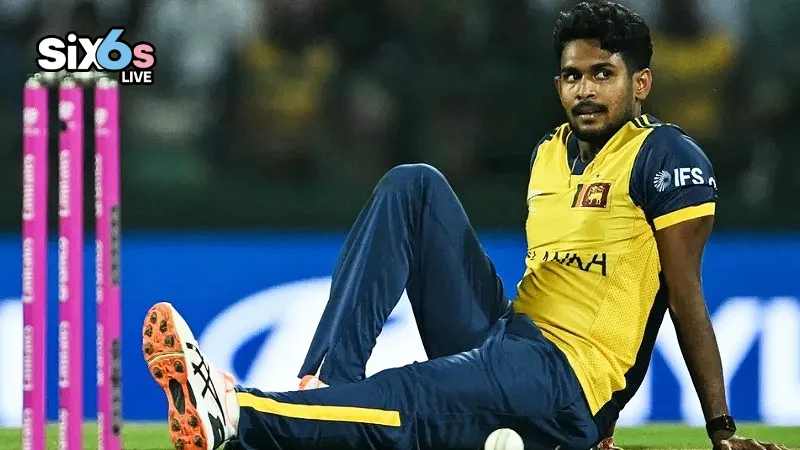
The Matheesha Pathirana injury in the T20 World Cup pushed Sri Lanka to lose their primary death-overs specialist just as the tournament moved into its decisive phase. With Pathirana ruled out of tournament participation due to a calf strain, the latest Sri Lanka squad update for the T20 World Cup confirms Dilshan Madushanka as a replacement. This is not a routine squad shuffle; it alters Sri Lanka’s bowling structure at the most pressure-sensitive stage of a T20 innings. The impact will be tactical, statistical, and strategic as Sri Lanka recalibrates their fast bowling plans for the Super Eight stage.
Loss of a Defined Death T20WC Specialist
Pathirana’s value lies in role clarity. He has operated as Sri Lanka’s designated death bowler, the option trusted for overs 17 through 20 when the margin for error disappears. His skiddy pace and yorker-heavy execution allowed Sri Lanka to compress scoring late in the innings.
The Matheesha Pathirana injury in the T20WC situation removes that defined structure. In T20 cricket, death overs frequently decide matches through small run differentials. Teams with a specialist closer can manage risk more precisely; without one, captains must improvise.
Now, Sri Lanka must redistribute those overs across multiple seamers. That spreads responsibility but reduces specialization. In high-stakes Super Eight fixtures, clarity of bowling roles often determines consistency.
Madushanka’s Statistical Profile and Fit
The confirmed Dilshan Madushanka T20 World Cup replacement brings international experience but a different performance profile. His Madushanka T20I bowling stats show 15 wickets at an average of 31.86 and an economy rate of 9.75. Those figures indicate wicket-taking ability but also exposure to expensive spells.
Unlike Pathirana, Madushanka has not consistently functioned as a dedicated death-overs operator. He has bowled across phases rather than being locked into the final overs. That distinction matters. Death bowling requires repeatable yorker accuracy, composure under boundary pressure, and tactical variation tailored to power hitters.
Therefore, the Sri Lanka fast bowling changes triggered by the Matheesha Pathirana injury may involve role reallocation rather than expecting Madushanka to mirror Pathirana’s responsibilities. Sri Lanka could deploy him earlier in spells while reserving experienced options for the closing overs.
Tactical Adjustments Across Phases
Replacing a bowler mid-tournament forces systemic recalibration. When Pathirana ruled out tournament participation, Sri Lanka’s bowling sequencing immediately became more fluid.
Without a fixed end-phase enforcer, captains must manage:
- Over-allocation flexibility
- Match-ups against left-right batting combinations
- Risk distribution in the final five overs
A committee-based approach can work if execution levels remain high. However, it increases dependence on collective discipline rather than individual specialization.
The Matheesha Pathirana injury in the World Cup setback may also influence field placements. Bowlers less comfortable at the death often rely more on defensive boundary riders rather than aggressive wicket-taking fields. That shift can subtly affect run containment strategies.
Conditions and Venue Influence
Sri Lanka’s upcoming Super Eight fixtures will test adaptability. Venues such as Pallekele and R. Premadasa Stadium (Khettarama) can behave differently under lights, particularly with dew affecting grip and slower-ball effectiveness.
In dewy conditions, yorker precision becomes even more critical because cutters and slower deliveries can skid on. That context magnifies the absence created by the Matheesha Pathirana injury in the T20 World Cup development.
If surfaces offer pace and carry, Sri Lanka may lean on seamers hitting hard lengths. On slower tracks, cross-seam variations and back-of-length control will dominate. Madushanka’s success will depend on rhythm and control rather than sheer pace.
The Matheesha Pathirana injury blow removes Sri Lanka’s most reliable late-overs specialist at a crucial juncture. While the Dilshan Madushanka replacement adds depth, his statistical profile suggests a different bowling role rather than a direct substitute. Sri Lanka’s Super Eight prospects now hinge on tactical redistribution, venue awareness, and collective discipline in the final overs. If they execute with clarity and control, the setback can be managed. If not, death-overs volatility may define their tournament trajectory.
Stay updated on the latest cricket news and exciting updates at Six6slive. Dive into our in-depth articles and analyses to connect with the action today!