
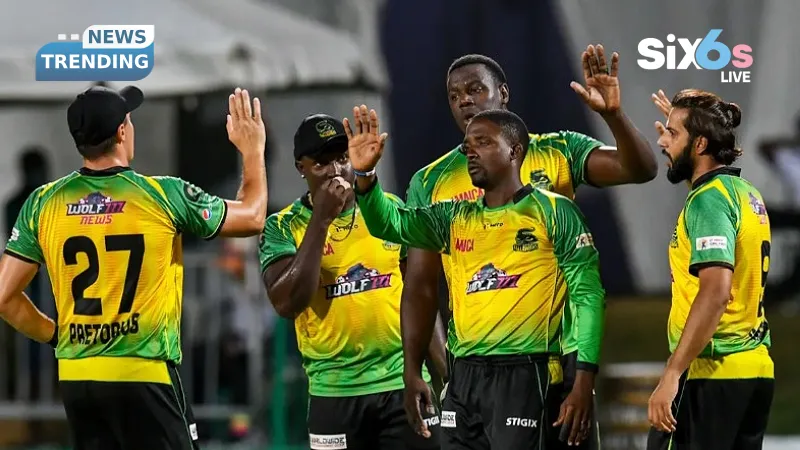
The CPL return to Jamaica in 2026 is officially confirmed, ending a six-year absence and introducing a Jamaica CPL franchise in 2026 as part of the league’s expansion strategy. The venue announcement also confirms that multiple matches at Sabina Park will be staged, restoring top-tier T20 cricket to Kingston. This move is more than symbolic. It signals structural, commercial, and competitive implications for the Caribbean Premier League and sets the stage for a new Jamaica-based team to re-enter the tournament ecosystem with strategic backing.
Restoration of a Historic Venue
The return of fixtures to Sabina Park is central to the CPL return to Jamaica narrative. Sabina Park has historically been one of the Caribbean’s most storied cricket venues, known for lively surfaces and strong crowd engagement. While the league has rotated venues across the region in recent seasons, Jamaica’s absence since 2019 created a noticeable gap in its geographic footprint.
From a competitive standpoint, Sabina Park typically offers true bounce early in matches, with conditions that can favor stroke-makers under lights. In T20 terms, that means powerplay scoring could be decisive, while death-over variations become critical as the surface slows. Reintroducing this venue adds tactical diversity to the tournament schedule.
CPL 2026: Impact of a New Franchise Structure
The introduction of a New Jamaica team is strategically significant. Following the relocation and rebranding of the Jamaica Tallawahs ahead of the 2024 season, Jamaica was left without a franchise identity. The Jamaica franchise effectively restores competitive balance and regional representation.
A new franchise must rebuild from scratch the ownership structure, squad composition, coaching staff, and brand positioning. In franchise T20 leagues, the early recruitment strategy determines the trajectory. Retention policies, overseas draft priorities, and alignment with local talent pipelines will define whether this team becomes immediately competitive or enters a transition phase.
Economic and Tourism Calculus
The Caribbean Premier League news cycle has emphasized the broader economic impact. Government stakeholders have framed the return as a tourism catalyst, particularly for Kingston. Major T20 events typically stimulate hospitality, broadcasting exposure, and local employment.
From a league governance perspective, collaboration between the CPL and Jamaican authorities suggests long-term alignment rather than a one-off hosting agreement. If attendance metrics meet expectations, Jamaica could re-establish itself as a permanent rotational hub in future editions beyond 2026.
Competitive Balance and Scheduling Dynamics
The CPL 2026 return to Jamaica also influences scheduling symmetry. Venue rotation affects travel logistics, rest windows, and home-advantage metrics. A Jamaica-based franchise playing multiple matches at Sabina Park introduces localized crowd momentum, an underrated factor in T20 cricket where momentum swings are frequent.
Strategically, home familiarity aids bowling units in reading pitch wear patterns and boundary dimensions. If the new franchise builds a squad suited to Sabina Park’s bounce profile, combining aggressive top-order batters with disciplined death bowlers, the home venue could become a competitive asset rather than merely symbolic.
This is not just a venue update; it is a structural reset for the league’s Caribbean footprint. With a Jamaica franchise confirmed and matches at Sabina Park reinstated, the tournament regains one of its most historic territories. The long-term success of this move will depend on smart franchise recruitment, sustained government partnership, and consistent fan turnout. If executed strategically, this return could strengthen competitive balance and commercial reach, positioning Jamaica once again as a central pillar of the Caribbean Premier League landscape.