
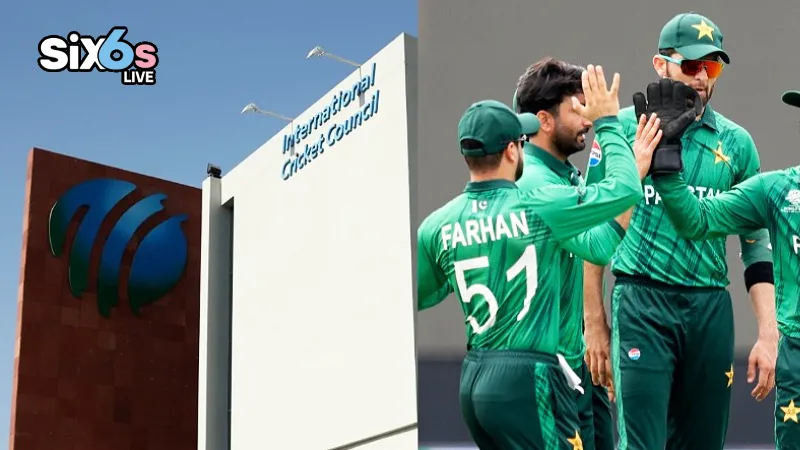
The Pakistan ICC dispute is nearing resolution because the ICC has reportedly held firm on its contractual framework while the PCB appears open to compromise, pending political approval. Recent PCB ICC negotiations update signals that Pakistan may ultimately agree to play India under the ICC Members Participation Agreement, likely at a Pakistan-India neutral venue match in Colombo. In short, this is less about cricketing readiness and more about governance, contracts, and diplomacy.
India vs Pakistan Match Shift Toward Compromise
After multiple rounds of meetings between ICC officials, the PCB, and other board representatives, the standoff has moved from public resistance to private negotiation. Reports suggest the matter has reached Pakistan’s top political leadership for final approval, indicating that the cricket board’s stance is no longer purely administrative but strategic.
This shift matters because the ICC’s authority over global tournaments is contract-based. Once a member signs participation agreements, refusal to comply risks penalties and reputational damage. From a governance perspective, the leverage rests with the ICC, not individual boards.
MPA Defines Legal Boundaries
The key document shaping the situation is the ICC Members Participation Agreement. It obligates boards to fulfill scheduled fixtures and adhere to tournament structures, including neutral-venue solutions when bilateral tensions exist.
That framework reduces negotiation space. The ICC cannot promise bilateral or tri-series commitments involving India because those decisions fall under the BCCI and government policy. Practically, this means many PCB demands tri-series requests fall outside ICC jurisdiction. Any expectations beyond compliance are unlikely to be formally guaranteed.
This legal reality explains why the Pakistan vs India cricket impasse looks closer to a procedural dispute than a political standoff.
Neutral Venue Logistics Pressure
Time pressure is now a decisive factor. With the scheduled fixture days away, thousands of fans have already arranged flights, hotels, and tickets. Travel logistics, stadium preparation, and broadcast planning depend on immediate confirmation.
Neutral venues like Colombo require:
- Advance team movement
- Security clearance
- Ticketing coordination
- Broadcast setup timelines
Delays increase operational costs and risk fan backlash. From a tournament-management standpoint, uncertainty is unsustainable. That urgency strengthens the ICC’s position in the Pakistan ICC dispute, pushing all parties toward a faster resolution.
Strategic Stakes Beyond One Match
Although this appears to be one fixture, the financial stakes are broader. India vs Pakistan matches are among cricket’s highest viewership events, driving major broadcast and sponsorship value. Missing such a match would impact tournament momentum and revenue confidence.
Tactically, the ICC prioritizes schedule stability and commercial continuity, while the PCB seeks long-term assurances like expanded series opportunities. These objectives don’t fully align, which explains the extended negotiation cycle.
However, history shows global events typically favor compromise over withdrawal. Structural incentives reward participation.
The result of this Pakistan ICC dispute is fairly easy to see: Pakistan will eventually accept the tournament structure that has been in place and play India at a neutral site due to contractual commitments and other logistics. Although the PCB will probably continue to negotiate additional guarantees, these are likely to be separate from the upcoming fixtures. Approval is expected shortly, after which there should be some confirmation of the scheduled Colombo game. What can be taken away from this experience by all involved parties is that the schedule will be determined by processes and agreements, and not by politics.